

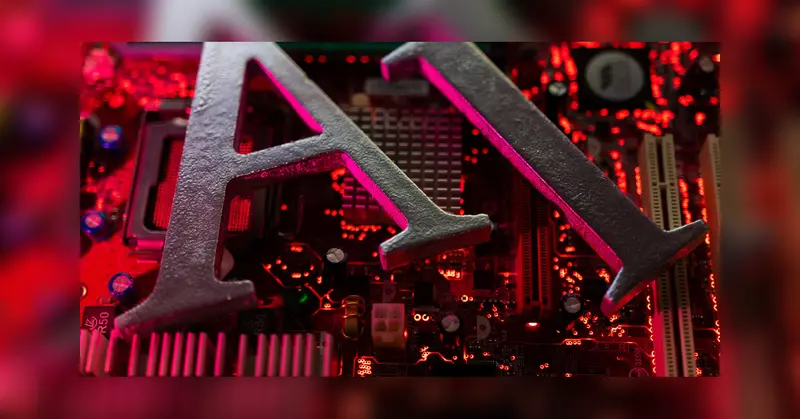
Chinese artificial intelligence firms are forming new alliances to accelerate domestic innovation and reduce reliance on foreign technologies, as US export controls continue to block access to Nvidia’s most advanced chips. The announcements came during the three-day World Artificial Intelligence Conference in Shanghai, which concludes Monday. According to Reuters, two major industry alliances were launched at the event to strengthen collaboration between China’s leading AI chipmakers and developers of large language models (LLMs).
The first, called the Model-Chip Ecosystem Innovation Alliance, brings together domestic LLM developers and GPU manufacturers including Huawei, Biren, Moore Threads, and Enflame—all of whom have faced US sanctions restricting their access to cutting-edge semiconductors. Zhao Lidong, CEO of Enflame, described the alliance as “an innovative ecosystem that connects the complete technology chain from chips to models to infrastructure.” Another consortium, the Shanghai General Chamber of Commerce AI Committee, aims to integrate AI technologies more deeply into industrial applications. Members include sanctioned facial-recognition firm SenseTime, LLM developers StepFun and MiniMax, and chipmakers Metax and Iluvatar CoreX.
Huawei unveils Nvidia rival as China clusters chip power
Huawei took centre stage at the conference with the launch of its CloudMatrix 384 system, built using 384 of its self-developed 910C AI chips. According to US-based research firm SemiAnalysis, the system outperforms Nvidia’s flagship GB200 NVL72 on some metrics, thanks to Huawei’s system-level innovations and large-scale clustering approach.
The CloudMatrix platform is designed to compensate for lower chip-level performance through high-volume integration and liquid-cooled infrastructure. At least six other Chinese firms, including Metax, showcased similar cluster-based architectures at the event, signalling a nationwide push toward scaling up domestic data-processing capacity. Metax’s AI supernode demonstration featured 128 of its C550 chips, tailored for large-scale cloud and data centre deployments.
Tech giants pivot to AI wearables, digital avatars
Trending Stories
&imwidth=180&imheight=135&format=webp&quality=medium)
US charges two former FBI officials with lying to Congress about Hunter Biden probes. 'Politically motivated' Trump grievance or something else?
&imwidth=180&imheight=135&format=webp&quality=medium)
Tu Hai Meri Kiran film review: Sonakshi Sinha and Zaheer Iqbal's thriller gets tangled in its own twists
&imwidth=180&imheight=135&format=webp&quality=medium)
IND vs NZ 2nd T20I: Shreyas Iyer on brink of breaking Rohit Sharma’s record
&imwidth=180&imheight=135&format=webp&quality=medium)
Did Neha Bora call for Bangladesh-like GenZ protest, 'anarchy' in India? WION Fact-checks viral claim
&imwidth=180&imheight=135&format=webp&quality=medium)
Will the US attack Iran this weekend? Trump's envoy says, 'absolutely'
&imwidth=180&imheight=135&format=webp&quality=medium)
Global cybersecurity alert: PHP flaws trigger website shutdowns as hack attempts surge into millions
&imwidth=180&imheight=135&format=webp&quality=medium)
US Navy, Marine Corps boards defy Trump's transgender military ban, vote to retain troops
&imwidth=180&imheight=135&format=webp&quality=medium)
Fauzi teaser out: Prabhas takes on the British Empire in patriotic avatar | Watch
&imwidth=180&imheight=135&format=webp&quality=medium)
Viral video shows cross falling on Colombia priest, no official confirmation | WATCH
&imwidth=180&imheight=135&format=webp&quality=medium)
Google Fitbit Air’s new health guardian feature tracks trends: How it works
&imwidth=180&imheight=135&format=webp&quality=medium)
'You’re a horrible little reporter, aren’t you?': Trump snaps at NBC reporter questioning his support for Ramaswamy's campaign ad
&imwidth=180&imheight=135&format=webp&quality=medium)
'Black triangle' UFO flying at 1,800mph spotted over sensitive US site: Latest Trump admin UFO file dump
&imwidth=180&imheight=135&format=webp&quality=medium)
'My name has always been Ilhan Omar': Congresswoman hits back at Trump, calls him a 'creep'
&imwidth=180&imheight=135&format=webp&quality=medium)
Nairobi building collapse: Several feared trapped after 16-storey structure crumbles; rescue operation underway
&imwidth=180&imheight=135&format=webp&quality=medium)
Chemical warehouse explosion in Mexico: Several injured in multiple blasts, 1,000 evacuated in León
&imwidth=180&imheight=135&format=webp&quality=medium)
AI deepfakes are spreading online: Why is removing them so difficult?
&imwidth=180&imheight=135&format=webp&quality=medium)
US midterms 2026: Trump revises Canada tariffs as Susan Collins faces tight re-election race in Maine
&imwidth=180&imheight=135&format=webp&quality=medium)
Anthropic security chief issues grim cyberattack warning: ‘It’s going to get a lot worse’
&im=FitAndFill=(700,400)&imwidth=180&imheight=135&format=webp&quality=medium)
How smart robots and AI assemble vehicles in 20 hours
&imwidth=180&imheight=135&format=webp&quality=medium)
Pakistan airline PIA unveils new crew uniforms, faces online criticism
&imwidth=180&imheight=135&format=webp&quality=medium)
IND-W vs ZIM-W, 1st ODI: Rawal, Charani star in India’s nine-wicket win over Zimbabwe
&imwidth=180&imheight=135&format=webp&quality=medium)
Emmanuel Macron calls Paris suburb shooting a 'racist terrorist attack' after one killed, several injured
&imwidth=180&imheight=135&format=webp&quality=medium)
Gravitas | US attack could trigger WW III: Russian planes in Tehran, Israeli jets, US warships in action
&imwidth=180&imheight=135&format=webp&quality=medium)
Horrific video shows the moment 18-year-old fell to her death from Mexico amusement park ride
&imwidth=180&imheight=135&format=webp&quality=medium)
China's dancing robot turns violent bodyguard, lifts cars and fights intruders - Watch
&imwidth=180&imheight=135&format=webp&quality=medium)
US midterms 2026: Viral video claims Lindsey Graham paid underage men for sex; clip released weeks before his sister's Senate race
&imwidth=180&imheight=135&format=webp&quality=medium)
First Lady Melania Trump secures ceasefire between Russia, Ukraine in Oleshky: White House
&im=FitAndFill=(700,400)&imwidth=180&imheight=135&format=webp&quality=medium)
New Friday OTT releases (October 23, 2026): Gajab Raat, Dorothy, Chaar Yaar- Watch these 6 new movies and TV shows on Netflix, Prime Video and more
&imwidth=180&imheight=135&format=webp&quality=medium)
French Open: PV Sindhu storms into final with win over Hina Akechi
&imwidth=180&imheight=135&format=webp&quality=medium)
'Already tired of his 9-to-5': Baby born with a moustache becomes internet sensation, video goes viral | Watch
&imwidth=180&imheight=135&format=webp&quality=medium)
India-China face-off continues near Arunachal’s Taksing, reveals ITBP chief in first official confirmation of tensions
&imwidth=180&imheight=135&format=webp&quality=medium)
Negotiators from Ukraine, Russia, United States to meet in Abu Dhabi: Zelensky
&imwidth=180&imheight=135&format=webp&quality=medium)
Farooq Abdullah says Pakistan’s raising of Kashmir issue keeps pressure on Delhi
&imwidth=180&imheight=135&format=webp&quality=medium)
Massive 7.2 magnitude quake off Vanuatu triggers tsunami warning for coasts within 300 km
The conference also spotlighted AI consumer tech, with major firms launching interactive wearables and virtual services. Alibaba unveiled its Quark AI Glasses, expected to hit the Chinese market by end-2025. Powered by the company’s Qwen model, the smart glasses will enable users to scan QR codes using voice commands and access maps on the go.
Tencent introduced its Hunyuan3D World Model 1.0, an open-source tool for generating interactive 3D environments from text or image prompts. Meanwhile, Baidu showcased a new “digital human” technology that can generate virtual livestream hosts. Its AI cloning tool can replicate a person’s voice, tone, and body language using just 10 minutes of sample footage.
Strategic shift amid US tech sanctions
Beijing’s AI industry push comes in response to ongoing US export restrictions that have barred China’s access to Nvidia’s H100 and other high-end AI chips. The shift toward domestic clustering, innovation alliances, and national LLM development signals a long-term strategy to counter Washington’s technological containment.
As per Reuters, the AI alliances unveiled in Shanghai may serve as a launchpad for a broader, state-backed campaign to strengthen China’s self-reliance in semiconductors and artificial intelligence.
(With inputs from the agencies)