
&imwidth=800&imheight=600&format=webp&quality=medium "China tariff delay fails to save US Christmas shopping season")
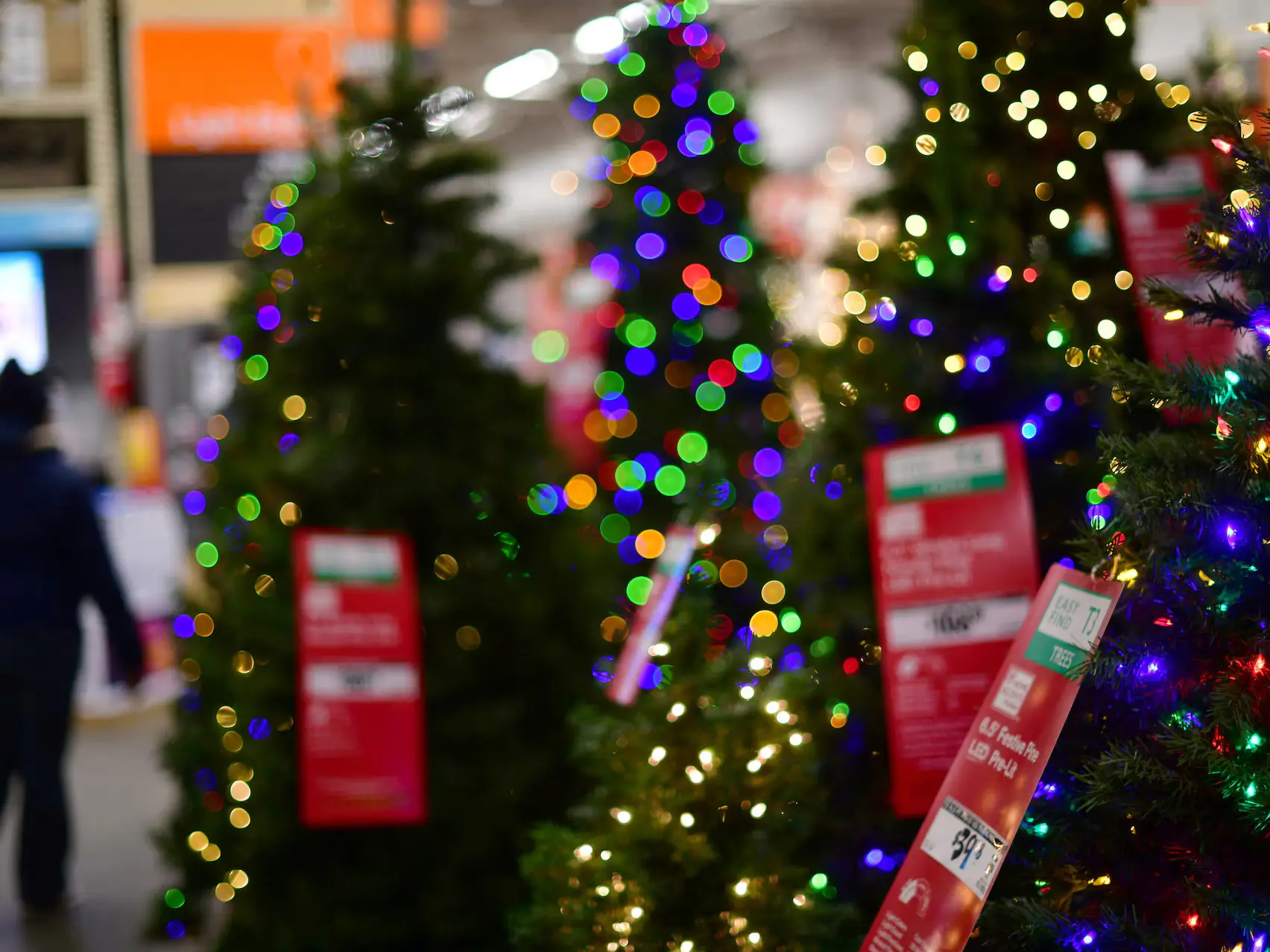
US retailers are warning of fewer fake Christmas trees and higher prices this holiday season, as tariffs on Chinese imports weigh on supply chains and consumer demand. According to a Reuters report, a last-minute reprieve from Washington and Beijing on August 11, granting a 90-day delay in tariff hikes has done little to ease concerns. Most retailers had already placed their seasonal orders months in advance, leaving limited room to restock shelves with fresh inventory.
Retailers cut back orders
Chris Butler, CEO of National Tree Company, which supplies Walmart, Home Depot, Lowe’s and Amazon, said this year’s market will see “lower supply.” His company sources around half of its trees from China, and the rest from Vietnam, Cambodia, and Thailand.

Butler confirmed that prices on popular models, including Carolina pine, Nordic spruce, and Dunhill fir will rise between 10 to 20 per cent. Retailers, he added, are pushing companies like his to ship directly to customers, cutting back on bulk inventory purchases to reduce financial risk.
China’s dominance in Christmas décor
China remains the global hub for festive goods, supplying 87 per cent of US Christmas decoration imports last year, worth roughly $4 billion, according to United States International Trade Commission data cited by Reuters.
Trending Stories
)
Justice eludes Air India 1985 bombing victims as Canada probe goes 'inactive' | Gravitas
)
Trump revives India-Middle East-Europe economic corridor as India emerges central to West Asia’s future: What is it?
)
Erdogan again raises Kashmir issue at UNGA, calls for dialogue under UN Charter
)
The Verdict | Moral policing isn’t culture or discipline, it’s crime
)
Trump signs Greenland security deal with Denmark, paving way for two new US military bases
)
Major League Soccer referee sacked for sexist comment about female match referee
)
IND vs JPN T20I: How an overturned wide became point of difference between India's win and a tie
)
Trump-Xi summit: From trade to Taiwan, what will the US and Chinese presidents discuss in Washington?
)
Cyclone Arnab: Landfall expected before midnight tomorrow as IMD issues orange alerts across six states
)
ICC plans T20I expansion and fewer ODIs in 2027–2031 FTP cycle: Report
)
'Mumma’s boy from Gwalior who dared to dream': Kartik Aaryan pens long note after first National Award win
)
Gravitas | Boosting NHS productivity could save 20,600 lives in UK annually: Report
)
US and China vie for AI dominance as calls grow for regulation | Gravitas
)
Yemen clashes kill 154 people in two days as cornered Saudi battles Houthi offensive | Gravitas
)
Bomb scare in New York amid UNGA: Suspicious suitcase found near UN headquarters
)
IND vs JPN, one-off T20I: Japan captain Kendel on pushing India to the brink - ‘It was special’
)
Raaka creates history! Allu Arjun’s film secures Guinness World Record ahead of release
)
Saudi Arabia exits China-led mBridge digital currency platform amid Saudi-Houthi conflict
)
WION Iconic Tourism Summit and Awards 2026: Key voices to discuss India’s tourism future
)
WION Iconic Tourism Summit and Iconic Awards 2026: India's travel economy leaders gather in Delhi
)
American manufacturing is reshoring faster than its factory floors can absorb
&im=FitAndFill=(700,400))
New OTT releases this week (September 21-27, 2026): Shaque: Trust No One, Hunkkaar, Don’t Be Shy- 5 new titles coming to Netflix, Prime Video and more
)
81st UN General Assembly: Burnham announces UK-US AI defence tie-up
)
Trump calls on nations to quit ‘rogue’ and ‘out-of-control’ International Criminal Court, rips UN
)
Who is Clavicular? The 20-year-old controversial 'Looksmaxxing' influencer charged with rape allegations
)
'What kind of confession is this?': Pakistan PM Shehbaz Sharif’s 'terrorists would be roaming New York' remark goes viral, raises alarm online. Watch
)
IIT Bombay professor Suryanarayana Doolla sent on leave amid Sahil Wakode death probe
)
'This is normally what toddlers do': Why a psychiatrist is raising fresh questions about Trump’s recent behaviour
&im=FitAndFill=(700,400))
National Film Awards 2026: Kartik Aaryan, Mammootty, Yami Gautam, Randeep Hooda and other key winners
)
‘Strike a deal or drive Iran into hell’: Trump issues fresh warning to Tehran at UNGA
)
Anne Hathaway to run in supporting race for Nolan's epic
)
Over 4,200 books withdrawn from circulation in J&K colleges, 94% from Kashmir
)
From Gaddafi tearing up UN Charter to Trump’s ‘escalatorgate’: Most unforgettable UNGA moments
)
Explainer: Why rare-earth export licences and Board of Trade are US priorities ahead of Trump-Xi summit
)
Asia prepares for record El Nino, food shock
)
Oil slips to $98 as Saudi Arabia restarts East-West oil pipeline
)
Four female students raped during 'Red Zone' at California university. What we know
But after US President Donald Trump first raised tariffs to 145 per cent in April before scaling them back to 30 per cent in May, retailers have been hesitant to commit to large orders at volatile price points.
Mac Harman, CEO of California-based Balsam Hill, expects 15 per cent fewer trees in the market this season. “Even with the extended 90 days, it’s too late for any of us to add orders,” he told Reuters.
Still, the pause has helped his company save around $2.5 million, underscoring how unpredictable tariff policy has become for businesses.
Holiday budgets under strain
The cutback in artificial trees highlights what may be a muted shopping season overall. American households are already squeezed by higher prices on essentials such as diapers, soap, and clothing.
Levi Strauss recently announced it would scale back its holiday offerings, while toy makers are also feeling the pinch. Isaac Larian, CEO of MGA Entertainment maker of Bratz dolls said that even a 30 per cent tariff on toys is “still too much,” forcing the company to raise prices.
Limited gains from the delay
Experts caution that the 90-day delay will only help goods shipped by air. Chris Rogers of S&P Global Market Intelligence noted that companies like Apple set for new product launches stand to benefit, but most retailers have already locked in their festive inventories.
Some brands attempted to rush extra orders after the moratorium was announced, but shifting supply chains is proving complex. Dave Tu, president of DCL Logistics, which handles distribution for brands like GoPro, said that many firms that diversified away from China are now facing bottlenecks and delays as new manufacturers struggle to scale up.
A muted Christmas ahead
Industry groups believe that, for most retailers, this season’s inventory is already fixed. Matt Priest, CEO of the Footwear Distributors and Retailers of America, summed it up bluntly: “Holiday inventory is what it is.”
Despite the reprieve, American shoppers can expect fewer fake firs and higher price tags, making this festive season a test of both retailers’ resilience and household budgets.
(With inputs from the agencies)