China proposes global AI governance body amid rising tech tensions with US

&imwidth=600&imheight=450&format=webp&quality=medium "China proposes global AI governance body amid rising tech tensions with US")
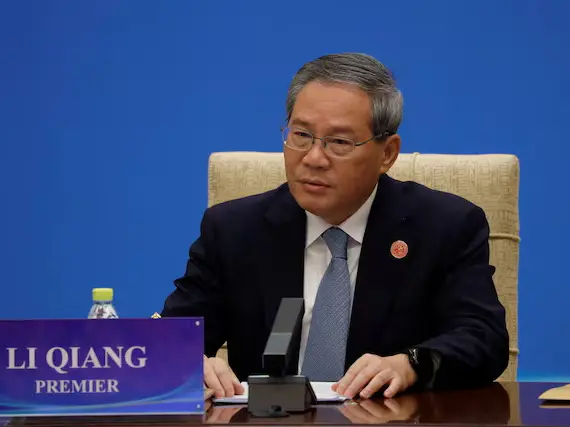
Chinese Premier Li Qiang. Photograph: (Reuters)
Chinese Premier Li Qiang's proposal reinforces the divide between Washington and Beijing over how AI should be developed and governed, especially in light of US restrictions on high-end chip exports to China, citing national security concerns.
Chinese Premier Li Qiang on July 26 proposed the establishment of a global organisation to coordinate artificial intelligence (AI) development and governance, urging world powers to forge a common regulatory framework as the technology accelerates amid mounting geopolitical friction. Speaking at the opening ceremony of the World Artificial Intelligence Conference (WAIC) in Shanghai, Li described AI as a “new engine of economic growth,” while warning of growing security risks and “fragmented governance” in the absence of unified global standards. He said the rapid pace of AI evolution makes international cooperation more urgent than ever.
“How to find a balance between development and security urgently requires further consensus from the entire society," Li said. "Currently, global AI governance is still fragmented. Countries have great differences in regulatory concepts and institutional rules.” Li's call comes just days after US President Donald Trump unveiled a sweeping deregulatory strategy for AI, including an executive order aimed at limiting what the administration calls “woke” AI systems. The move reinforces the divide between Washington and Beijing over how AI should be developed and governed, especially in light of US restrictions on high-end chip exports to China, citing national security concerns.
China offers open-source development
While Li stopped short of naming the US, his remarks appeared to be a thinly veiled critique of Western dominance in advanced AI systems and the flow of talent and resources. He warned that AI risks becoming “an exclusive game” monopolised by a handful of countries and companies. To counter that, Li proposed that China would actively promote open-source AI models and share its technological advancements, particularly with nations in the Global South.
“Only by adhering to openness, sharing, and fairness in access to intelligence can more countries and groups benefit,” he said. Li also acknowledged practical barriers to AI development in China, including restricted access to top-tier semiconductors and limited cross-border talent exchange, the two consequences of ongoing US export controls.
Global stage, global stakes
Trending Stories
&imwidth=280&imheight=210&format=webp&quality=medium)
&im=FitAndFill=(700,400)&imwidth=280&imheight=210&format=webp&quality=medium)
&imwidth=280&imheight=210&format=webp&quality=medium)
&imwidth=280&imheight=210&format=webp&quality=medium)
&imwidth=280&imheight=210&format=webp&quality=medium)
&im=FitAndFill=(700,400)&imwidth=280&imheight=210&format=webp&quality=medium)
&imwidth=280&imheight=210&format=webp&quality=medium)
&imwidth=280&imheight=210&format=webp&quality=medium)
&imwidth=280&imheight=210&format=webp&quality=medium)
&imwidth=280&imheight=210&format=webp&quality=medium)
&imwidth=280&imheight=210&format=webp&quality=medium)
&imwidth=280&imheight=210&format=webp&quality=medium)
&imwidth=280&imheight=210&format=webp&quality=medium)
&imwidth=280&imheight=210&format=webp&quality=medium)
&imwidth=280&imheight=210&format=webp&quality=medium)
&imwidth=280&imheight=210&format=webp&quality=medium)
&imwidth=280&imheight=210&format=webp&quality=medium)
&imwidth=280&imheight=210&format=webp&quality=medium)
&imwidth=280&imheight=210&format=webp&quality=medium)
&imwidth=280&imheight=210&format=webp&quality=medium)
&imwidth=280&imheight=210&format=webp&quality=medium)
&imwidth=280&imheight=210&format=webp&quality=medium)
&imwidth=280&imheight=210&format=webp&quality=medium)
&imwidth=280&imheight=210&format=webp&quality=medium)
&im=FitAndFill=(700,400)&imwidth=280&imheight=210&format=webp&quality=medium)
&imwidth=280&imheight=210&format=webp&quality=medium)
&imwidth=280&imheight=210&format=webp&quality=medium)
&imwidth=280&imheight=210&format=webp&quality=medium)
&imwidth=280&imheight=210&format=webp&quality=medium)
&imwidth=280&imheight=210&format=webp&quality=medium)
&imwidth=280&imheight=210&format=webp&quality=medium)
&imwidth=280&imheight=210&format=webp&quality=medium)
&imwidth=280&imheight=210&format=webp&quality=medium)
&imwidth=280&imheight=210&format=webp&quality=medium)
&imwidth=280&imheight=210&format=webp&quality=medium)
Now in its seventh edition, WAIC has become one of Asia’s premier AI showcases. This year’s three-day conference hosts more than 800 companies presenting over 3,000 cutting-edge AI products, including 40 large language models and 60 intelligent robots. Chinese tech giants like Huawei and Alibaba dominate the exhibit floor, though US firms Tesla, Alphabet, and Amazon are also participating. Prominent speakers included AI pioneer Geoffrey Hinton, former Google CEO Eric Schmidt, and Anne Bouverot, France’s special envoy on AI. However, Tesla CEO Elon Musk was notably absent this year.
UN Secretary-General António Guterres, in a video message, called AI governance “a defining test of international cooperation.” His comments echoed Li’s warnings that without common standards, AI risks becoming a source of global inequality and instability.
As AI continues to reshape industries and societies, concerns have also grown around misinformation, job displacement, and ethical dilemmas. A recent study warned that AI-generated search summaries could drastically reduce online traffic for news publishers, raising new challenges for media and information ecosystems.