
&imwidth=800&imheight=600&format=webp&quality=medium "China expands flood compensation as extreme rain triggers social tensions")
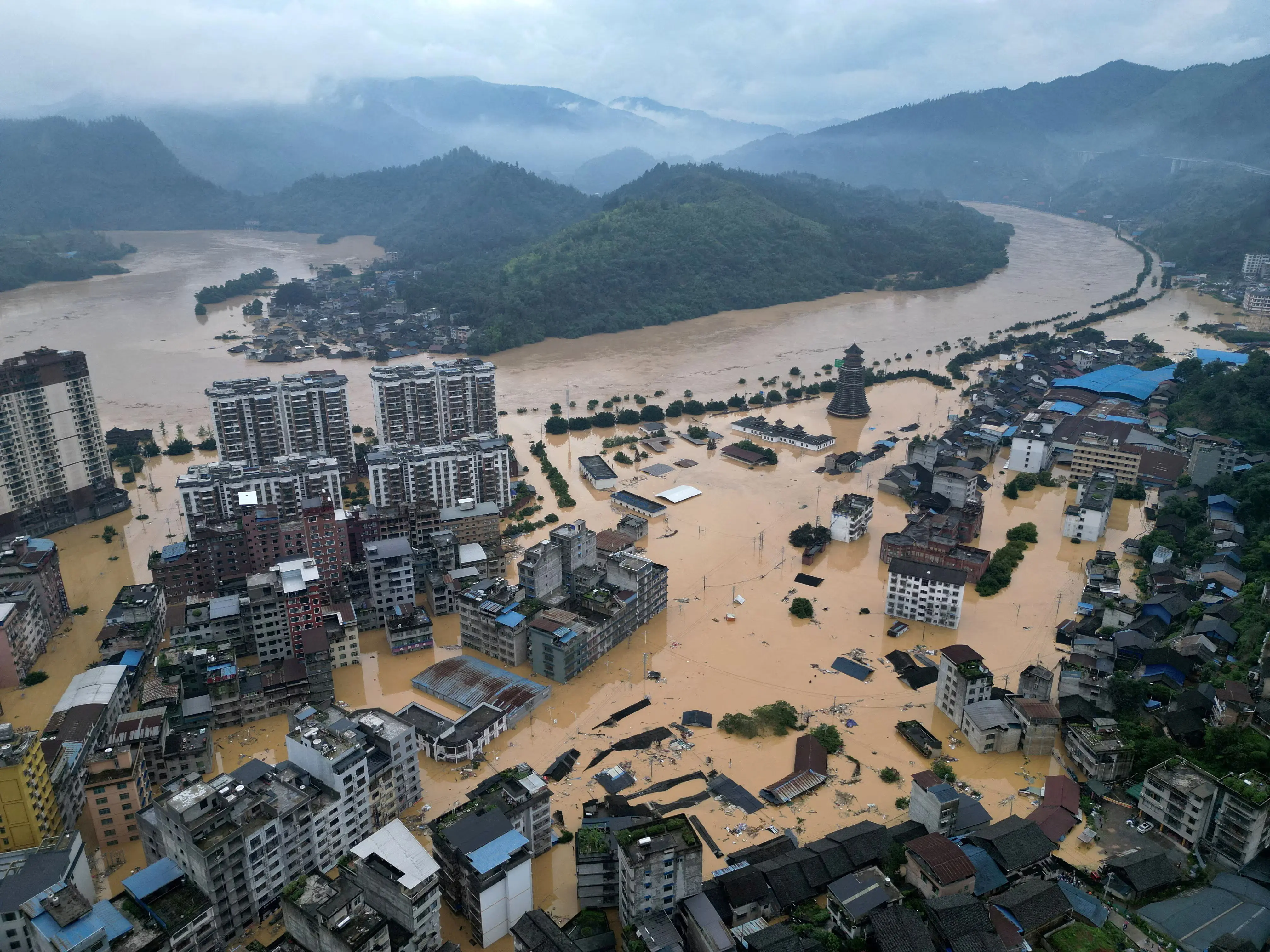
China is expanding its compensation system for residents forced to give up homes and farms to flood diversion schemes, as extreme rainfall continues to displace communities and damage critical infrastructure. The move, announced late on Friday, comes amid growing public anger over the government’s practice of diverting swollen rivers into designated storage zones that often include populated farmland and residential areas.
According to Reuters, new rules from China’s State Council will see the central government cover 70 per cent of compensation payments, up from a previous formula based on local finances and actual losses “Importantly, livestock and poultry that cannot be relocated before flooding will now also qualify for compensation,” Reuters reported, noting that previously only working animals were covered.
Anger over forced flood storage

Flood diversion zones are a critical part of China’s strategy to protect cities from catastrophic flooding by sacrificing rural and agricultural land. As extreme rainfall events become more frequent, Beijing has used these areas more aggressively, fuelling resentment. During record-breaking rains in the summer of 2023, nearly 1 million people were relocated in Hebei province to make way for diverted floodwaters aimed at protecting Beijing.
According to Xinhua, eight designated flood storage areas were used in Hebei alone during that crisis. China has 98 officially designated flood diversion zones across major river basins, including the Yangtze, which supports over one-third of the nation’s 1.4 billion population.
Record rain and expanding climate threat
Trending Stories
)
No Pandya as Auqib Nabi earns maiden ODI call-up; Mayank returns for WI T20Is| check full squads
)
Trump praises India’s Opium crackdown, hails anti-drug efforts
)
Sydney Sweeney defends provocative ad choice, the internet is still not impressed
)
Trump calls Canada-EU associate membership plan ‘laughable’ and threatens 'very serious tariffs'
)
Protests erupt over migrant housing plan in Piddington
)
Shahzad Bhatti Network declared terrorist organisation under UAPA: Govt order
)
US, China dominate global economy: Where does India rank among the world's biggest economies?
)
Europe wants a common playbook for security threats, seeks security beyond NATO
)
Bigg Boss 20: Mahhi Vij reveals she lost Yuva role to Kareena Kapoor; 'didn’t work out in my favour'
)
All Indian goods to get duty-free access to New Zealand
)
Hockey: Pakistan urges AHF to move Asian Champions Trophy out of India over security concerns
)
Lionel Messi for 2026 Ballon d’Or over Mbappe and Yamal, says Diego Simeone
)
Alex Saab, ally of Venezuela's Maduro, pleads guilty in US corruption case
)
Veteran actor Anant Nag honoured with Indian cinema’s highest award
)
Two terrorists killed in Udhampur encounter; security operation continues
)
AUS vs SA: Steve Smith still gets 'little flashbacks' from sandpaper gate
)
Pakistan naval vessel returns to harbour with 'severe damage' after collision with Indian warship in Arabian Sea
)
Fed raises rates for first time in 3 years, Kevin Warsh defies Trump as inflation mounts
)
Katrina Kaif’s postpartum weight is not the problem; your gaze is
)
Taiwan seeks deeper India ties as direct flights restart soon and chip projects advance
)
Daayra movie review: Kareena Kapoor, Prithviraj Sukumaran shine in Meghna Gulzar’s cop-versus-cop crime thriller
)
Saudi Vs Houthis: Yemeni military rebels clash with Houthis
)
US trade tariff: 100% tariff targets Russian buyers amid trade tensions
)
Pakistan: Imran Khan's sons Kasim & Sulaiman claim their father is 'tortured' in jail
&im=FitAndFill=(700,400))
New OTT releases this week (September 14-20, 2026): Lust Stories 3, Waiting Hai, Irumudi- 5 new titles coming on Netflix, Prime Video and more
)
Strapped to flight seat with duct tape: Passenger claims no memory of mid-air outburst
)
Trump's Iran war faces fresh House rebuke; 7 Republicans join Democrats in push to end conflict ahead of midterms
)
Trump gets new power to hit India, China with up to 100% tariffs as US Senate clears Russia sanctions bill
)
Prime Minister Narendra Modi's birthday: Tributes pour in from President Murmu and leaders
)
US Treasury rallies global financial institutions for Op Economic Outcast to isolate Iran
)
Saudi vs Houthis: Riyadh claims to have shot Houthi drone targeting Mecca
)
India breaks silence on US Russia sanctions bill, 100% tariff threat: ‘Committed to energy security’ for 1.4 billion
)
Pakistan boycotts chess match against Israel at Olympiad
&im=FitAndFill=(700,400))
Suriya and Jyothika say ‘I do’ again after 20 years! See their dreamy wedding pics
)
Abhishek Sharma rises to No. 2 in T20Is; ENG’s Robinson 3rd after record Pakistan Tests
)
BRICS success stuns White House, Trump targets India with 100% tariff | Gravitas
)
Meghan Markle's phone number leaked from children's WhatsApp group, couple switches Archie and Lilibet's school
)
The Early Spring season 2 is happening, but fans have one request - 'don't change the actors'
The urgency of these measures reflects intensifying climate risks. The China Meteorological Administration said on Friday that since early June, rainfall in the middle and lower reaches of the Yangtze has been up to double historical averages. “Thirty meteorological stations in provinces such as Hubei and Guizhou reported record daily rainfall for June,” according to the agency’s briefing, as cited by Reuters.
In Guizhou this week, one city experienced flooding described as a once-in-50-years event. Local media reported that the speed of inundation shocked its 300,000 residents and overwhelmed emergency services. As per CGTN, Beijing has pledged to relocate vulnerable populations and industries to safer zones while allocating more land for flood storage to manage such surges.
Economic toll mounts
The human and financial costs of China’s floods are staggering. According to China’s Ministry of Emergency Management, direct economic losses from extreme rainfall and flooding in 2023 exceeded 110 billion yuan ($15 billion).
And the crisis is ongoing. As reported by Xinhua and CGTN in June 2024, cumulative flood-related damage this year has already surpassed 54 billion yuan ($7.5 billion), damaging roads, railways, irrigation networks, homes, and critical infrastructure. These losses underline the immense challenge China faces in balancing the protection of its mega-cities with the needs of rural communities that often serve as buffers in times of crisis.
A social contract under strain
While Beijing’s expanded compensation scheme aims to quell unrest, it also signals the government’s recognition that forced flood diversion is politically and socially sensitive. State media commentary acknowledged that farmers have long complained about insufficient or delayed payments for deliberately flooded lands, and that including livestock losses is a long-overdue reform.
Still, experts warn that as extreme weather becomes more common, these trade-offs will test China’s social contract. By relying on rural areas to absorb floodwaters and protect urban centres, China is confronting not just a climate emergency but a deepening question of fairness: who pays the price to keep its cities safe?
(With inputs from the agencies)