Bond Tokenization Summit 2026: How India's bond market is transforming for retail investors

&imwidth=600&imheight=450&format=webp&quality=medium "Bond Tokenization Summit 2026: How India's bond market is transforming for retail investors")
Bond Tokenization Summit in Mumbai
Discover how discussions at the Bond Tokenization Summit 2026 are paving the way for digital debt, real-world asset tokenization, and fresh investment avenues across India's financial landscape.
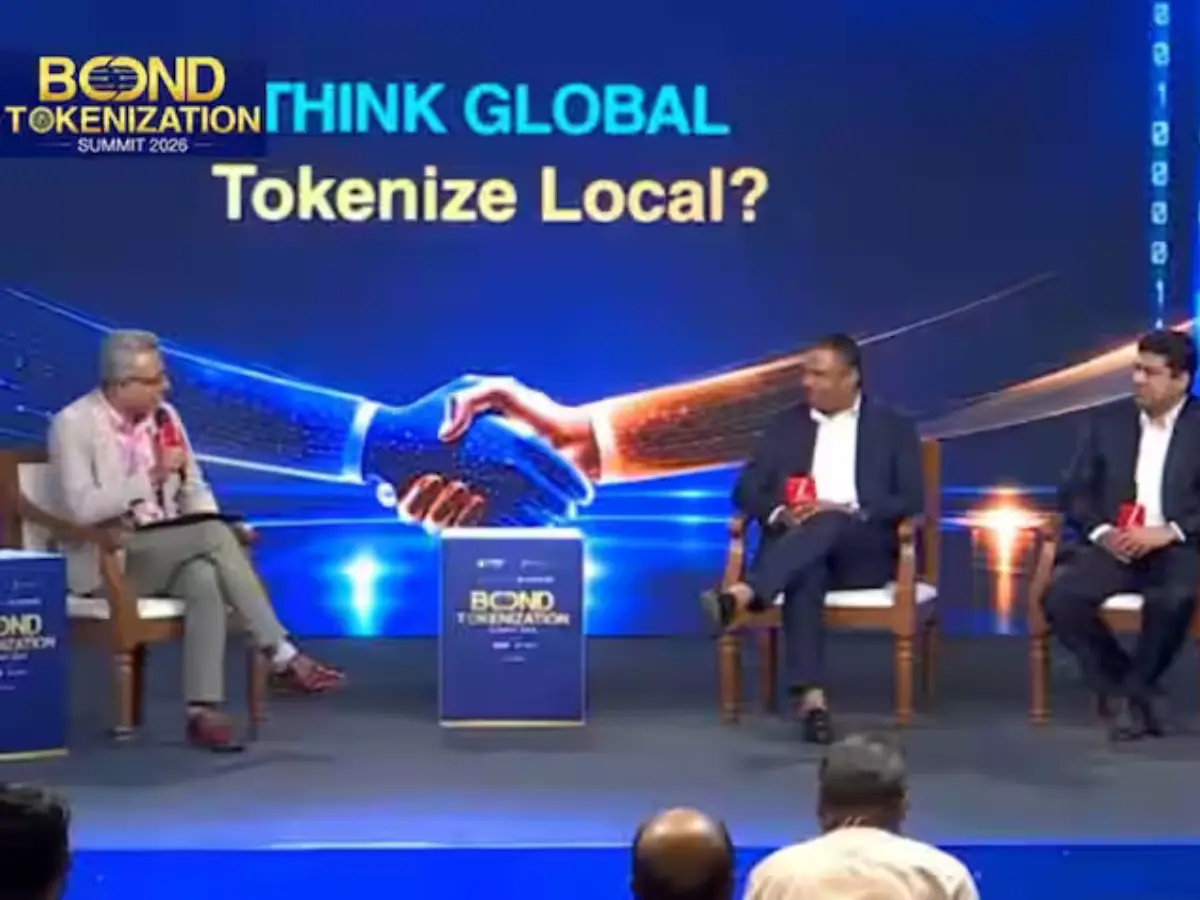
Real-world asset (RWA) tokenization could open up new ways of investing in bonds, private credit, trade receivables and other income-generating assets, according to experts speaking at theZee Business Bond Tokenization Summit 2026, organised in Mumbai on Wednesday, September 9. The Summit saw the country’s finance, policy and technology leaders come together to discuss the future of bond tokenization. The central idea was to use blockchain-based digital tokens to represent the ownership or economic value associated with real-world financial and physical assets.
Experts said the technology could potentially improve access, liquidity, price discovery and fractional participation in assets that are currently difficult for smaller investors to access. However, they also cautioned that India will need to clearly define what a token represents from a legal and regulatory perspective before the market can scale.
What is real-world asset (RWA) tokenization?
RWA tokenization broadly refers to bringing an asset or its economic value onto a blockchain-based digital infrastructure through tokens. During the discussion, Ramana Kumar A, President of ADI Foundation of Abu Dhabi, said tokenization should not be viewed only through the lens of corporate bonds.
"I think the concept is very clear. People have run behind equity. Debt is now the biggest factor," Kumar said, arguing that investors should look beyond conventional bonds at other assets capable of generating cash flows.
According to Kumar, these could include trade receivables, private credit, treasury-related cash flows and other forms of economic interests linked to real-world assets.
Trending Stories
&im=FitAndFill=(700,400)&imwidth=280&imheight=210&format=webp&quality=medium)
&imwidth=280&imheight=210&format=webp&quality=medium)
&imwidth=280&imheight=210&format=webp&quality=medium)
&imwidth=280&imheight=210&format=webp&quality=medium)
&imwidth=280&imheight=210&format=webp&quality=medium)
&imwidth=280&imheight=210&format=webp&quality=medium)
&imwidth=280&imheight=210&format=webp&quality=medium)
&imwidth=280&imheight=210&format=webp&quality=medium)
&imwidth=280&imheight=210&format=webp&quality=medium)
&imwidth=280&imheight=210&format=webp&quality=medium)
&imwidth=280&imheight=210&format=webp&quality=medium)
&imwidth=280&imheight=210&format=webp&quality=medium)
&imwidth=280&imheight=210&format=webp&quality=medium)
&imwidth=280&imheight=210&format=webp&quality=medium)
&imwidth=280&imheight=210&format=webp&quality=medium)
&imwidth=280&imheight=210&format=webp&quality=medium)
&imwidth=280&imheight=210&format=webp&quality=medium)
&imwidth=280&imheight=210&format=webp&quality=medium)
&imwidth=280&imheight=210&format=webp&quality=medium)
&imwidth=280&imheight=210&format=webp&quality=medium)
&imwidth=280&imheight=210&format=webp&quality=medium)
&imwidth=280&imheight=210&format=webp&quality=medium)
&imwidth=280&imheight=210&format=webp&quality=medium)
&imwidth=280&imheight=210&format=webp&quality=medium)
&imwidth=280&imheight=210&format=webp&quality=medium)
&imwidth=280&imheight=210&format=webp&quality=medium)
&im=FitAndFill=(700,400)&imwidth=280&imheight=210&format=webp&quality=medium)
&imwidth=280&imheight=210&format=webp&quality=medium)
&imwidth=280&imheight=210&format=webp&quality=medium)
&imwidth=280&imheight=210&format=webp&quality=medium)
&imwidth=280&imheight=210&format=webp&quality=medium)
&imwidth=280&imheight=210&format=webp&quality=medium)
&imwidth=280&imheight=210&format=webp&quality=medium)
&imwidth=280&imheight=210&format=webp&quality=medium)
&imwidth=280&imheight=210&format=webp&quality=medium)
&imwidth=280&imheight=210&format=webp&quality=medium)
"We should not just focus on bonds. Focus on trade receivables. Focus on cash flow arbitrage. Focus on treasury tokens," he said.
Kumar said the broader opportunity could create new liquidity and investment avenues for investors who currently have relatively limited choices between bank deposits, savings products and more complex wealth-management offerings.
Also read: Bond Tokenization Summit 2026: Market leaders map out the future of digital debt in Mumbai
How could tokenization change the bond market?
Zubin Goyal, CEO and Director of Exchange One, said bond tokenization could be particularly significant for India because many bonds currently have limited liquidity and price discovery. Goyal, who previously worked as a bond trader, said the market for government securities and corporate bonds has significant potential for wider participation.
"If you're able to tokenize these assets, open up the access to this market, to not just institutional investors, but high net worth investors, retail investors, foreign investors, and just make the sort of guardrails a little bit more relaxed," he said, clarifying that he was referring to participation rather than relaxing compliance requirements. According to Goyal, greater participation could improve price discovery and liquidity in bonds.
He said tokenization could also expand the utility of a bond after it has been purchased. A tokenized bond, for example, could potentially be used as collateral to borrow funds.
"If that bond is sitting in my ledger, I can take that anywhere," Goyal said. He gave an example of an investor using a Rs 10 lakh bond as collateral to borrow against it. Because the asset is tokenized, borrowing periods could potentially become more flexible, allowing for shorter-duration funding rather than requiring conventional three-month, six-month or one-year borrowing periods, he said. "The settlement cycle, everything gets accelerated," Goyal added.
Could tokenization improve access to credit for SMEs?
Prashant Nikam, co-founder and Chairman of Sapio Analytics, said bond tokenization could potentially help deepen and widen India's financial markets, particularly by improving access for smaller businesses.
According to Nikam, government and highly rated blue-chip issuers generally do not face major difficulties in accessing the bond market through existing systems. "It is the SME who hasn't been able to really access the bond market," he said. Nikam said tokenization and fractionalisation could potentially help bring a wider pool of investors into SME financing.
"If we can use this new methodology, this new technology, to give them better access to the market, to raise finance, and to get more wider participation through getting that bond fractionalized, I think that will be the real great value we can unleash in a bond tokenization market," he said. However, he acknowledged that attracting investors to SME-linked credit would remain challenging because of credit-risk concerns.
"If we can fractionalize the bonds, then we might be able to attract a new set of investors who may be willing to take the chances on this new asset class," Nikam said, while adding that the process would not necessarily be easy. He said the benefits could outweigh the cost of building the required blockchain infrastructure if the system succeeds in bringing SMEs and new investors into the market.
Beyond bonds: Trade receivables and private credit
Kumar said some of the biggest opportunities in RWA tokenization may lie outside traditional corporate bonds. He cited examples from overseas markets involving trade receivables, private credit and other cash-flow-linked assets.
For example, Kumar described a model in which receivables from fintech companies were pooled through a special purpose vehicle, or SPV, to create what he called a "treasury token".
He said such structures could create investment products linked to short-duration receivables rather than requiring investors to rely solely on conventional corporate bonds.
Kumar also pointed to private credit and trade-related financing as areas that could potentially be replicated in India.
"These are the assets that should go into tokenization," he said while discussing suppliers that wait 90 to 120 days to receive payments. The opportunity, according to Kumar, lies in bringing economic interests and cash flows associated with such assets onto digital infrastructure.
Fractional investing and faster movement of capital
One of the major potential benefits of tokenization is fractionalisation, which could allow investors to participate in assets in smaller units. Goyal compared the potential impact of tokenization with the way digital infrastructure increased the speed and convenience of payments in India.
"Nothing in the existing infra has been replaced, but you've been able to add a level of speed, a level of velocity to sort of daily life," he said, referring to the evolution of India's digital financial infrastructure.
According to Goyal, tokenization could similarly add "velocity, discoverability, fractionalization" to financial markets and real-world assets. The underlying idea, he said, is that faster circulation and movement of capital could potentially improve liquidity across the financial system.
Token ownership versus economic value: The key legal question
Despite the potential benefits, experts said one of the most important questions for India is determining exactly what ownership of a token represents. Kumar said the industry cannot treat all forms of tokenization in the same way. "We should understand, while we are talking tokenization very easily, let's understand what is a token," he said.
"Are we talking about a legal ownership? Are we talking about a financial instrument? Are we talking about a token being an economic value? It's important what it is, so we know what regulation is needed."
According to Kumar, direct tokenization of legal ownership of physical assets could create complex legal and jurisdictional questions. He gave the example of a coffee-related asset, where questions could arise over responsibility if there were disputes over the quality of the underlying product.
Kumar said his experience had led to a different approach: instead of directly tokenizing legal ownership of an underlying asset, structures could potentially place assets into an SPV and create a tokenized fund or instrument linked to their economic value. "You're not buying the legal ownership of the tokens. You're buying the economic value of the tokens and that's how you create liquidity," he said.
Can India use its existing financial infrastructure?
Goyal argued that tokenization does not necessarily require India to replace its existing financial system.
"I don't think you need fresh regulation, you don't need fresh institutions, you don't need fresh platforms to come out," he said, adding that regulators, exchanges, market infrastructure providers and other existing participants could potentially continue to operate while tokenization adds another layer to the system.
However, Kumar took a more nuanced view, saying that existing frameworks may not be sufficient where tokens represent direct legal ownership of assets. "If you talk about asset ownership, you cannot have existing systems work. It will not work," he said.
"You need to have new regulation that defines what is a token legal ownership means."
The discussion highlighted that the regulatory approach may depend on the nature of the underlying asset and what rights the token holder receives.
Zubin Goyal also pointed out that fungible assets such as bonds may be easier to structure than unique or bespoke physical assets.
A unit of a particular government security or bond can be interchangeable, whereas different lots of physical commodities such as coffee may have different characteristics and associated risks, he said.
Why bonds could be India's starting point
Nikam said beginning with bond tokenization could be a practical way for India to build investor awareness and experience before expanding tokenization into more complex real-world assets such as infrastructure. "I think the government is doing the right thing. They have started off with a bond tokenization," he said.
"To tokenize real world asset, infrastructure asset, is gonna be a little more complicated. So before we can go there, I think the bond tokenization will probably set the stage, will create investor awareness."
He said tokenization could later potentially be extended to infrastructure financing and municipal bonds.
Infrastructure projects require capital at different stages, including planning and design, construction, and operations and maintenance, Nikam said. Different financing structures could potentially be designed for different stages to access capital more efficiently.
The road ahead for India
The experts agreed that RWA tokenization could create new investment and financing possibilities, but its success would depend on balancing innovation with governance.
Nikam said India should not lose sight of governance while pursuing efficiency.
"We have embarked on a new journey," he said. “Governance and efficiency will have to be finally balanced. So I think we must not lose sight of governance, just to push efficiency agenda.” Kumar, meanwhile, said India should look beyond simply copying global models and develop structures that work within clear legal and financial frameworks.
The opportunity, according to the panel, could extend from tokenized bonds to SME financing, private credit, trade receivables and other cash-flow-generating assets.
For investors, tokenization could eventually mean access to a wider range of assets in smaller units. For borrowers and businesses, it could potentially open new channels for raising capital. And for financial markets, supporters believe it could improve liquidity, price discovery and the speed at which capital moves through the system.
But before that opportunity can fully take shape, India will have to answer a fundamental question: when an investor buys a token, what exactly do they own—the underlying asset, a financial instrument or simply its economic value? The answer could determine how India's real-world asset tokenization market develops.