Mining giants collaborate on eco-friendly dual fuel trucks to slash emissions

Mining giants collaborate on eco-friendly dual fuel trucks to slash emissions
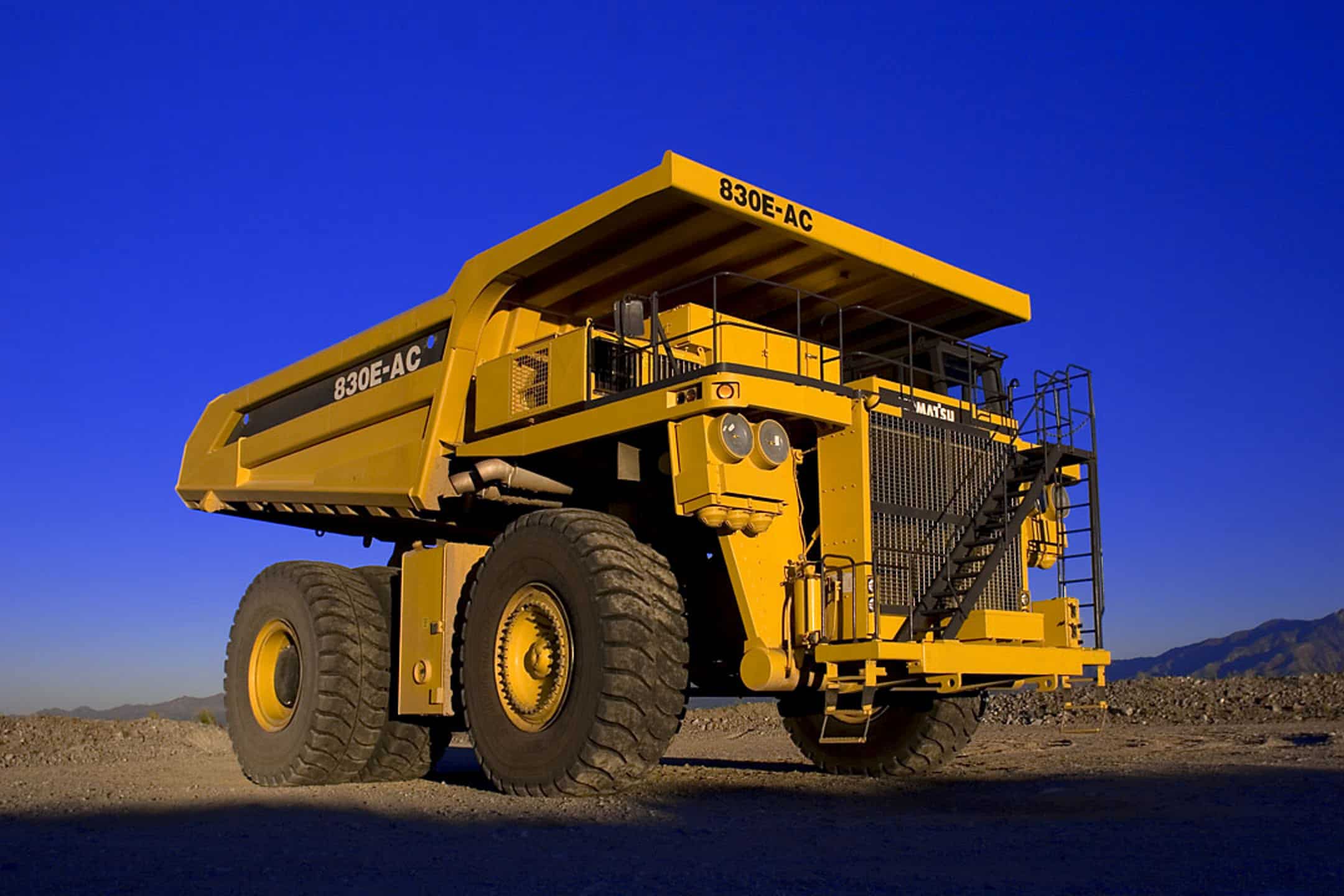
Vale, Komatsu, and Cummins have unveiled plans to develop innovative Dual Fuel haul trucks. This revolutionary initiative, announced as part of the newly launched Dual Fuel Program, aims to transform the mining industry by significantly reducing carbon emissions through the use of a unique ethanol-diesel blend.
The collaboration between these mining and engineering powerhouses marks a pivotal moment in the sector's ongoing efforts to combat climate change. By retrofitting existing diesel engines in large-capacity trucks to operate on a mixture of ethanol and diesel, the program promises to slash direct CO2 emissions by an impressive 70% compared to conventional diesel engines.
These state-of-the-art trucks, boasting capacities between 230 and 290 tons, will be the first of their kind globally to harness ethanol as a primary fuel source. This pioneering approach not only showcases the companies' commitment to environmental stewardship but also sets a new standard for sustainable practices in the mining industry.

For Vale, this initiative plays a crucial role in achieving its ambitious environmental targets. The Brazilian mining giant has pledged to reduce its carbon emissions by 33% by 2030, with the ultimate goal of achieving carbon neutrality by 2050. The transition to ethanol-powered vehicles represents a significant stride towards these objectives, particularly given Brazil's well-established ethanol production and distribution infrastructure.
José Baltazar, Vale's Director of Engineering for Mine and Plant Operations, emphasised the critical nature of this project, stating, "Eliminating diesel from our operations is paramount to reaching our decarbonization goals." This sentiment was echoed by Benjamin Stear, Komatsu's Director of Engineering, Design, and Technology, who highlighted the partnership's potential to meet collective carbon reduction targets across the industry.
The development and implementation of these innovative engines will unfold over the next two years. Cummins, a global leader in power solutions, will spearhead the manufacturing process. Luke Mosier, Cummins' Mining Product Planning and Strategy Manager, underscored the significance of this collaboration, noting its potential to drive innovation and substantially reduce the carbon footprint of mining operations worldwide.
&imwidth=180&imheight=135&format=webp&quality=medium)
US midterms 2026: Ken Paxton may have Elon Musk to thank if he wins the Texas Senate race. Here's why
&im=FitAndFill=(700,400)&imwidth=180&imheight=135&format=webp&quality=medium)
Salman Khan-Karisma Kapoor reunion at Koffee with Karan season 9 sparks nostalgia: A look at their most loved films
&imwidth=180&imheight=135&format=webp&quality=medium)
Ankita Bhandari murder case: Parents meet CBI, seek impartial investigation
&imwidth=180&imheight=135&format=webp&quality=medium)
A secret code, a midnight escape and 300 deaths: The Russian officer who turned on Putin
&imwidth=180&imheight=135&format=webp&quality=medium)
US midterms 2026: Alexandria Ocasio-Cortez donates $1 million to Abdul El-Sayed’s as Michigan race heats up
&im=FitAndFill=(700,400)&imwidth=180&imheight=135&format=webp&quality=medium)
Who left the White House podium the fastest? Press secretaries with the shortest stints
&imwidth=180&imheight=135&format=webp&quality=medium)
After ODIs, T20Is and Tests, cricket set to introduce a new format: All you need to know
&imwidth=180&imheight=135&format=webp&quality=medium)
Iranian woman, 23, handed death sentence for ‘blasphemy’ in social media post; appeals for help
&imwidth=180&imheight=135&format=webp&quality=medium)
US budget deficit nears $2 trn as tariff refunds rise; debt crosses $40 trn
&imwidth=180&imheight=135&format=webp&quality=medium)
China tells Israel to stop West Bank settlements, calls Palestine issue ‘historic injustice’
&imwidth=180&imheight=135&format=webp&quality=medium)
BCCI names India’s ODI squad for New Zealand tour, Gill and Iyer to share captaincy
&imwidth=180&imheight=135&format=webp&quality=medium)
Pakistan to head IMF, World Bank boards after 74 years amid persistent economic crisis
&imwidth=180&imheight=135&format=webp&quality=medium)
Gravitas | Iran threatens to hit key bridges in 7 countries if US resumes strikes
&imwidth=180&imheight=135&format=webp&quality=medium)
CJP's Tiranga march: People hit streets of Delhi again, reiterate call for Gyanesh Kumar's resignation
&imwidth=180&imheight=135&format=webp&quality=medium)
China responds to Trump's Press Secretary Katie Zacharia after toilet remark: 'Visit China more often'
&imwidth=180&imheight=135&format=webp&quality=medium)
Here’s who is eyeing the White House press secretary role after Katie Zacharia’s exit
&im=FitAndFill=(700,400)&imwidth=180&imheight=135&format=webp&quality=medium)
Inside Tesla's Roadster: 10 features of Elon Musk's 'flying car' that push the limits of electric vehicles | In Pics
&imwidth=180&imheight=135&format=webp&quality=medium)
Russian woman and Bihar boy's love story goes viral after she reaches India to marry him
&imwidth=180&imheight=135&format=webp&quality=medium)
India's Gen Z rebellion: Can the 'Lehra Do Tiranga' movement reshape the political order? | The Verdict

US ends automatic work permit extensions; Indian workers lose 540-day safety net: What it means
&imwidth=180&imheight=135&format=webp&quality=medium)
'I don’t trust anybody', says Trump when asked about Netanyahu
&imwidth=180&imheight=135&format=webp&quality=medium)
Oregon school shooting: 16-year-old shooter identified, used shotgun bought by mother; Trump praises bystander who shot gunman as 'great hero'
&imwidth=180&imheight=135&format=webp&quality=medium)
Abhishek Sharma sets all-time record for most T20I sixes in a year
&imwidth=180&imheight=135&format=webp&quality=medium)
‘My president, I mean my husband’: Trump's new press secretary Katie Zacharia's first briefing goes off the rails in 14 minutes
&imwidth=180&imheight=135&format=webp&quality=medium)
Iran rejects Saudi allegations of backing Houthi attacks, renews mediation offer
&imwidth=180&imheight=135&format=webp&quality=medium)
India’s naval priorities: Ex-Navy Chief calls for third aircraft carrier, more warships and submarines

Not Khan but Pal: Why did Imran Khan choose his mother's surname over his father's? Family tree explained
&imwidth=180&imheight=135&format=webp&quality=medium)
Did Trump just fire Katie Zacharia as his new press secretary? Here’s what he said
&imwidth=180&imheight=135&format=webp&quality=medium)
'We are not sitting in ivory towers, we are aware': SC issues notice to Rahul Gandhi, Akhilesh Yadav
&imwidth=180&imheight=135&format=webp&quality=medium)
Group's fibre-optic drones pose new challenge for Israel
&imwidth=180&imheight=135&format=webp&quality=medium)
Vijay Deverakonda and Rashmika Mandanna's Ranabaali X Review: Netizens call it history-rich but overstuffed
&imwidth=180&imheight=135&format=webp&quality=medium)
Israel examines Russia's Shahed-type drones sent by Ukraine to combat Iran | Gravitas
&imwidth=180&imheight=135&format=webp&quality=medium)
Ukraine drone strike disrupts 22 Russian airports, over 200 flights
&im=FitAndFill=(700,400)&imwidth=180&imheight=135&format=webp&quality=medium)
New Friday OTT releases (October 16, 2026): DC, Sacrifice, Aasha- 6 new movies and TV shows coming on Netflix, Zee 5, Prime Video and more
The choice of ethanol as a key component in this dual-fuel system is particularly strategic for operations in Brazil. The country's long-standing embrace of ethanol as an alternative fuel source, coupled with its robust production and distribution network, provides a solid foundation for the program's success. Ludmila Nascimento, Vale's Director of Energy and Decarbonization, pointed out that this initiative not only contributes to emission reduction but also bolsters Brazil's biofuel industry, creating a win-win scenario for both environmental and economic interests.
As the mining industry faces increasing pressure to adopt more sustainable practices, this collaboration between Vale, Komatsu, and Cummins sets a new benchmark for environmental responsibility. The Dual Fuel Program demonstrates that significant reductions in carbon emissions are achievable through innovative engineering and cross-industry partnerships.
The success of this initiative could have far-reaching implications beyond the mining sector. As other industries grapple with the challenge of reducing their environmental impact, the lessons learned and technologies developed through this program could potentially be adapted and applied in various heavy-duty industrial applications.
Moreover, this project underscores the growing trend of major corporations taking proactive steps to address climate change, rather than waiting for regulatory pressures. By voluntarily pursuing such ambitious environmental goals, Vale and its partners are positioning themselves as leaders in the global transition to a low-carbon economy.
As the Dual Fuel Program moves forward, all eyes will be on the results of the initial testing phase. If successful, this innovative approach to powering mining equipment could spark a revolution in how the industry approaches its energy needs, potentially paving the way for even more ambitious sustainability initiatives in the future.

