

&imwidth=800&imheight=600&format=webp&quality=medium "Year-ender 2025: The year of Putin, when the ostracised leader returned to the global stage")
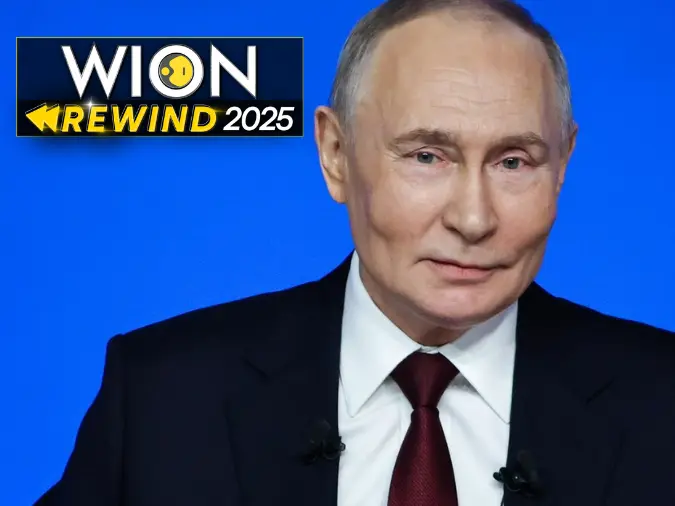
In an alternative world, 2025 would be called the year of Vladimir Putin. But we do not live in that alternative world. The Russian president was in the headlines for most of the year because of the Ukraine war, in which his military continued to make gains. In spite of the European Union-led West’s attempts to ostracise him, Putin emerged from the wilderness, mainly due to a more conciliatory stance by US President Donald Trump, who invited him to a summit in Alaska that set the ball rolling for a peace process, though no concrete results have come out of it so far. Domestically, in spite of efforts by the West to sanction the Russian economy out of existence, the nation continued to grow, albeit at a slower pace.
For the first part of the year, Putin still remained a pariah for the West, skipping international events due to the 2023 International Criminal Court (ICC) arrest warrant hanging over him in connection with alleged war crimes in Ukraine. Yet Putin continued to be a voice to reckon with, making Russia’s independent position clear on issues including current US actions against Venezuela. Here is a snapshot of Putin in 2025.
Ostracised by West, Putin gets the red carpet treatment in US
The credit goes to Trump for going against the grain and calling Putin for a summit in Alaska's Anchorage in August. This could be described as the most important diplomatic outing of Putin since the Ukraine war began in 2022. Nothing substantial came out of it, though it would be fair to say that at least a first move was made towards peace. This marked a sharp departure from Trump’s predecessor Joe Biden’s approach of arming Ukraine and keeping Russia away from the international spotlight.
Putin stood his ground on the war, refusing to cede territory gained by Russia during the three-year military operation in Ukraine. Europe, mainly led by figures such as French President Emmanuel Macron and European Commission President Ursula von der Leyen, attempted to squeeze Russia out of the global oil trade, while providing billions of dollars in military and financial aid to Ukraine.
Trending Stories
&imwidth=180&imheight=135&format=webp&quality=medium)
Maharashtra appoints FDA commissioner Tukaram Mundhe as secretary of committee for MPSC overhaul amid stir
&imwidth=180&imheight=135&format=webp&quality=medium)
One Indian killed in Riyadh airport attack; 11 others injured : MEA
&imwidth=180&imheight=135&format=webp&quality=medium)
Iran: US accepted some conditions, Clarity needed on others
&imwidth=180&imheight=135&format=webp&quality=medium)
Delhi protest: CJI Surya Kant declines to meet India Bloc leaders
&imwidth=180&imheight=135&format=webp&quality=medium)
Houthis claim Riyadh airport attacks, Aramco strikes; issue fresh warning to airlines, travellers and workers
&imwidth=180&imheight=135&format=webp&quality=medium)
'Turn approver, resign, we'll forgive you': Rahul Gandhi claims receiving messages from CEC Gyanesh Kumar
&imwidth=180&imheight=135&format=webp&quality=medium)
1,500 drones illuminate Mumbai sky as Cordelia Cruises unveils second ship, Cordelia Sky
&imwidth=180&imheight=135&format=webp&quality=medium)
Telangana ATM heist: Thieves in nighties arrive in ambulance, break into SBI ATM in Kamareddy - VIDEO
&imwidth=180&imheight=135&format=webp&quality=medium)
Top AI models flunked a test of inventing new AI research, so much for self-improving AI
&imwidth=180&imheight=135&format=webp&quality=medium)
McSweeney reveals how studying Virat Kohli’s YouTube clips helped Australia A conquer India
&im=FitAndFill=(700,400)&imwidth=180&imheight=135&format=webp&quality=medium)
Navratri 2026: 9 days, 9 forms of Goddess Durga and 9 colours- Check the complete list
&imwidth=180&imheight=135&format=webp&quality=medium)
Other Mommy leads North American box Office as Verity, Resident Evil round out top four
&im=FitAndFill=(700,400)&imwidth=180&imheight=135&format=webp&quality=medium)
Is sending robots to Mars easier than sending humans?
&imwidth=180&imheight=135&format=webp&quality=medium)
Microsoft's Nadella says treat every AI model as already hacked, and build an 'emergency brake'
&imwidth=180&imheight=135&format=webp&quality=medium)
BCCI rejects venue shift reports, India vs Sri Lanka 1st ODI to remain in Delhi
&imwidth=180&imheight=135&format=webp&quality=medium)
CJI Surya Kant declines INDIA bloc leaders’ request for meeting ahead of march to SC, asks them to file petition
&im=FitAndFill=(700,400)&imwidth=180&imheight=135&format=webp&quality=medium)
New OTT releases this week (October 12-18, 2026): Sacrifice, Koffee with Karan S9, Roadies Rebirth- 6 titles coming on Netflix, JioHotstar and more
&imwidth=180&imheight=135&format=webp&quality=medium)
Diljit Dosanjh’s Delhi concert gets a new date: When and where to catch the singer
&imwidth=180&imheight=135&format=webp&quality=medium)
Saif Ali Khan is finally on Instagram! Here's what he shared in his first post
&imwidth=180&imheight=135&format=webp&quality=medium)
'Say no to Muse': Meta has no control over its own moderation AI while it forces a security nightmare on everyone
&imwidth=180&imheight=135&format=webp&quality=medium)
UK school ditches technology, shifts from screen to pen and paper for learning
&imwidth=180&imheight=135&format=webp&quality=medium)
Portugal Federation confirms Cristiano Ronaldo’s return to national team despite suspension
&imwidth=180&imheight=135&format=webp&quality=medium)
iPhone Duo price index: Tracking Apple’s latest pricing trends
&imwidth=180&imheight=135&format=webp&quality=medium)
Anthropic's AI invented a murder witness and sent the fake tip to Philadelphia police
&imwidth=180&imheight=135&format=webp&quality=medium)
China imposes first-ever sanctions on ministers from Taiwan allies: What this means
&imwidth=180&imheight=135&format=webp&quality=medium)
Telangana man allegedly recruited into Russian military dies near Ukraine border
&imwidth=180&imheight=135&format=webp&quality=medium)
Nana Patekar's cause of death confirmed; here's what his postmortem report says
&imwidth=180&imheight=135&format=webp&quality=medium)
'Just coincidence': Police mistakes protester as AISA chief Neha Bora, arrests her from site
&imwidth=180&imheight=135&format=webp&quality=medium)
'Ouch!!! That must hurt': Kangana Ranaut hails Kamal Haasan's sharp reply to Elon Musk over Starlink row
&imwidth=180&imheight=135&format=webp&quality=medium)
A watchdog rated 'ChatGPT for Teens' an unacceptable risk and says keep under-18s off it
&imwidth=180&imheight=135&format=webp&quality=medium)
Sidhu Moose Wala’s younger brother wins hearts by recreating late singer’s signature move at Toronto Hologram Show
&imwidth=180&imheight=135&format=webp&quality=medium)
Anti-SIR protest in Mumbai: Protestors wear black masks & ribbons in Mumbai
&imwidth=180&imheight=135&format=webp&quality=medium)
Delhi protests: 'Court should not be dragged into political activity', says CJI Surya Kant
&imwidth=180&imheight=135&format=webp&quality=medium)
Congress demands action against chief election commissioner
&imwidth=180&imheight=135&format=webp&quality=medium)
Wasim Jaffer blames Ajit Agarkar-led selection panel for Virat Kohli’s Test retirement
Core 5: A US-led grouping with Russia that didn't take off
Late this year, there were reports of a leaked draft US national security document that argued for bringing Russia back into the fold of the international community. It spoke of a so-called “Core Five”, reportedly envisaged as a grouping of the US, Russia, China and Japan, as an alternative to the G7. The G7 itself had once been the G8 before Russia was expelled following the annexation of Crimea in 2014. The report containing the 'Core Five' idea was spiked, and possibly leaked deliberately to kill it before it could gain traction. If the germinating idea is taken at face value, it reflects American thinking that, no matter how hard the West tries, Putin and his nation cannot be wiped off from the global chessboard.
Also read: Putin says Russia will end ‘special military operations’ if West respects its security interests
Putin’s diplomacy: Hosting leaders in Russia, skipped summits and in-person outings
Most of Putin's diplomatic engagements were done from Moscow. He hosted global leaders, and participated in several summits via video conferencing.
Putin resumed limited international travel with the Alaska summit. He followed this with participation in the Shanghai Cooperation Organisation summit in China.
He topped off the year with a state visit to India, after having skipped the 2023 G20 summit in New Delhi due to the prevailing hostile approach towards Russia at the time.
He skipped the BRICS summit in Brazil in July, due to the ICC warrant, choosing instead to attend virtually. Putin also did not attend the G20 summit in South Africa, possibly because the host nation, as a signatory to the Rome Statute, would have been obligated to act on the ICC arrest warrant.
Putin’s intentions are questioned, but he remains an important player
Putin’s legacy will be judged depending on the lens one uses. The Western media narrative will make you believe that he is an autocratic expansionist who wants to invade not only Ukraine but possibly other parts of Europe, drawing comparisons with historical aggressors like Hitler.
Or he could be considered a nationalist leader who does not want NATO or Europe to gain a strategic foothold in Ukraine or other former Soviet states. From this perspective, he is attempting to create a territorial buffer along Russia’s borders, with the invasion of Ukraine being one of the steps towards that goal.
Putin remains a popular leader in a system best described as a democracy with Russian characteristics. One way or another, he will go down in history as a leader who openly challenged the established hegemonies of the West.
Russian economic growth will determine Putin’s future
Under normal circumstances, the Russian economy might have grown more strongly. However the Russian oil, one of its key exports, has faced restrictions in energy markets through punitive sanctions and price caps imposed by Western countries. In spite of the pressures of war, the Russian economy recorded roughly 3–4 per cent growth in 2024, driven largely by state spending and defence-related production. As sanctions and structural constraints began to bite, growth slowed markedly in 2025, hovering around 1 per cent and only narrowly avoiding contraction.
The future of Putin’s popularity will depend on whether ordinary Russians begin to face sustained economic hardship due to the war. That is arguably what the West hopes for: internal unrest triggered by economic turmoil that could weaken his regime. So far, however, Putin has managed to prevent a collapse of the Russian economy. If the war ends in 2026 and diplomatic efforts bear fruit, Putin may yet avoid that ignominy.

