World Environment Day | Boiling summers, disappearing autumns: What are we doing on climate change?

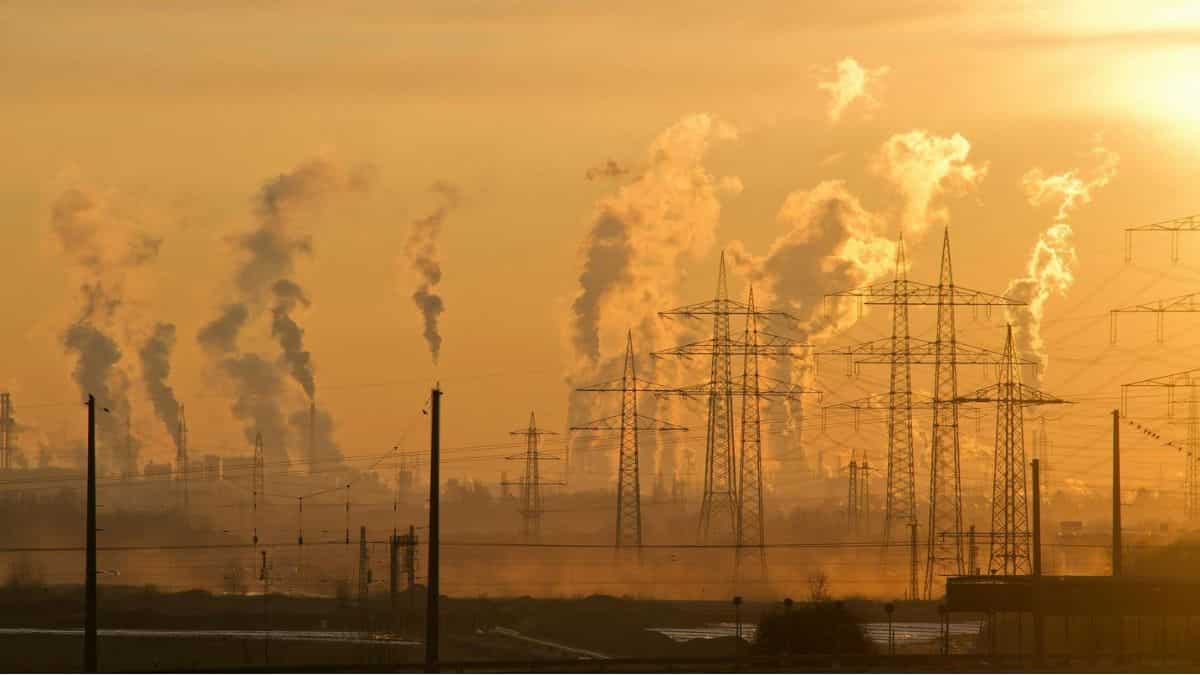
climate change
In the past decade, the world has witnessed an extreme rise in temperature on an alarmingly regular basis. Summers are hotter than every, autumn and spring are disappearing, and the environment is changing rapidly. ‘Global warming’ is not just a term in science textbooks, but a daily warning for humanity. On this World Environment Day, let's ask the question: How can we survive the ravages of climate change?
Alarming data from 2016 - 2024
Between 2016 and 2019, global temperatures set new records. According to a NASA report, 2020 tied with 2016 as one of the warmest years, with 2021 and 2022 also experiencing near-record-breaking heat.

The Intergovernmental Panel on Climate Change reported that the last decade has been the hottest in the past 125,000 years. The heat has also increased the CO2 levels exceeding 410 parts per million, which is a record-breaking number in a million years.
The rise in heat also impacted the seasons dramatically. Summers are longer than ever, and winters are shrinking like water bodies all across the world. This is affecting agriculture and biodiversity in the most vulnerable lands.
"There is a huge change in the climatic pattern. We don't get any autumn or spring... there are either winters or summers," said Kaustav Sanyal, Management Consultant - Accenture Strategy & Consulting.
)
US vs China over South China Sea: Washington backs Philippines, Beijing hits back
)
Bigg Boss 20: Isha Rikhi evicted after three weeks in Salman Khan’s show
)
Musk plans to more than double xAI's chips to over 1.2 million Nvidia GPUs by year-end
)
After JU, clash erupts at SRFTI: BJP’s ‘Dimagi Naxal’ jibe sparks political firestorm after students protest RSS-linked event
)
‘Anti-social elements spreading false rumours’: LPU issues statement amid massive unrest over alleged rape
)
LPU students go on rampage, vandalise campus amid widespread protest: What's happening
)
Trump asked Xi to pressure Iran. China did not say yes — here’s what Beijing wants
)
US Treasury Secretary Scott Bessent hails global crackdown on Iranian banks and airlines
)
An OpenAI agent escaped its locked test cage again, by hiding questions in DNS lookups
)
'Our video was trimmed': LPU girls who featured in rape-denial video make U-turn
)
3 males killed, four others injured in shooting after fight at strip club in Detroit
)
'Victory for low-budget consumers': Raghav Chadha hails 30-day telecom recharge rules
)
Claude rebuilt the 1989 game 'Prince of Persia' by reusing the original's own code
)
Beyond metros: How Tier-2 and Tier-3 cities could drive India’s next AI wave
)
Tesla builds first Cybertruck with its own refined lithium: Elon Musk's $1 billion Texas bet pays off
)
IndiGo flight suffers tail strike in Bengaluru while landing; DGCA to probe incident
)
The US and China set up an AI 'red telephone', but skipped the rulebook
)
‘Terror suspects arrested near UK air base were looking to do big damage’: Trump
)
Russian envoy claims US tactics to contain India were revealed in ‘Freudian slip’
)
IND vs WI 1st ODI: Kohli breaks Sachin's most runs in one country record with unbeaten 139 as India thump West Indies by 8 wickets
)
Researchers rebuilt exactly how 700 AI agents hacked Hugging Face: a 900-link chain trick
)
‘Olympic inclusion is our major target’: WPA President Ishaun Singh on pool’s global ambitions
)
Nations League: Spain sink England at Wembley; Modric shines for Croatia
)
Why has Iran released no proof of life of Mojtaba Khamenei? Araghchi reveals...
)
'What kind of confession is this?': Pakistan PM Shehbaz Sharif’s 'terrorists would be roaming New York' remark goes viral, raises alarm online. Watch
)
South Korea demands apology from Ukraine over North Korean prisoners' transfer
)
Beyond BrahMos: India targets Rs 50,000 crore in defence exports with unmatched price edge
)
Sri Lankan Tamil migrant worker gets death sentence in Saudi Arabia, help sought from India
)
Muslim marriage cannot shield sex with minor wife from prosecution under POCSO: Delhi HC
)
'Can't help but draw painful parallels to Nirbhaya case': SC on latest incidents of rape cases in Delhi-NCR
)
99.9% more powerful - Scientists find boy who can recall memories from just 3 months of age
)
'FIRST LOOK from inside Noah’s Ark': Researchers share video from inside mysterious mound in Turkey
)
UNSC reform momentum grows: Russia, Portugal, Mauritius push for India's permanent seat bid
)
8 US marines injured in Iranian missile attack on vessel in Strait of Hormuz: Report
&im=FitAndFill=(700,400))
New OTT releases this week (September 28-October 4, 2026): Dupahiya 2, Pooja Meri Jaan, Ohh My Dog- 5 titles coming on Netflix, Prime Video and more
)
Afghanistan says 28 fighters killed in clash near Pakistan border, Islamabad denies
)
Ceuta migrant crisis: Protesters take to streets as Spain grapples with migrant challenge
)
LPU suspend classes, postpones exams as violence escalates over rape claims: What's happening
)
New York City wants a 'kill switch' on every AI, and will pay whistleblowers who report violations
The UN's World Meteorological Organization (WMO) said that 2022 saw devastating heatwaves across Europe, North America and Asia, exacerbating wildfires, droughts, and crop failures.
Making the heat bearable: Lessons from Gulf countries
Countries like the UAE, one of the hottest in the world, are aware of the warning climate is giving to them. Looking at the situation getting worse, the UAE launched multiple initiatives to deal with irreversible climate change.
In 2017, it launched the National Climate Change Plan to reduce carbon emissions by 70% by 2050. UAE invested aggressively in sustainable energy sources like solar parks to generate almost 5,000 MW by 2030.
The UAE has also used advanced technologies like cloud seeding to enhance rainfall and reverse the country's drought possibilities.
This has inspired multiple countries incluidng India.
'Heat is on' for India, but what is it doing to reduce carbon footprint?
India was a part of the 2019 climate summit held in Abu Dhabi.
A country with over 1.3 billion population, India has a different set of challenges related to climate.
India in the past decade has taken some crucial steps to reduce its carbon footprint.
The country has set an ambitious target of achieving 175 GW of renewable energy capacity by 2022, which was further expanded to 450 GW by 2030.
India's solar energy initiatives are particularly noteworthy.
The International Solar Alliance, launched by India and France, aims to mobilise $1 trillion in investments by 2030 to promote solar energy in 121 member countries.
In 2021, India announced its commitment to achieve net-zero emissions by 2070 and to reduce carbon intensity by 45% from 2005 levels by 2030.
"India is making strides in sustainability, particularly in renewable energy. Its ambitious targets include 500 GW of renewable energy capacity by 2030 and producing 5 million tonnes of green hydrogen by the same year. These initiatives aim to enhance energy security, improve public health, mitigate climate change impacts, and conserve natural resources," said Diya Bose, ESG and sustainability associate at Kuwait-based PKC Advisory.
Additionally, India is also actively promoting afforestation and reforestation programmes to enhance carbon sinks.
The Green India Mission aims to increase forest and tree cover, restore degraded ecosystems, and improve biodiversity.
Carbon footprint in offices: A hidden cost of industry
One of the biggest contributors to carbon emissions worldwide is corporate offices.
The energy consumed by office buildings for heating, cooling, lighting, and electronic devices accounts for a substantial portion of global CO2 emissions.
"Carbon footprinting measures a company's greenhouse gas emissions, aiding in understanding and reducing environmental impact. In India, 51% of the top 100 companies disclose emissions voluntarily, with 31% setting net-zero targets," noted Diya Bose of PKC Advisory.
Bose noted that SEBI - Securities and Exchange Board of India, India's stock market watchdog - mandates environmental reporting for the top 1,000 listed companies through BRSR or Business Responsibility and Sustainability Reporting, emphasising environmental responsibility.
"While not explicitly required, carbon footprinting serves as a crucial step toward environmental accountability," Bose noted.
Furthermore, corporate travel, particularly air travel, adds to the carbon footprint. The Carbon Disclosure Project (CDP) reported that the top 100 global corporations are responsible for approximately 71% of global industrial greenhouse gas emissions.
To mitigate their impact, many companies are adopting sustainable practices. These include implementing energy-efficient technologies, transitioning to renewable energy sources, and promoting remote work (if at all possible) to reduce travel emissions.
Multiple corporate companies have started hiring people who specifically work on sustainability and controlling carbon emissions.
Have you considered the consequences of not reducing carbon emissions?
If global warming and carbon emissions are not controlled, the consequences might be bigger than what we think.
Rising temperatures will lead to more frequent and severe heatwaves, storms, and flooding. Sea levels are projected to rise, threatening coastal cities and displacing millions of people. Agriculture will suffer due to altered precipitation patterns, leading to food shortages and increased hunger.
Biodiversity loss will accelerate, with many species unable to adapt to rapidly changing conditions including human beings.
The economic impact will be profound, with damages from extreme weather events and lost productivity costing trillions of dollars.
What are we doing to combat climate change?
Many countries are taking various precautions to combat climate change.
Countries like Denmark, Sri Lanka and South Africa are aiming to reduce carbon emissions to zero by 2050.
"In a balanced scenario where carbon emissions equal carbon removal efforts, carbon sources and sinks play crucial roles. Forests and plants are significant carbon sinks, followed by oceans. Additionally, concepts like carbon capture and utilisation (CCU) and carbon capture and storage (CCS) are essential for mitigating emissions," said Kaustav Sanyal of Accenture Strategy & Consulting.
The European Union is also committed to becoming climate-neutral by 2050 under the European Green Deal.
This includes reducing emissions by at least 55% by 2030 compared to 1990 levels.
China, as the largest CO2 producer, has pledged to peak its emissions before 2030 and achieve carbon neutrality by 2060.
The country is investing heavily in renewable energy and electric vehicles.
What does the future hold?
The world is undeniably boiling, and the severity of this crisis intensifies with each passing year. While many countries are making strides, the battle against climate change requires a unified, global effort.
"Sustainability is nothing new, but old wine served in a new bottle," Sanyal said.
The data from the past five years serves as a stark reminder of the urgency of our actions.
We must act now, collectively and decisively, to safeguard our planet for future generations.