Why the Gulf crisis could reshape the global order — and India’s role in it

&imwidth=600&imheight=450&format=webp&quality=medium "Why the Gulf crisis could reshape the global order — and India’s role in it")
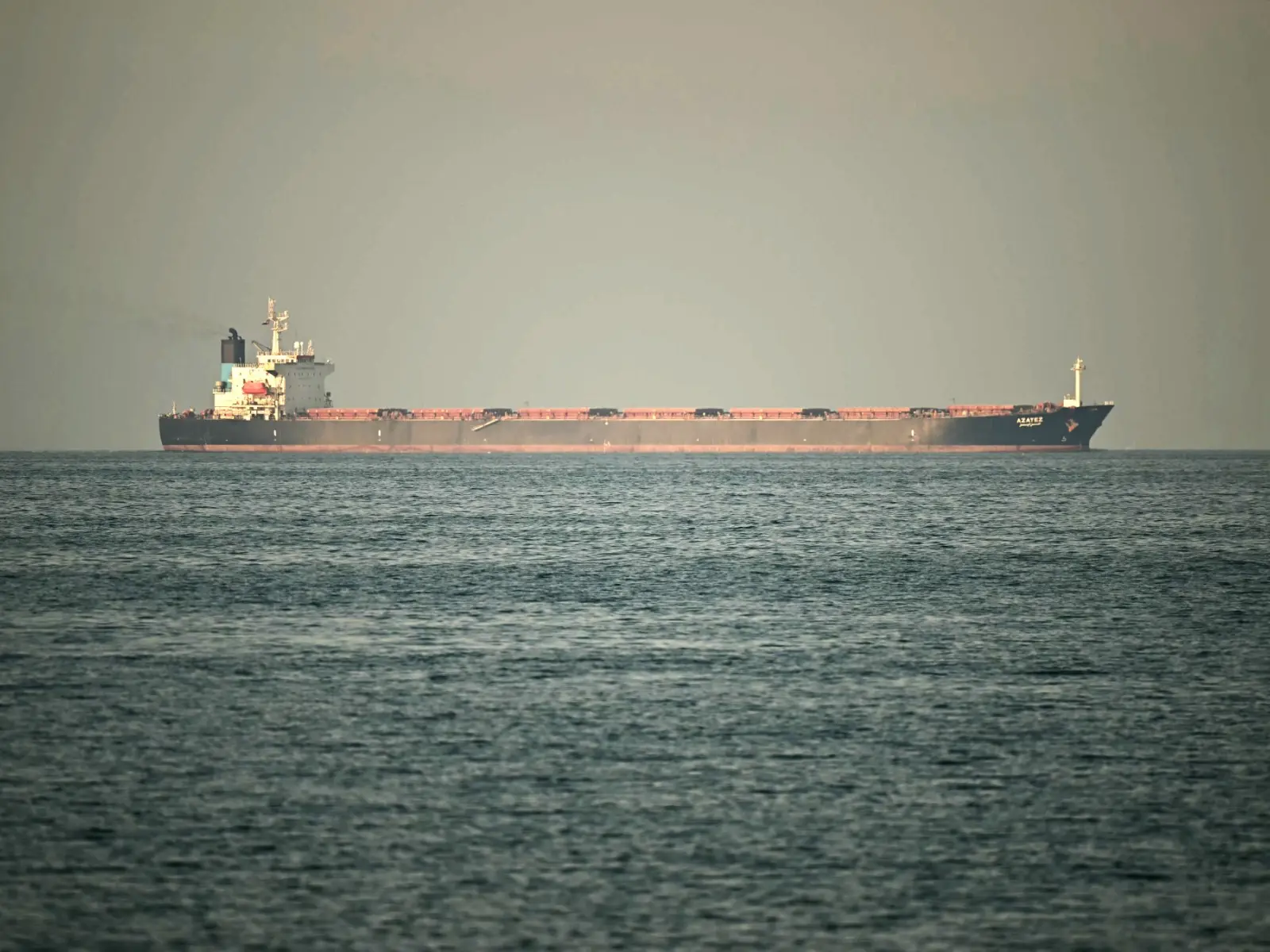
A cargo ship is pictured off coast city of Fujairah, in the Strait of Hormuz in the northern Emirate on February 25, 2026. Photograph: (AFP)
India’s growing technological capabilities and expanding economy position it well to benefit from the diversification of global supply chains.
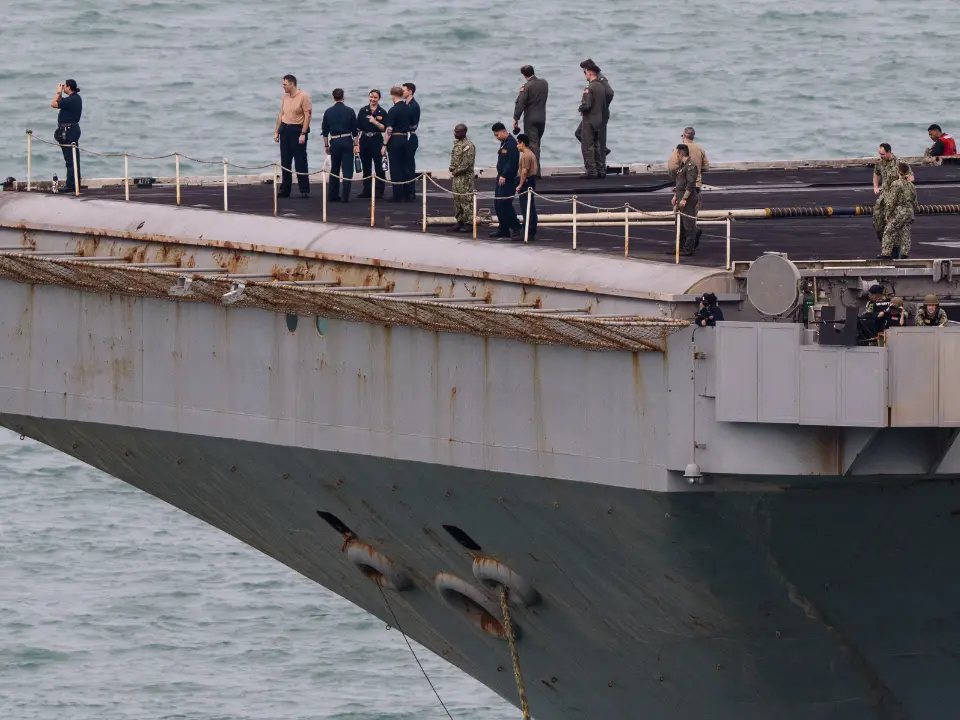
The renewed tensions around the Persian Gulf — marked by heightened naval deployments, threats to tanker traffic and rising volatility in oil markets — are an early signal that the foundations of the global order are being reconfigured.
What appears on the surface to be a regional confrontation is unfolding at the intersection of several deeper shifts: the strategic importance of energy chokepoints, the emergence of new digital financial infrastructure, and intensifying competition over critical resources.
Military tensions around the Gulf have intensified. Western policymakers have again turned their attention to major oil producers such as Venezuela. At the same time, Washington has been moving toward a clearer regulatory framework for cryptocurrencies and dollar-backed stablecoins — developments that together point to a deeper strategic adjustment.
The United States appears to be adapting the foundations of its long-standing global influence to a world increasingly shaped by technological disruption, geopolitical rivalry and shifting energy dynamics.
For decades, the international system rested on what became known as the petrodollar order. Oil was traded largely in US dollars. Those dollars flowed back into American financial markets through purchases of Treasury securities and other assets. Meanwhile, the sea lanes carrying global energy supplies were secured by US naval power.
Energy flows, financial markets and maritime security reinforced one another, placing the dollar at the centre of global commerce.
Trending Stories
)
)
)
)
)
)
)
)
)
)
)
)
)
)
)
)
)
)
)
)
)
)
)
&im=FitAndFill=(700,400))
)
)
)
)
)
)
)
)
)
&im=FitAndFill=(700,400))
)
)
&im=FitAndFill=(700,400))
)
That structure is now under pressure.
China has emerged as the world’s largest manufacturing power and a central hub in global supply chains. Alternative payment mechanisms are proliferating. Some countries have begun experimenting with non-dollar energy transactions. At the same time, the scale of US public debt has expanded sharply, raising questions about the durability of global demand for dollar assets.
Preserving monetary dominance in this environment requires adaptation.
One sign of that adaptation lies in Washington’s growing focus on dollar-backed stablecoins. These digital tokens maintain a fixed value against the US dollar and are typically backed by reserves held in short-term US Treasury securities or dollar deposits.
If stablecoins become widely used for cross-border payments, issuers will need to hold substantial quantities of dollar assets in reserve. This creates a new structural source of demand for US government debt.
In effect, stablecoins could become a digital extension of the dollar system, embedding American financial influence within the infrastructure of global digital payments while reinforcing demand for US financial assets.
Yet financial power alone has never sustained global primacy.
The tensions unfolding in the Persian Gulf underline the continuing importance of energy and maritime geography. Nearly a fifth of the world’s oil passes through the Strait of Hormuz, one of the most sensitive chokepoints in the global economy. Any disruption there would ripple immediately through energy markets.
Even as countries speak of energy transition, petroleum remains central to the functioning of the global economy. Control over energy flows — and the sea lanes that carry them — continues to confer immense geopolitical leverage.
The Gulf crisis also highlights another strategic reality: China’s growing energy vulnerability.
China is now the world’s largest importer of crude oil, much of it sourced from the Persian Gulf and transported across the Indian Ocean toward East Asia. This dependence creates what Chinese strategists call the “Malacca dilemma” — the vulnerability of China’s energy lifeline to disruption along maritime chokepoints.
The security of the Gulf, therefore, carries implications not only for global markets but also for the balance of power in Asia.
A parallel contest is unfolding over the resources that will power the technologies of the future. Lithium, cobalt, nickel, copper and rare earth elements are essential inputs for electric vehicles, semiconductors and artificial intelligence infrastructure. Control over these supply chains is rapidly becoming as strategically significant as control over oil was in the twentieth century.
Together, these forces are reshaping the strategic foundations of the global system.
The system that underpinned American dominance rested on three pillars: the dollar, energy markets and maritime power. The emerging system is taking shape around four: digital dollar networks, global capital markets, control over energy and mineral supply chains, and military power capable of securing the sea lanes through which these resources move.
This does not mean the world is returning to uncontested American supremacy. China retains major advantages in manufacturing, infrastructure development and mineral processing. Beijing is expanding economic partnerships across Asia, Africa and Latin America while promoting alternative financial arrangements.
The emerging global system is therefore likely to resemble a hybrid order — one in which financial power remains concentrated in the United States while industrial capacity and production networks become more widely distributed.
For India, this evolving landscape presents both opportunity and risk.
India’s growing technological capabilities and expanding economy position it well to benefit from the diversification of global supply chains. Partnerships in advanced manufacturing, semiconductors, digital infrastructure and critical minerals could significantly strengthen India’s strategic position.
At the same time, India remains deeply exposed to developments in the Persian Gulf. A large share of India’s oil imports passes through the Strait of Hormuz. Any sustained disruption in that corridor would have immediate economic consequences.
Yet India’s geography also offers a strategic advantage.
The sea lanes connecting the Persian Gulf to East Asia pass directly across the Indian Ocean, the principal artery of the world’s energy trade. Positioned near the midpoint of these routes, India occupies a uniquely important location in the emerging maritime system.
During the twentieth century, the North Atlantic formed the strategic centre of the global order. In the twenty-first century, the Indian Ocean is increasingly assuming that role.
For India, the ability to help secure these maritime corridors could become one of its most significant strategic contributions to global stability.
The Gulf crisis may therefore prove to be more than a regional confrontation. It is an early warning that the structure of global power is changing — and that the states which recognise this shift first will shape the rules of the next international order.
Disclaimer: The views of the writer do not represent the views of WION or ZMCL. Nor does WION or ZMCL endorse the views of the writer.
