

&imwidth=800&imheight=600&format=webp&quality=medium "Why Mexican teachers are protesting ahead of the FIFA World Cup 2026 opener")
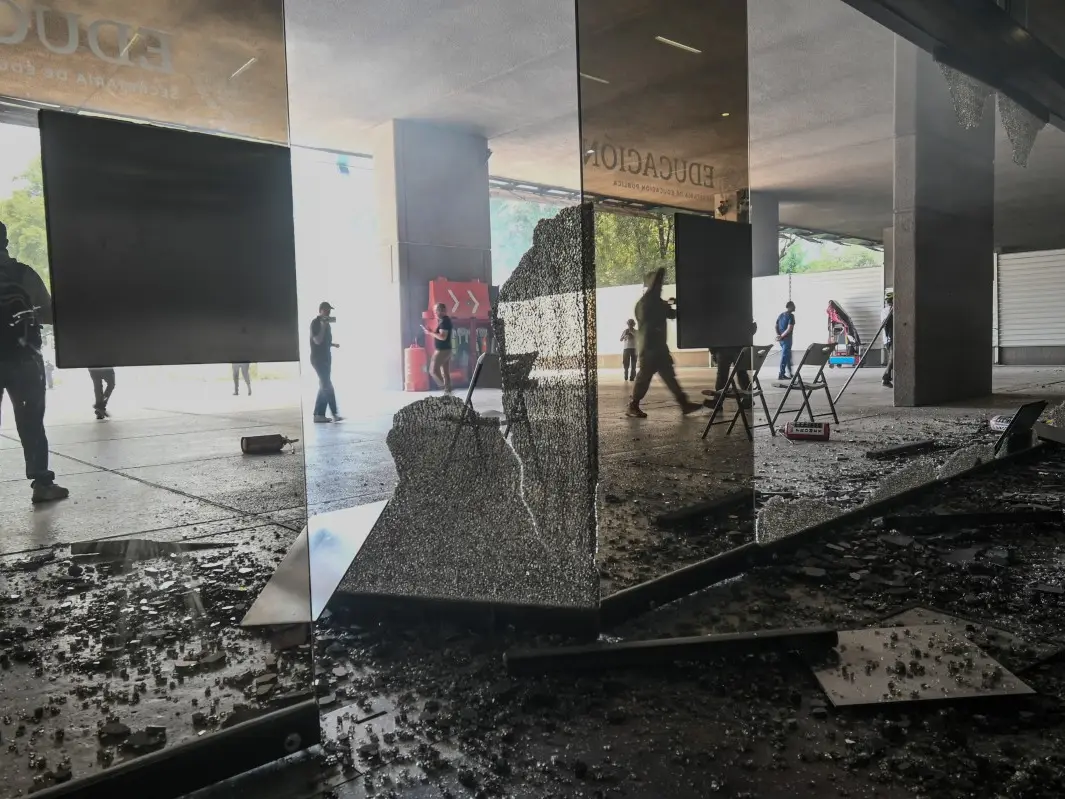
As visitors across the world are flooding into Mexico for the kickoff fixture of the FIFA World Cup 2026, protests have engulfed the city. The country will host the first match of the FIFA World Cup on June 11, between Mexico and South Africa at the Azteca Stadium. Meanwhile, protestors have blocked major thoroughfares, burnt soccer balls, ripped off clothes, and set them on fire on the city’s main Paseo de la Reforma. They brought down statues of football players, broke into the government building and played football on the blockaded street. Mexican President Claudia Sheinbaum has said she will not “fall into the trap” of confronting protestors.
Why are Mexican teachers protesting?
A breakaway segment of the National Coordination of Education Workers blocked main arteries connecting to Mexico City, in an effort to extract concessions from the Mexican Government. Some 12000 teachers, according to the union estimate, have set up semi permanent expansive camps with tents and tarpaulins across the city. Mexican teachers have accused the government of de-prioritising education and focusing on football and tourism revenue.
The protestors are demanding fulfilment of the campaign promises by the former President Andres Manuel Lopez Obrador and President Sheinbaum. They want a complete repeal of the ISSSTE law reform of 2007, and return to the pre-2007 defined-benefit system. The teachers argue that the law itself is fundamentally unjust and harms the public sector workers. They are also demanding a 100 per cent increase on their base wage to properly reflect the financial reality of the contemporary time.
The ISSSTE law reform dismantled the older public solidarity-based pension system. It introduced UMA or inflation-indexed Measurement and Update Units by shifting away from the national minimum wage, reducing their retirement payouts and effectively capped their retirement purchasing power. Further, each of the public sector employees hired after 2008 into an individual account system managed by private administrators known as Afores. As Afores invest all the pension funds into the financial market, it increases the volatility of the payout. Teachers' union want to remove the cap on retirement age of 65 and return to the previous system, where teachers can retire according to necessity with a fixed pension which is entirely backed by the state, calculated based on years of service rather than their age alone.
Trending Stories
How did the Sheinbaum administration react?
Sheinbaum's administration said it sympathises with the demands of the protestors and maintained that it is keeping channels open for dialogue. However, two major consecutive attempts at dialogue have completely collapsed, plunging the capital into an even deeper deadlock. The government has offered a 9 per cent wage hike and other concessions like lowering the retirement age for certain teaching tracks. The CNTE publicly blasted it as "crumbs" and “crumbs of crumbs” and called it an insult. The officials argue that a complete return to the pre-2007 defined benefit system is fiscally impossible as it will put pressure on the government budget.

