

&imwidth=800&imheight=600&format=webp&quality=medium "Why did so many buildings collapse in Venezuela’s twin earthquakes?")
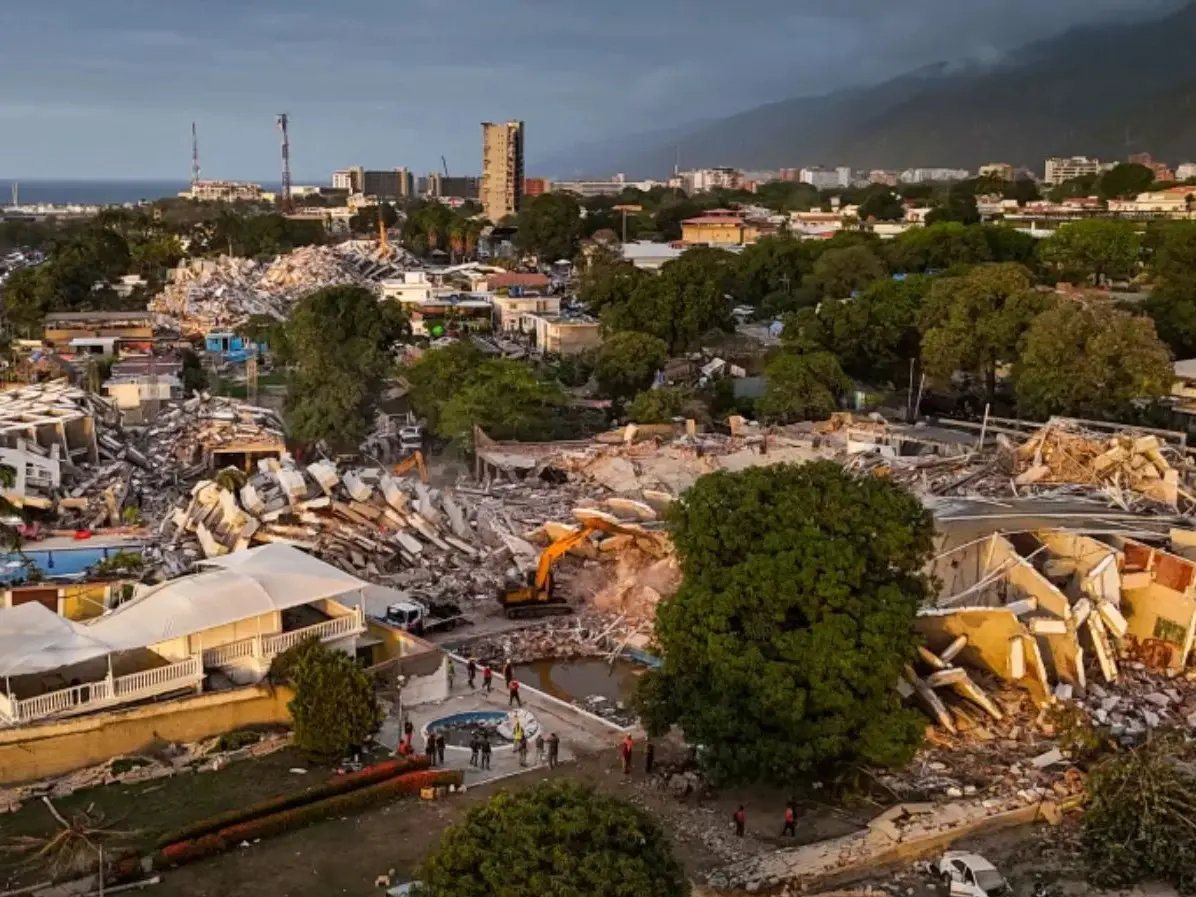
As Venezuela reels after the deadly twin earthquakes that resulted in widespread devastation and loss of lives, engineers and urban planners are asking questions over the safety of public housing projects built under former president Hugo Chávez’s social housing programme. The humanitarian crisis in the country has raised concerns over the construction quality, enforcement of building regulations and the risks of building in geologically unstable areas. The two quakes of magnitude 7.2 and 7.5 that struck within a minute of each other have flattened neighbourhoods, resulting in a high death toll. In the worst-hit La Guaira state, several apartment blocks have collapsed. Meanwhile, rescuers are racing against time to locate survivors under the rubble as tens of thousands of people remain missing.
National Assembly president Jorge Rodriguez on Monday (Jun 29) said that the death toll in the tragedy has risen to at least 1,719. He added that 5,034 people were injured.
Why did the buildings collapse?
While the experts say it is too early to determine the exact cause of structural failure, civil engineers have listed multiple factors that may have caused more buildings to collapse. Weak enforcement of building codes, inadequate quality checks, poor maintenance and decades of institutional decline may have worsened the destruction.
Many of the damaged buildings were part of large government-backed affordable housing schemes that were constructed in the last two decades. Experts have also argued that speed often took priority over maintaining engineering standards.
Risky terrain adds to danger
Trending Stories
&imwidth=180&imheight=135&format=webp&quality=medium)
Brendan Taylor overtakes Andy Flower to become Zimbabwe’s leading ODI run-scorer
&imwidth=180&imheight=135&format=webp&quality=medium)
Pakistan to head IMF, World Bank boards after 74 years amid persistent economic crisis
&imwidth=180&imheight=135&format=webp&quality=medium)
"The scariest thing was"... flydubai Captain Smit Machchhar recalls cockpit fight and how he thought of his son and daughter
&imwidth=180&imheight=135&format=webp&quality=medium)
'We are not sitting in ivory towers, we are aware': SC issues notice to Rahul Gandhi, Akhilesh Yadav
&imwidth=180&imheight=135&format=webp&quality=medium)
Flying car race: Alef Aeronautics welcomes Tesla Roadster '11 years' later, but are the two models the same?
&imwidth=180&imheight=135&format=webp&quality=medium)
6-year-old among 2 killed as vehicle crashes into youth soccer game in US
&imwidth=180&imheight=135&format=webp&quality=medium)
‘I have very severe problems’: Trump fuels health speculation during address to firefighters
&imwidth=180&imheight=135&format=webp&quality=medium)
Lizard people? Ex-US Army sniper claims soldier killed by 'reptilian beings' in battle near Area 51
&imwidth=180&imheight=135&format=webp&quality=medium)
At least 19 killed in stampede-like situation after part of Kolkata Durga Puja pandal collapses
&imwidth=180&imheight=135&format=webp&quality=medium)
Rain washes out 5th T20I as India-West Indies share honours 2-2
&imwidth=180&imheight=135&format=webp&quality=medium)
'Reason UN has lost credibility': Amid SIR protests India hits out at report alleging 'youth repression'
&imwidth=180&imheight=135&format=webp&quality=medium)
Pope Leo XIV discharged from hospital in Rome after cancer surgery
&imwidth=180&imheight=135&format=webp&quality=medium)
‘My president, I mean my husband’: Trump's new press secretary Katie Zacharia's first briefing goes off the rails in 14 minutes
&imwidth=180&imheight=135&format=webp&quality=medium)
China responds to Trump's Press Secretary Katie Zacharia after toilet remark: 'Visit China more often'
&imwidth=180&imheight=135&format=webp&quality=medium)
UAE agrees with Saudi Arabia to rejoin Yemen fight as Houthi strikes rattle Riyadh
&imwidth=180&imheight=135&format=webp&quality=medium)
PCB omits Atherton, Hussain from tri-series commentary panel over Imran Khan interview row
&imwidth=180&imheight=135&format=webp&quality=medium)
SA vs AUS 2nd Test: Rain delays start as Rabada returns; Boland replaces Lyon for Australia
&imwidth=180&imheight=135&format=webp&quality=medium)
At least 400 arrested as protests turn violent in France; PM blames far left
&imwidth=180&imheight=135&format=webp&quality=medium)
Explosion and fire at military base in Canada's Alberta, casualties feared
&imwidth=180&imheight=135&format=webp&quality=medium)
WATCH | iPhones, luxury perfumes floating in Hormuz? Iranian fishermen make bizarre discovery
&imwidth=180&imheight=135&format=webp&quality=medium)
Two students die, 14 injured at Dandiya event in Hyderabad: Know what happened? VIDEO
&imwidth=180&imheight=135&format=webp&quality=medium)
'keep telling him you will get your opportunities': Iyer opens up on conversations with Sooryavanshi
&imwidth=180&imheight=135&format=webp&quality=medium)
‘Be back in few weeks’: Emi Martinez shares first update after head clash in Premier League match
&imwidth=180&imheight=135&format=webp&quality=medium)
No Ravindra Jadeja, Yashasvi Jaiswal in India’s 2027 ODI World Cup plans: Report
&imwidth=180&imheight=135&format=webp&quality=medium)
Kolkata Durga Puja stampede: PM Modi announces Rs 2 lakh ex-gratia for kin of dead, Amit Shah to visit injured
&imwidth=180&imheight=135&format=webp&quality=medium)
Taylor Swift performs at star-studded Academy Museum Gala 2026 in stunning Dior ensemble
&imwidth=180&imheight=135&format=webp&quality=medium)
Anirudh Ravichander-Kavya Maran wedding: Telangana CM reveals Chennai reception date
&im=FitAndFill=(700,400)&imwidth=180&imheight=135&format=webp&quality=medium)
Inside Tesla's Roadster: 10 features of Elon Musk's 'flying car' that push the limits of electric vehicles | In Pics
&imwidth=180&imheight=135&format=webp&quality=medium)
One species, two lineages: Why Sri Lanka’s spectacled cobra differs genetically from Indian variant
&imwidth=180&imheight=135&format=webp&quality=medium)
Oil tanker carrying over 2M barrels of crude hits mine in Strait of Hormuz, catches fire, says Iran
&imwidth=180&imheight=135&format=webp&quality=medium)
2 injured in plane crash on busy California highway
&imwidth=180&imheight=135&format=webp&quality=medium)
'We feel like Mr India': Gujarat’s undercover SHE team guard garba nights at Navratri
&imwidth=180&imheight=135&format=webp&quality=medium)
13 dead after truck mows down devotees, crashes into temple gate in Madhya Pradesh's Gwalior
&imwidth=180&imheight=135&format=webp&quality=medium)
IND-W vs ZIM-W, 2nd T20I: When and where to watch live streaming in India?
Richard Casanova, director of Venezuela’s College of Engineers, told Reuters that La Guaira’s geography also played a major role in the scale of the disaster. Built between steep mountains and the Caribbean coast, the region sits on loose sand, gravel and debris left behind by past floods and landslides. Such soil conditions can amplify seismic shaking and increase the likelihood of structural failure during major earthquakes.
Civil engineer Nicolás Labrópoulos said these loose sediments can amplify ground motion during earthquakes, making strict compliance with earthquake-resistant construction standards essential.
Experts stress that the building regulations in the country are not necessarily outdated, but weak implementation, limited oversight and poor quality control remain the biggest challenges in preventing similar disasters.

