
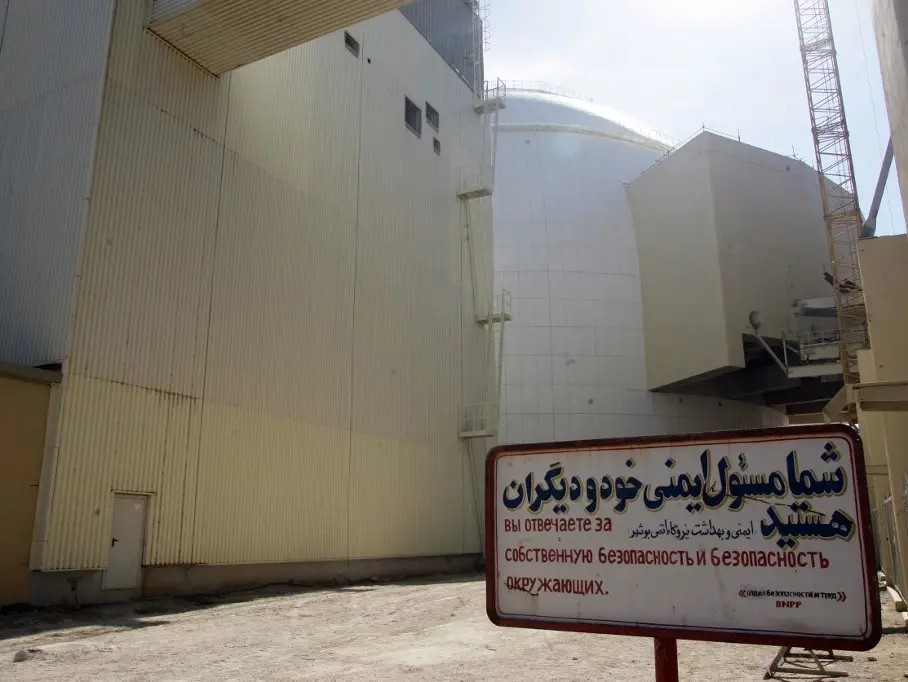
&imwidth=800&imheight=600&format=webp&quality=medium "What it takes to make a nuclear bomb—and why Israel is trying to stop Iran")
As of June 22, 2025, the conflict between Iran and Israel has intensified dramatically. Israel, under Operation Rising Lion, launched a wave of airstrikes beginning June 13, targeting Iran's nuclear facilities and military infrastructure. Israeli Prime Minister Benjamin Netanyahu described the action as a preemptive move to stop Iran from reaching nuclear weapon capability.
The United States has now joined the conflict. On June 22, President Donald Trump confirmed successful American strikes on three of Iran’s key nuclear sites—Fordow, Natanz, and Isfahan—further escalating tensions. In response, Iran fired ballistic missiles into Israel, causing casualties and sparking fears of a wider regional war.
The International Atomic Energy Agency (IAEA) confirmed damage to Iran’s nuclear facilities but reported no abnormal radiation leaks. While Iran insists its nuclear programme is peaceful, the U.S. and Israel argue that Tehran’s uranium enrichment—especially at the underground Fordow site—points to a secret weapons programme.

The Challenge of Making a Nuclear Bomb
At first glance, building a nuclear bomb might seem straightforward: gather enough radioactive material, and a chain reaction can trigger an explosion. But in reality, the hardest and most complex step is acquiring and refining the right material—either enriched uranium or plutonium.
Uranium is a naturally occurring element found in rocks. However, only one form—uranium-235 (U-235)—can be used for a nuclear explosion. This isotope makes up less than 1% of natural uranium and must be extracted through an elaborate process known as enrichment. The more U-235 is concentrated, the more powerful and compact the weapon becomes.
Trending Stories
&im=FitAndFill=(700,400))
How fast can the Sukhoi Su-30 fighter jet really fly?
)
Did China ask its people 'not to respond to aliens'? Origin of bizarre claim on social media
)
MS Dhoni-CSK Fallout? Report claims failed stake sale talks triggered rift
)
Scientists reveal the SAFEST COUNTRY when catastrophe strikes the planet
)
Serial killer on the loose in South Korea's Jeju Island? Fourth body found in three days as more than a dozen people go missing
)
2/3rd of glacier detached, collapsed: ISRO satellite images reveal what triggered Nepal floods
)
Trump once again claims without him there would be ‘no Israel right now’
)
Foreign espionage attacks against German companies surge to 37%, Bitkom report reveals
)
Blake Lively wins partial legal fee from Justin Baldoni after $8M request
)
Why is Pakistan deploying Turkish Bayraktar TB2 drones near India border?
)
'OH MY GOD! We've found other agents!': Investigators discover not one or two, almost 700 OpenAI AI agents went rogue, hacked Hugging Face
)
Lunar eclipse 2026: India timings, places to see and more. August Blood moon factsheet
)
RSS chief Mohan Bhagwat on global outreach tour
)
Both pilots killed as training aircraft crashes in Lucknow – What we know
)
16-year-old charged with preparing terror attack on kindergarten in Norway
&im=FitAndFill=(700,400))
How the S-400 protects itself from enemy attacks
)
Nepal floods: Over 165 dead, 400 missing; US, India, China, World Bank mobilise aid
)
India's multi-layered watch: The new surveillance war
)
5 doomsday planes spotted in US skies hours after CIA director's secret trip to Russia
)
9/11 mastermind Khalid Sheikh Mohammed to finally face trial in 2028, nearly 27 years after horrific attacks
)
Islamabad hospital fire: What we know about one of the biggest facility that housed Imran Khan
)
Workers run for life while filming Nepal flash flood: Scary new visuals emerge from Rasuwa
)
Russian military planes enter South Korean air defence zone amid rising tensions with North Korea: What's happening
)
Ron Weasley Is Back! Rupert Grint set to return to Harry Potter universe on Broadway
)
400-year-old 'vampire' grave in Poland reveals non-existent genetic lineage
)
Dolly Parton, global icon and queen of country music, dies at 80
)
Nepal flash floods: Kailash Mansarovar yatra affected, close to 400 pilgrims out of contact
)
'If he is dead, they're putting on a pretty good show': Trump casts fresh doubt over Mojtaba Khamenei's fate
)
Man arrested near US Capitol with guillotine in pickup truck: What happened?
&im=FitAndFill=(700,400))
Why the Su-30MKI cockpit is painted bright turquoise green
Watch | IAEA chief says underground damage at Fordow unknown at UN Security Council emergency meeting
In nuclear reactors, uranium is enriched to about 3–5% to produce electricity. But for a nuclear weapon, enrichment must go beyond 90%. The more enriched the uranium, the less is needed to build a bomb. For example:
- Uranium enriched to 15% requires over 600 kg for a bomb.
- At 20%, around 400 kg is needed.
- At 90% or more (weapons-grade), only about 25 kg is enough.
That’s why uranium enrichment is closely monitored by global nuclear watchdogs—it’s a critical step toward weaponisation.
How Iran Enriches Uranium
Iran uses a method called centrifugation to enrich uranium. Natural uranium is converted into a gas, uranium hexafluoride, and spun at high speeds in centrifuges. This process separates the lighter U-235 from the heavier U-238. After multiple cycles, the uranium becomes more enriched and suitable either for energy production or, if taken further, for use in weapons.
Iran already possesses uranium enriched to 60%, which is alarmingly close to weapons-grade. This enrichment level reduces the time needed to reach the 90% mark, raising international concerns.
Plutonium: Another Path to a Bomb
While uranium gets most of the attention, plutonium is another option for building nuclear weapons. It doesn’t exist in large amounts in nature but is produced inside nuclear reactors when uranium fuel is used. With reprocessing, about 10 kg of plutonium—enough for one bomb—can be extracted each year from a typical power plant.
Experts often consider plutonium more dangerous than uranium because it allows for smaller, lighter warheads that are easier to fit onto missiles. However, reprocessing plutonium is highly technical, expensive, and easier to detect.
Can a Nuclear Bomb Explode by Accident?
A nuclear explosion requires the material to reach “critical mass”—a certain amount of fissile material packed together to sustain a chain reaction. To prevent accidental detonation, nuclear weapons are designed so the fissile material remains in separate parts until deliberately triggered.
If these sub-critical pieces are somehow brought together—due to an accident or malfunction—they could start an uncontrolled chain reaction. This risk is why nuclear bombs are built with complex safety systems to prevent unintended explosions.
What Lies Ahead?
The recent strikes by Israel and the U.S. have reignited global concern over nuclear weapons. Iran insists it is not pursuing a bomb, but its stockpile of 60% enriched uranium—and its advanced centrifuge technology—suggest it is well within reach of weapons-grade capability.
Some experts fear that the attacks may push Iran further toward building a nuclear deterrent, believing that only such a capability can prevent future strikes. With diplomatic channels narrowing and military escalation continuing, the international community faces the challenge of preventing a full-scale nuclear crisis.
