What is BLA and its Majeed Brigade - designated 'foreign terrorist groups' by US - and what's its connection with Pakistan

&imwidth=600&imheight=450&format=webp&quality=medium "What is BLA and its Majeed Brigade - designated 'foreign terrorist groups' by US - and what's its connection with Pakistan")
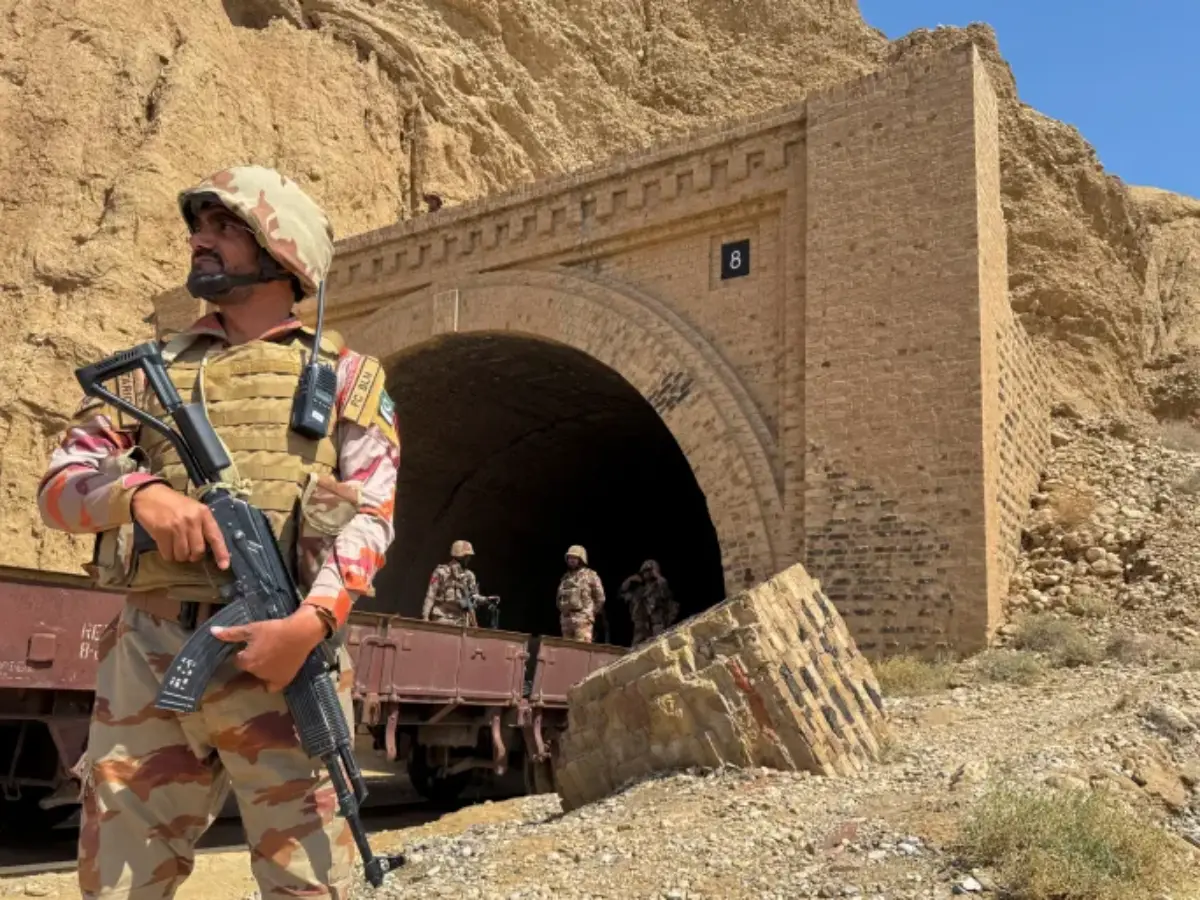
A Pakistan army soldier stands at a tunnel where a train was attacked by BLA fighters in Bolan Photograph: (Reuters)
The United States has officially designated the Balochistan Liberation Army (BLA) and its militant wing, the Majeed Brigade, as a terrorist organisation. This comes amid Asim Munir's visit to the US. Why is BLA termed a terrorist organisation?
The United States has officially designated the Balochistan Liberation Army (BLA), along with its militant wing, the Majeed Brigade, as a Foreign Terrorist Organisation (FTO). The decision was announced by the US State Department on Monday (Aug 11). The decision coincided with Pakistan Army Chief Field Marshal Asim Munir's visit to the US. Notably, this was Munir's second visit to the US in two months. Experts have also said that America's move might also be to “get back” at India, and also in a way a support to Pakistan's long-standing accusation that New Delhi funds Baloch insurgency. This designation comes in addition to the BLA's status as a Specially Designated Global Terrorist (SDGT) organisation, which it has held since 2019.
While the SDGT status primarily restricted financial support, the new FTO designation makes it a criminal offence for anyone in the United States to offer any kind of support—logistical, material, or financial—to the group. According to the US State Department, the designations have been made under Section 219 of the US Immigration and Nationality Act and Executive Order 13224. They will take effect once published in the Federal Register. But what is BLA and the Majeed Brigade, and why is Pakistan rattled by it?
What is the Balochistan Liberation Army (BLA)?
The Balochistan Liberation Army (BLA) is a Pakistan-based armed separatist group that seeks full independence for the Baloch people. It emerged in the early 2000s, fueled by long-standing grievances over political marginalisation, economic exploitation, and military repression by the Pakistani state. The BLA is known for orchestrating violent attacks targeting Pakistani security forces, government infrastructure, and projects linked to the China-Pakistan Economic Corridor (CPEC). The group is opposed to Chinese investment in the region, seeing it as exploitative and a threat to Baloch sovereignty. The Majeed Brigade is an elite unit within the BLA, known for carrying out suicide missions and highly coordinated urban assaults. It has been involved in several attacks claimed by the BLA and is now included in the US designation as part of the terrorist group.
While designating the BLA as a terror organisation, the US State Department noted that it was responsible for suicide attacks near Karachi airport and the Gwadar Port Authority Complex in 2024. It further added that in March 2025, the group hijacked the Peshawar-bound Jaffar Express from Quetta, killing 31 civilians and security personnel and taking over 300 passengers as hostages. Pakistan has accused BLA of terrorist activities, and the US designation is seen as support from America that strengthens their claim.
Why is the BLA considered a terrorist group?
Balochistan has witnessed at least five separatist uprisings since Pakistan’s independence in 1947. The most recent wave began in the early 2000s, expanding its goals from merely securing a share of local resources to seeking full independence from Pakistan.
Supporters of the movement argue that the Pakistani government exploits Balochistan’s wealth, leaving the local population impoverished and politically marginalised. While the BLA frames its struggle as a freedom movement for Balochistan's independence, both Pakistan and multiple Western nations consider it a terrorist organisation due to its use of violence, including suicide bombings and civilian casualties. The group’s increasing attacks against infrastructure projects and civilian transport systems have escalated its profile globally. The US now views the BLA as a direct threat to regional stability, particularly in the context of strategic trade routes.
Where is Balochistan?
Balochistan is the largest but least populous and poorest province in Pakistan, covering nearly 44% of the country’s land area. It lies in the southwestern part of Pakistan and shares borders with Iran to the west, Afghanistan to the northwest, Sindh province to the southeast and the Arabian Sea to the south. The province is rich in natural resources such as gas, coal, and minerals, but has remained underdeveloped, fueling deep resentment among its estimated 15 million residents. Despite being rich in natural resources like gas, minerals, and coastal assets, Balochistan remains among Pakistan’s poorest and most underdeveloped regions. The BLA opposes the extraction of these resources without local benefit and condemns the Pakistani government's denial of Baloch rights.
Quetta, the capital and largest city of Balochistan, is strategically located near the Afghan and Iranian borders. With a population of over 1.5 million as of 2024, it is the tenth largest city in Pakistan and a key political and military hub in the region. Moreover, Balochistan is strategically important, not only to Pakistan but also to other countries as it hosts Gwadar Port, a cornerstone of the China-Pakistan Economic Corridor (CPEC). It serves as a strategic route linking southwestern China to the Arabian Sea. It is central to regional trade and security dynamics involving Pakistan, China, Iran, and Afghanistan.
Trending Stories
&imwidth=280&imheight=210&format=webp&quality=medium)
&im=FitAndFill=(700,400)&imwidth=280&imheight=210&format=webp&quality=medium)
&imwidth=280&imheight=210&format=webp&quality=medium)
&imwidth=280&imheight=210&format=webp&quality=medium)
&imwidth=280&imheight=210&format=webp&quality=medium)
&imwidth=280&imheight=210&format=webp&quality=medium)
&imwidth=280&imheight=210&format=webp&quality=medium)
&imwidth=280&imheight=210&format=webp&quality=medium)
&imwidth=280&imheight=210&format=webp&quality=medium)
&imwidth=280&imheight=210&format=webp&quality=medium)
&imwidth=280&imheight=210&format=webp&quality=medium)
&imwidth=280&imheight=210&format=webp&quality=medium)
&imwidth=280&imheight=210&format=webp&quality=medium)
&imwidth=280&imheight=210&format=webp&quality=medium)
&imwidth=280&imheight=210&format=webp&quality=medium)
&imwidth=280&imheight=210&format=webp&quality=medium)
&imwidth=280&imheight=210&format=webp&quality=medium)
&imwidth=280&imheight=210&format=webp&quality=medium)
&imwidth=280&imheight=210&format=webp&quality=medium)
&imwidth=280&imheight=210&format=webp&quality=medium)
&imwidth=280&imheight=210&format=webp&quality=medium)
&imwidth=280&imheight=210&format=webp&quality=medium)
&im=FitAndFill=(700,400)&imwidth=280&imheight=210&format=webp&quality=medium)
&imwidth=280&imheight=210&format=webp&quality=medium)
&im=FitAndFill=(700,400)&imwidth=280&imheight=210&format=webp&quality=medium)
&imwidth=280&imheight=210&format=webp&quality=medium)
&imwidth=280&imheight=210&format=webp&quality=medium)
&imwidth=280&imheight=210&format=webp&quality=medium)
&imwidth=280&imheight=210&format=webp&quality=medium)
&imwidth=280&imheight=210&format=webp&quality=medium)
&imwidth=280&imheight=210&format=webp&quality=medium)
&imwidth=280&imheight=210&format=webp&quality=medium)
&imwidth=280&imheight=210&format=webp&quality=medium)
&imwidth=280&imheight=210&format=webp&quality=medium)
&imwidth=280&imheight=210&format=webp&quality=medium)

