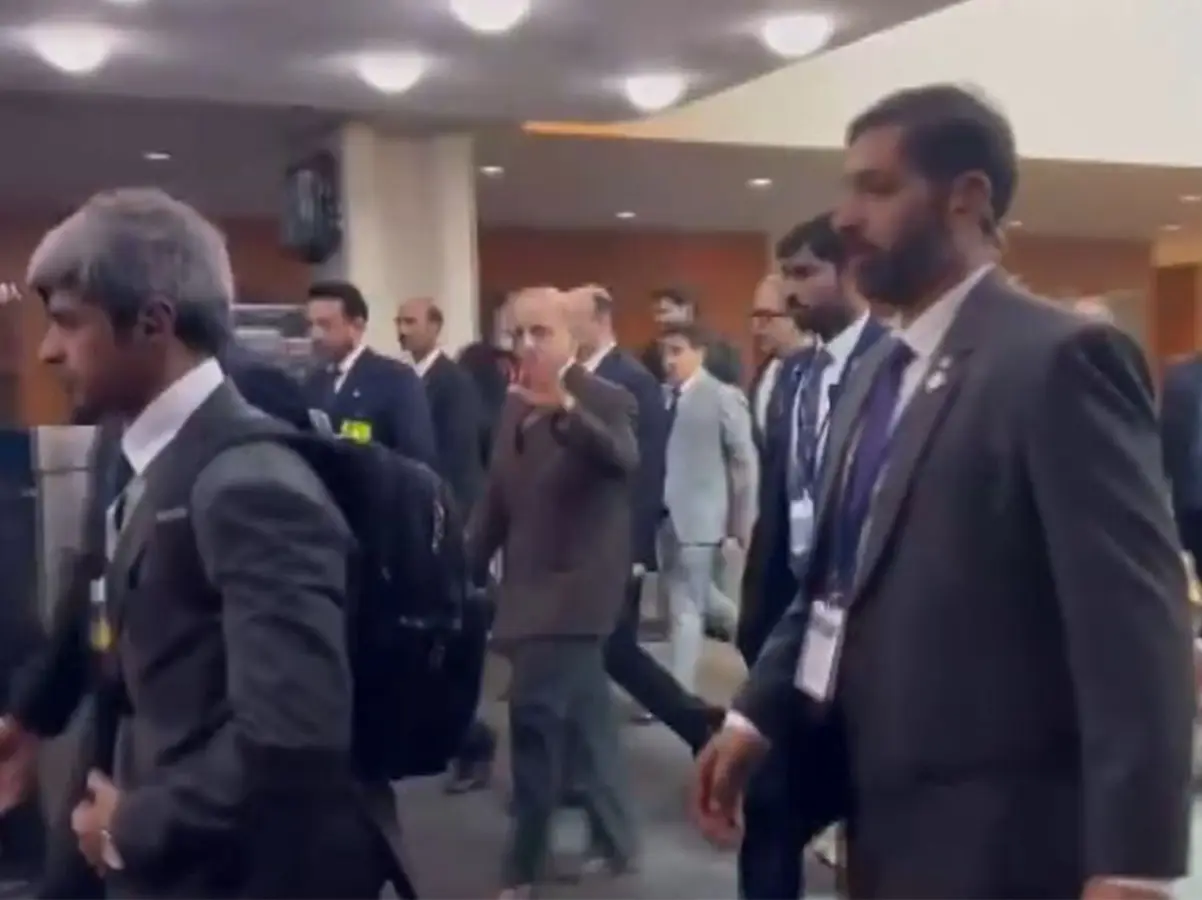
WATCH: Pak PM Shehbaz Sharif refuses to answer on Hafeez Sayeed, walks away

&imwidth=600&imheight=450&format=webp&quality=medium "WATCH: Pak PM Shehbaz Sharif refuses to answer on Hafeez Sayeed, walks away")
Pakistan Prime Minister Shehbaz Sharif leaves venue without answering
The Pahalgam terror attack on April 22, 2025 that killed 26 people, was also orchestrated by Pakistan-based operatives of the banned terrorist organisation Lashkar-e-Taiba (LeT), according to NIA.
Pakistan Prime Minister Shehbaz Sharif, who was on a visit to the United States for the 81st UN General Assembly was asked questions by reporters regarding Lashkar-e-Taiba (LeT) chief Hafiz Saeed and Pakistan's alleged harbouring of terrorists, which he refused to answer and just walked away.
As Sharif entered the UN headquarters, he was confronted by a reporter who asked, “Prime Minister, when will you stop harbouring terrorists?” Sharif refused to answer or say anything on the matter. Later, as he left the premise, he was again asked the same question but this time too he refused to answer.
Hafiz Muhammad Saeed, a resident of Pakistan's Punjab province, is a designated terrorist under the Unlawful Activities (Prevention) Act, 1967- India's primary anti-terrorism and national security legislation.- and the founder of the proscribed terrorist organisation Lashkar-e-Taiba (LeT).
He is wanted as an accused in the 26/11 Mumbai terror attack case. The Pahalgam terror attack on April 22, 2025 that killed 26 people, was also orchestrated by Pakistan-based operatives of the banned terrorist organisation Lashkar-e-Taiba (LeT), according to National Investigation Agency (NIA).
In its supplementary chargesheet NIA names Hafiz Muhammad Saeed as Accused No. 8, alleging his involvement in the larger conspiracy behind the attack.
India slams Pak at UN
Meanwhile, India during its address to the UNGA ripped apart Pakistan, telling Islamabad to direct its energy towards a debt-ridden economy surviving on bailouts rather than harbouring territorial ambitions or sponsoring cross-border terrorism.
Exercising its right of reply at the UN Human Rights Council, Indian diplomat Kshitij Tyagi dismantled Pakistan's diversionary tactics, asserting that its hostile posturing would do nothing to rescue its failing financial system.
Stating that Pakistan's priorities remain fundamentally misplaced, Kshitij Tyagi remarked, "Pakistan would better serve its people by focusing on development, rather than by coveting territory of others or exporting terror, because neither these nor its theatrics in the Council would help repay the loans its economy survives on."
Trending Stories
)
)
)
)
)
)
)
)
)
)
)
)
)
&im=FitAndFill=(700,400))
)
)
)
)
)
)
)
)
)
)
)
)
)
)
)
)
)
)
)
)
)
)
)
)
)
)
(With inputs from agencies)
