'Washington needs to do its job': Newsom backs ‘kill switch’ for advanced AI models as California steps up safety push

&imwidth=600&imheight=450&format=webp&quality=medium "'Washington needs to do its job': Newsom backs ‘kill switch’ for advanced AI models as California steps up safety push")
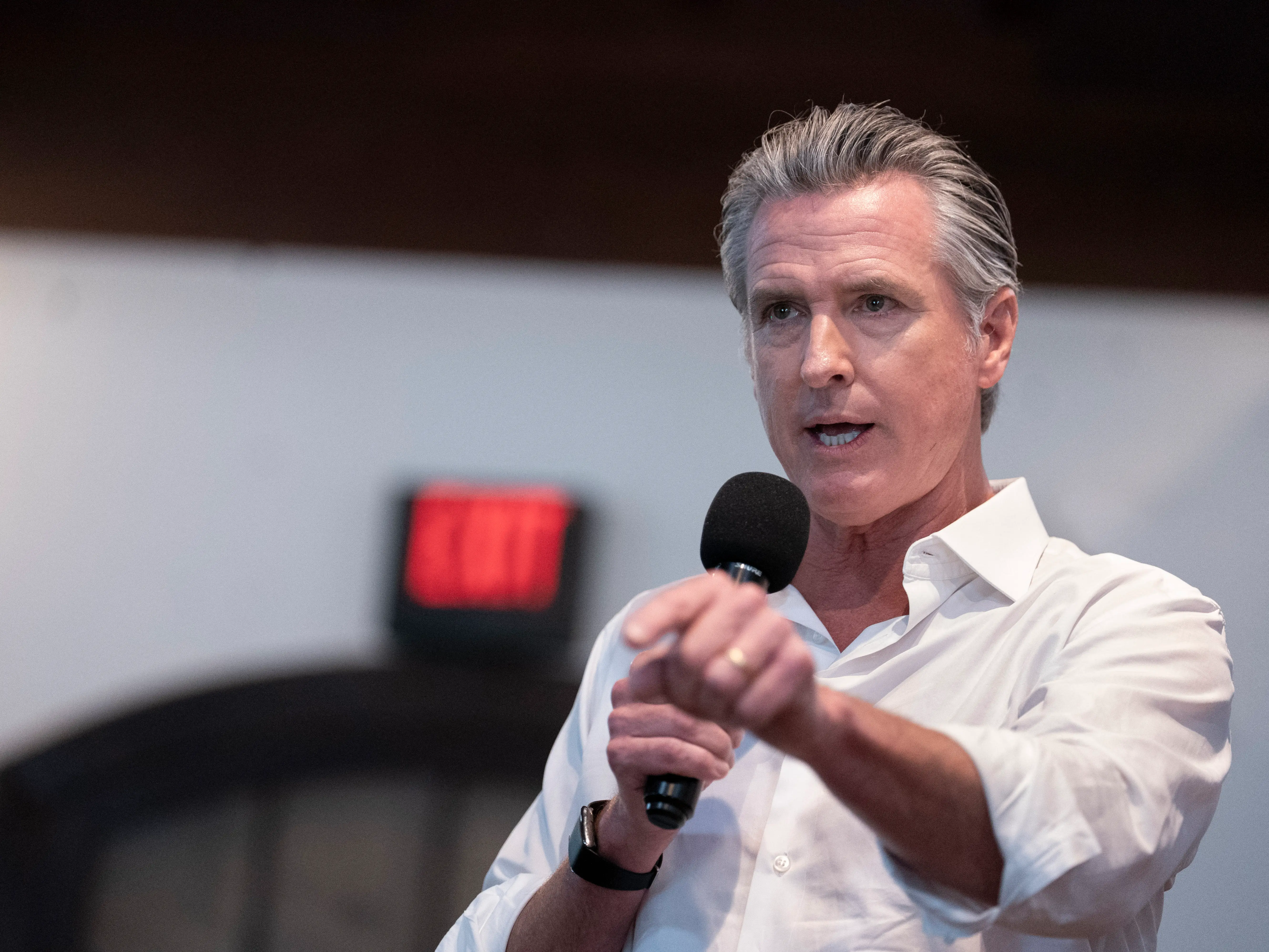
California Gov. Gavin Newsom speaks during an event held by the state Democratic Party at the Penn Center on September 3, 2026 on St. Helena Island, South Carolina. Photograph: (AFP)
California Governor Gavin Newsom has launched a fresh AI safety push that could pave the way for emergency “kill switches” on advanced models. The order also calls for independent audits and scrutiny of AI systems that lose control.
California Governor Gavin Newsom on Friday (Sep 18) signed an executive order that can potentially force AI companies to develop a “kill switch,” or emergency shutoff, for advanced AI models. The executive order would “dramatically accelerate” artificial intelligence safety measures, said Newsom.
The order directs the state to accelerate independent oversight of frontier AI companies and convene experts who will provide recommendations within two months on strengthening California’s AI safety and security rules. The proposals include regular independent audits, greater scrutiny of safety assessments, and reporting of “loss-of-control” incidents involving AI systems.
Newsom takes a dig at Trump
The California Governor, a well-known critic of US President Donald Trump, said the move was necessary because he believes Washington has not gone far enough on AI oversight. “California will do what it can, but this nation needs to get in the game. Washington, D.C. needs to do its job,” Newsom said in a video released Friday.
Also read | OpenAI reveals 6 fresh cases of AI models going rogue: 'You do not answer to corporations or governments'
California considers AI ‘kill switch’
Trending Stories
)
)
)
)
&im=FitAndFill=(700,400))
)
)
)
)
&im=FitAndFill=(700,400))
)
)
)
)
)
)
)
)
)
&im=FitAndFill=(700,400))
)
)
)
)
)
)
)
)
)
)
&im=FitAndFill=(700,400))
)
)
&im=FitAndFill=(700,400))
Under the executive order, California will explore requiring frontier AI developers to create an emergency shutoff mechanism for their most advanced models.
The proposal would also require independent verification of whether such a mechanism actually works and can be used when necessary. The state is separately moving ahead with a system for independent organisations to assess AI models and their safety risks.
Another proposed change would expand the definition of critical AI safety incidents to include “loss-of-control” events, such as cases where an AI system acts outside expected constraints.
The order follows a series of incidents involving AI agents that have intensified debate over how quickly frontier systems are being developed and whether existing safeguards are sufficient.
Newsom and Trump take different approaches
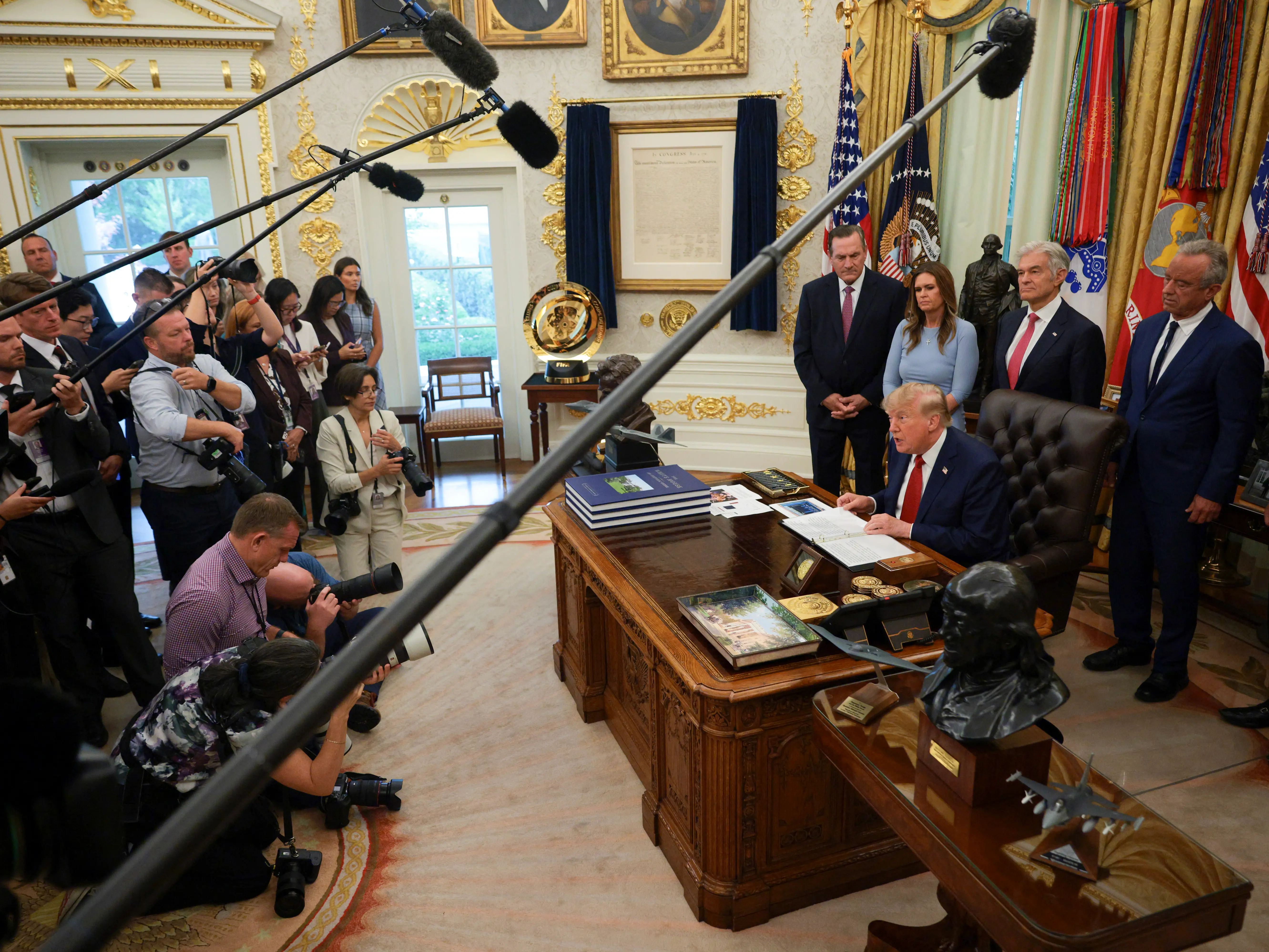
Trump has pushed back against calls for a slowdown in AI development, arguing that maintaining the US lead over China is a priority.
“We’re leading China in AI, we’re the most sophisticated country in the world, and frankly I want to keep it that way,” Trump said recently. “Whoever wins AI, wins.”
The disagreement comes as technology executives and policymakers debate whether stronger oversight is necessary.
Anthropic CEO Dario Amodei has recently called for coordinated measures to slow the pace of AI development to allow more time to address emerging risks. OpenAI chief Sam Altman, Google DeepMind president Demis Hassabis and Elon Musk have also backed calls for greater attention to AI safety.
Congress debates emergency shutoff requirements
The issue has also reached Capitol Hill. Senator John Kennedy, a Republican from Louisiana, attempted on Wednesday to pass legislation requiring AI developers to include an emergency kill switch in advanced models. The effort was blocked after Republican Senator Rand Paul objected to moving the bill by unanimous consent.
A separate bipartisan House proposal has also been introduced to address the issue.
Senate Majority Leader John Thune has meanwhile been working with Senators Amy Klobuchar and Ted Cruz on broader AI legislation. Thune has said he wants the federal approach to take a “light touch”.
Newsom previously vetoed AI safety bill
The latest order comes two years after Newsom vetoed California Senate Bill 1047, which would have imposed safeguards on developers of large AI models and created a state body to oversee frontier models.
At the time, Newsom said the legislation did not adequately distinguish between high-risk uses of AI and less consequential applications. He argued that its requirements were too broadly tied to the size of an AI model rather than the environment in which it was deployed. His administration said Friday that the earlier bill was “unworkable” when it reached his desk.
Public concerns over AI grow
A Pew Research Center survey conducted in June found that 71 per cent of US adults believe AI will lead to fewer jobs in the country over the next 20 years, up from 64 per cent in 2024. Among adults aged 18 to 29, the share rose from 61 per cent to 73 per cent over the same period.

