

&imwidth=800&imheight=600&format=webp&quality=medium "US Supreme Court questions Trump’s push to end birthright citizenship; final verdict likely in July")
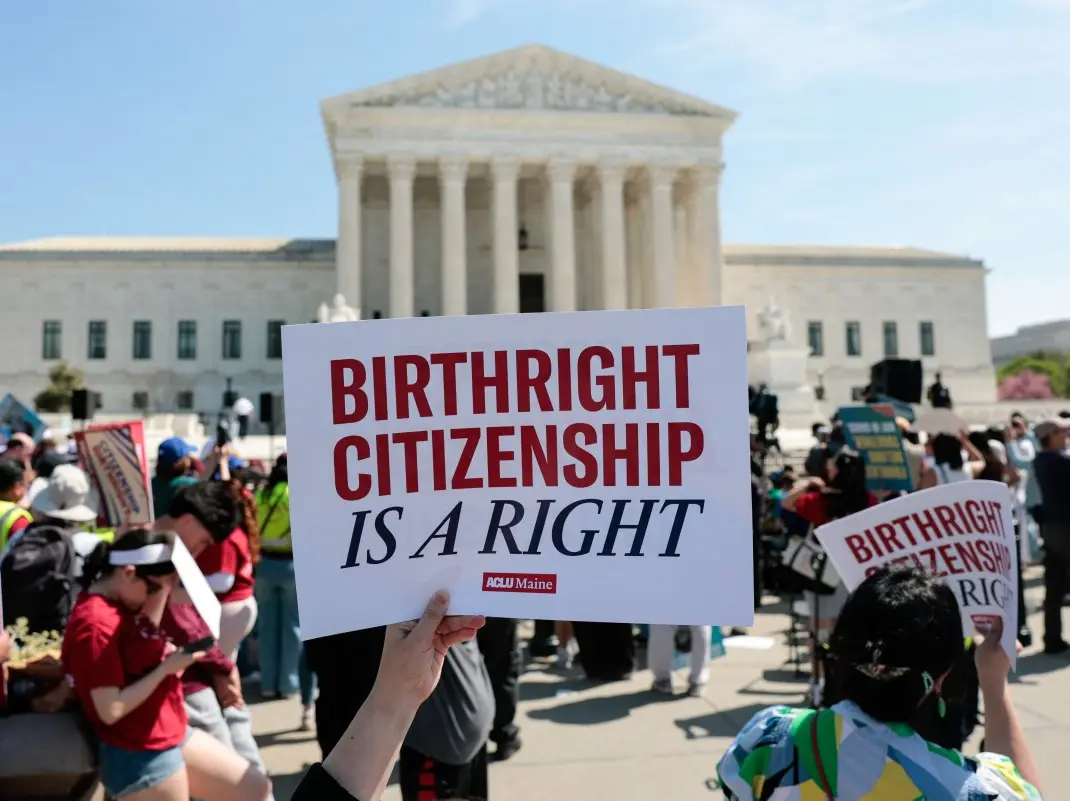
The US Supreme Court appeared inclined on Wednesday (April 1) to reject Donald Trump’s unprecedented attempt to end birthright citizenship, following a high-profile hearing attended by the president himself. The case represents a central element of Trump’s broader immigration agenda, and his presence at oral arguments marked a rare moment for a sitting president. Trump left after Solicitor General John Sauer presented the administration’s arguments, and did not stay for American Civil Liberties Union attorney Cecillia Wang, who defended birthright citizenship.
"We are the only Country in the World STUPID enough to allow 'Birthright' Citizenship!" Trump said in a social media post after returning to the White House. Trump had signed an executive order at the start of his second term declaring that children born in the U.S. to undocumented immigrants or temporary visa holders would not automatically receive citizenship. Lower courts blocked the order, citing the Citizenship Clause of the 14th Amendment, which guarantees citizenship to nearly all individuals born on US soil.
Sauer argued before the court that "unrestricted birthright citizenship contradicts the practice of the overwhelming majority of modern nations" and “demeans the priceless and profound gift of American citizenship.” "It operates as a powerful pull factor for illegal immigration and rewards illegal aliens who not only violate the immigration laws but also jump in front of those who follow the rules," he said.
He also raised concerns about "birth tourism," where individuals travel to the US specifically to give birth. However, both liberal and several conservative justices expressed doubts about the administration’s reasoning. Chief Justice John Roberts questioned the relevance of such arguments. "We're in a new world now," the solicitor general said, “where eight billion people are one plane ride away from having a child who's a US citizen.” "Well, it's a new world. It's the same constitution," Roberts replied.
The 14th Amendment states that "All persons born or naturalized in the United States, and subject to the jurisdiction thereof, are citizens of the United States." Roberts noted that the administration appeared to be attempting to broaden exceptions to include undocumented immigrants, calling the approach “quirky.” Justice Brett Kavanaugh questioned the relevance of comparing U.S. law to policies in other countries. "We try to interpret American law with American precedent based on American history," Kavanaugh said. "Why should we be thinking about...other countries? I'm not seeing the relevance as a legal, constitutional interpretive matter."
Trending Stories
&imwidth=180&imheight=135&format=webp&quality=medium)
'Hell of a beautiful a**': Trump compliments Nicki Minaj as rapper joins him in Michigan rally
&imwidth=180&imheight=135&format=webp&quality=medium)
Telangana unveils AI avatar of IT minister D Sridhar Babu at Hyderabad DevFest 2026
&imwidth=180&imheight=135&format=webp&quality=medium)
Who is Eyal Zamir, Israeli army chief, who reportedly clashed with Netanyahu over Iran?
&imwidth=180&imheight=135&format=webp&quality=medium)
US Midterms: Trump targets Norway over Nobel Peace Prize snub, likens Abdul El-Sayed to 9/11 hijackers
&imwidth=180&imheight=135&format=webp&quality=medium)
Fire breaks out at Delhi’s North Block, thick black smoke seen | VIDEO
&im=FitAndFill=(700,400)&imwidth=180&imheight=135&format=webp&quality=medium)
Armoured vehicles vs main battle tanks: What is the real difference?
&imwidth=180&imheight=135&format=webp&quality=medium)
Pahalgam, Gulmarg record season’s first sub-zero temperatures as winter chill intensifies in Kashmir
&imwidth=180&imheight=135&format=webp&quality=medium)
IND vs NZ: Tilak Varma sets world record with most T20I catches in a year
&imwidth=180&imheight=135&format=webp&quality=medium)
FIR filed against opposition MPs for ‘trespassing’ amid Jamia Millia students’ protest
&imwidth=180&imheight=135&format=webp&quality=medium)
WATCH | Virat Kohli returns to training ahead of New Zealand ODI series
&imwidth=180&imheight=135&format=webp&quality=medium)
Can Putin cheat death? All about his daughter’s billion-dollar quest for immortality
&im=FitAndFill=(700,400)&imwidth=180&imheight=135&format=webp&quality=medium)
How do army night-vision systems see in almost complete darkness?
&imwidth=180&imheight=135&format=webp&quality=medium)
Daler Mehndi controversy: Mika Singh’s team confirms Subodh Uniyal’s apology
&imwidth=180&imheight=135&format=webp&quality=medium)
Netanyahu warns Israelis of ‘existential threat’ from Iran, posts AI image of nuclear strike
&imwidth=180&imheight=135&format=webp&quality=medium)
Brazil re-elects factory worker Lula for fourth term; Indian PM Modi congratulates 'dear friend'
&imwidth=180&imheight=135&format=webp&quality=medium)
Pakistan airline PIA unveils new crew uniforms, faces online criticism
&imwidth=180&imheight=135&format=webp&quality=medium)
‘That is a miss’: Ravi Ashwin questions Sooryavanshi’s demotion to No. 3 in 2nd T20I vs NZ
&im=FitAndFill=(700,400)&imwidth=180&imheight=135&format=webp&quality=medium)
Why does this fighter jet have a golden window that looks like alien technology?
&im=FitAndFill=(700,400)&imwidth=180&imheight=135&format=webp&quality=medium)
New OTT releases this week (October 26-November 1, 2026): Baththa, Akka, The One About Matthew Perry- 7 titles coming on Netflix, Prime Video and more
&imwidth=180&imheight=135&format=webp&quality=medium)
Elon Musk’s Grok releases first AI-generated Odyssey episode, months after promising ‘historically accurate’ full-length film
&imwidth=180&imheight=135&format=webp&quality=medium)
'Already tired of his 9-to-5': Baby born with a moustache becomes internet sensation, video goes viral | Watch
&imwidth=180&imheight=135&format=webp&quality=medium)
Rahul Gandhi’s convoy collides with ambulance on UP expressway | VIDEO
&imwidth=180&imheight=135&format=webp&quality=medium)
Serbia’s student-led movement defeats Vucic’s party after 14 years in power: Why it matters
&imwidth=180&imheight=135&format=webp&quality=medium)
'I promised Gautam & Kotak Sir that...': Tilak Varma opens up on match-winning mindset against NZ
&imwidth=180&imheight=135&format=webp&quality=medium)
‘Saddam Hussein opened a cheesecake factory’: Obama mocks Trump’s White House renovations; defends Abdul El-Sayed
&im=FitAndFill=(700,400)&imwidth=180&imheight=135&format=webp&quality=medium)
Why do some fighter jets have two engines while others use one?
&imwidth=180&imheight=135&format=webp&quality=medium)
Formula 1: Mercedes' Kimi Antonelli one race and ninth spot finish away from title after US Grand Prix win
&imwidth=180&imheight=135&format=webp&quality=medium)
Delhi's new entry rules for vehicles begin November 1. Here's all you need to know about the ban
&imwidth=180&imheight=135&format=webp&quality=medium)
'Clear overkill': Putin rejects claims Russia is behind mass protests in Europe
&imwidth=180&imheight=135&format=webp&quality=medium)
Clayface tops North American box office, Elizabeth Holmes documentary follows close behind
&imwidth=180&imheight=135&format=webp&quality=medium)
Nagpur man fails to pay rent, allegedly prints fake Rs 500 notes worth Rs 37 lakh
&imwidth=180&imheight=135&format=webp&quality=medium)
Why Europe’s protests are about more than austerity and rising costs
&imwidth=180&imheight=135&format=webp&quality=medium)
Donald Trump targets Bill Maher in lengthy post after White House dinner, says ‘Don’t call anymore’
Justice Neil Gorsuch also raised historical concerns, noting that the concept of illegal immigration did not exist when the amendment was adopted in 1868. "If somebody showed up here in 1868 and established domicile, that was perfectly fine," Gorsuch said. “And so why wouldn't we...come to the conclusion that the fact that someone might be illegal is immaterial?” Wang argued that overturning birthright citizenship would jeopardize millions of Americans’ legal status. "Ask any American what our citizenship rule is, and they'll tell you, everyone born here is a citizen alike," Wang said. "That rule was enshrined in the 14th Amendment to put it out of the reach of any government official to destroy."
The administration contends that the amendment, originally passed after the Civil War to secure rights for formerly enslaved people, does not apply to children of undocumented migrants or temporary residents. Trump’s executive order hinges on the interpretation that such individuals are not "subject to the jurisdiction" of the United States.
However, the Supreme Court rejected a similar narrow interpretation in an 1898 case involving a man born in San Francisco to Chinese parents. A ruling against Trump would mark another legal setback, following the court’s decision earlier this year to strike down much of his global tariff policy. A final verdict is expected by late June or early July.

