

&imwidth=800&imheight=600&format=webp&quality=medium "US strikes leave 20,000 without water as fears grow over Gulf infrastructure")
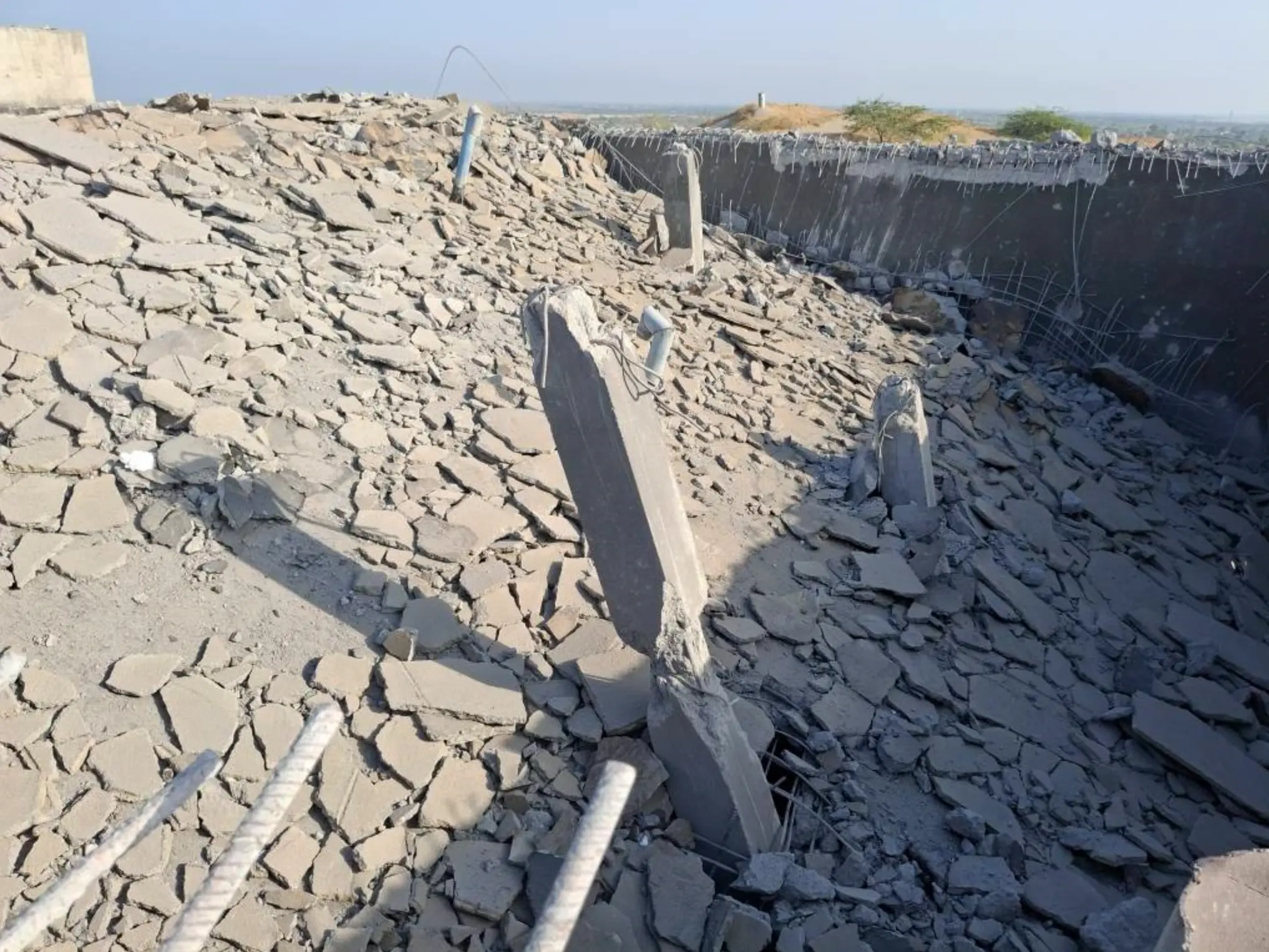
US strikes on Iran on June 10 reportedly destroyed two water reservoirs, marking a significant escalation since the announcement of the ceasefire on April 8. The US described the attacks as “self-defence strikes” and a “proportional response to unjustified Iranian aggression”. Iranian officials confirmed that the US strikes have damaged water reservoirs in Bemani and Kouhestak areas in Sirik County, southern Iran. Approximately 20,000 residents across the city and the surrounding 10 villages rely on the desalination plant for the drinking water supply. The temperature in the area has reached over 100 degrees Fahrenheit in the last few days.
These strikes come in response to the downing of the Apache Helicopters patrolling the Strait of Hormuz. The pictures of fragments shared by the semi-official news portal Tasnim show what appears to be a lightweight precision glide bomb, GBU-39, according to the Open Source Munitions Portal. The strikes had also caused major damage to a telecommunications tower in the town of Sirik.
Water-scarce West Asia region
According to a CSIS report, the GCC countries, Bahrain, Kuwait, Oman, Qatar, UAE, and Saudi Arabia, are among the most arid regions on Earth and depend on desalination plants for freshwater, as it has scant constellation of groundwater aquifers. A desalination plant uses thermal distillation or reverse osmosis to remove salt and minerals from seawater, making it suitable for human consumption, such as drinking, irrigation and industrial use. These facilities are particularly critical for regions like Iran, as freshwater reserves are scarce. The desalination plants account for 77.3 per cent of total water demand in Qatar, 67.5 per cent in Bahrain, 52.1 per cent in the UAE, 42.2 per cent in Kuwait, 31 per cent in Oman, and 18.1 per cent in Saudi Arabia. For drinking water, Qatar is 99 per cent, Bahrain over 90 per cent, Kuwait over 90 per cent, Oman 86 per cent, Saudi Arabia 70 per cent, and the UAE over 42 per cent. All of them are precariously in range of Iranian missiles and drones.
Iran was already facing a multiyear drought before the US-Israeli war. 2025 was the fifth consecutive drought year, and across the country, around 19 dams had run dry. Isa Bozorgzadeh, spokesperson of Iran's water industry, claimed the US strike on Iranian water reservoirs was a war crime, as reported by WANA (West Asia News Agency). The Berlin Rules of Water Resources, drafted by the International Law Association, protect water resources and prohibit countries at war from destroying them. However, the US have not declared its intent to strike water infrastructure, though from the satellite images it was clear that both buildings stand in remote areas without any other infrastructure nearby. Hitting remote buildings and striking the centre of a roof are considered likely indicators of a precision strike. This is the second strike by the US on Iran's water infrastructure after the March 7 attack on Qeshm Island off the coast of Iran in the Strait of Hormuz, cutting off water supply to 30 villages. In response, Iran retaliated by targeting the desalination plants in Kuwait, Bahrain and the UAE. Now this escalation by the US provides Iran with the justification for targeting the water infrastructures in the GCC, which would be disastrous.
Trending Stories
&imwidth=180&imheight=135&format=webp&quality=medium)
'Hell of a beautiful a**': Trump compliments Nicki Minaj as rapper joins him in Michigan rally
&imwidth=180&imheight=135&format=webp&quality=medium)
'Hire the robot, fire the human': Bill Gates's words hint at a bleak future
&imwidth=180&imheight=135&format=webp&quality=medium)
Telangana unveils AI avatar of IT minister D Sridhar Babu at Hyderabad DevFest 2026
&imwidth=180&imheight=135&format=webp&quality=medium)
Who is Eyal Zamir, Israeli army chief, who reportedly clashed with Netanyahu over Iran?
&imwidth=180&imheight=135&format=webp&quality=medium)
Fire breaks out at Delhi’s North Block, thick black smoke seen | VIDEO
&im=FitAndFill=(700,400)&imwidth=180&imheight=135&format=webp&quality=medium)
Armoured vehicles vs main battle tanks: What is the real difference?
&imwidth=180&imheight=135&format=webp&quality=medium)
IND vs NZ: Tilak Varma sets world record with most T20I catches in a year
&imwidth=180&imheight=135&format=webp&quality=medium)
Harry Kane favourite to win 2026 Ballon d’Or ahead of Lamine Yamal and Kylian Mbappé
&imwidth=180&imheight=135&format=webp&quality=medium)
FIR filed against opposition MPs for ‘trespassing’ amid Jamia Millia students’ protest
&imwidth=180&imheight=135&format=webp&quality=medium)
WATCH | Virat Kohli returns to training ahead of New Zealand ODI series
&imwidth=180&imheight=135&format=webp&quality=medium)
Can Putin cheat death? All about his daughter’s billion-dollar quest for immortality
&imwidth=180&imheight=135&format=webp&quality=medium)
Daler Mehndi controversy: Mika Singh’s team confirms Subodh Uniyal’s apology
&im=FitAndFill=(700,400)&imwidth=180&imheight=135&format=webp&quality=medium)
How do army night-vision systems see in almost complete darkness?
&imwidth=180&imheight=135&format=webp&quality=medium)
Netanyahu warns Israelis of ‘existential threat’ from Iran, posts AI image of nuclear strike
&imwidth=180&imheight=135&format=webp&quality=medium)
Brazil re-elects factory worker Lula for fourth term; Indian PM Modi congratulates 'dear friend'
&imwidth=180&imheight=135&format=webp&quality=medium)
Pakistan airline PIA unveils new crew uniforms, faces online criticism
&imwidth=180&imheight=135&format=webp&quality=medium)
‘That is a miss’: Ravi Ashwin questions Sooryavanshi’s demotion to No. 3 in 2nd T20I vs NZ
&im=FitAndFill=(700,400)&imwidth=180&imheight=135&format=webp&quality=medium)
Why does this fighter jet have a golden window that looks like alien technology?
&im=FitAndFill=(700,400)&imwidth=180&imheight=135&format=webp&quality=medium)
New OTT releases this week (October 26-November 1, 2026): Baththa, Akka, The One About Matthew Perry- 7 titles coming on Netflix, Prime Video and more
&imwidth=180&imheight=135&format=webp&quality=medium)
Elon Musk’s Grok releases first AI-generated Odyssey episode, months after promising ‘historically accurate’ full-length film
&imwidth=180&imheight=135&format=webp&quality=medium)
'Already tired of his 9-to-5': Baby born with a moustache becomes internet sensation, video goes viral | Watch
&imwidth=180&imheight=135&format=webp&quality=medium)
Serbia’s student-led movement defeats Vucic’s party after 14 years in power: Why it matters
&imwidth=180&imheight=135&format=webp&quality=medium)
'I promised Gautam & Kotak Sir that...': Tilak Varma opens up on match-winning mindset against NZ
&imwidth=180&imheight=135&format=webp&quality=medium)
Maldives opposition leader demands transparency on Muizzu Govt's Pakistan defence, security deals
&im=FitAndFill=(700,400)&imwidth=180&imheight=135&format=webp&quality=medium)
Why do some fighter jets have two engines while others use one?
&imwidth=180&imheight=135&format=webp&quality=medium)
Formula 1: Mercedes' Kimi Antonelli one race and ninth spot finish away from title after US Grand Prix win
&imwidth=180&imheight=135&format=webp&quality=medium)
Delhi's new entry rules for vehicles begin November 1. Here's all you need to know about the ban
&imwidth=180&imheight=135&format=webp&quality=medium)
'Clear overkill': Putin rejects claims Russia is behind mass protests in Europe
&imwidth=180&imheight=135&format=webp&quality=medium)
'I've done my work sincerely': AR Rahman on facing backlash over Ramayana soundtrack
&imwidth=180&imheight=135&format=webp&quality=medium)
Clayface tops North American box office, Elizabeth Holmes documentary follows close behind
&imwidth=180&imheight=135&format=webp&quality=medium)
Nagpur man fails to pay rent, allegedly prints fake Rs 500 notes worth Rs 37 lakh
&imwidth=180&imheight=135&format=webp&quality=medium)
Israel elections 2026: How the country is gearing up for a crucial vote
&imwidth=180&imheight=135&format=webp&quality=medium)
Donald Trump targets Bill Maher in lengthy post after White House dinner, says ‘Don’t call anymore’
&imwidth=180&imheight=135&format=webp&quality=medium)
'He is a red flag': Ex-India strength and conditioning coach on Rohit's fitness regime

