Trump gets new power to hit India, China with up to 100% tariffs as US Senate clears Russia sanctions bill

&imwidth=600&imheight=450&format=webp&quality=medium "Trump gets new power to hit India, China with up to 100% tariffs as US Senate clears Russia sanctions bill")
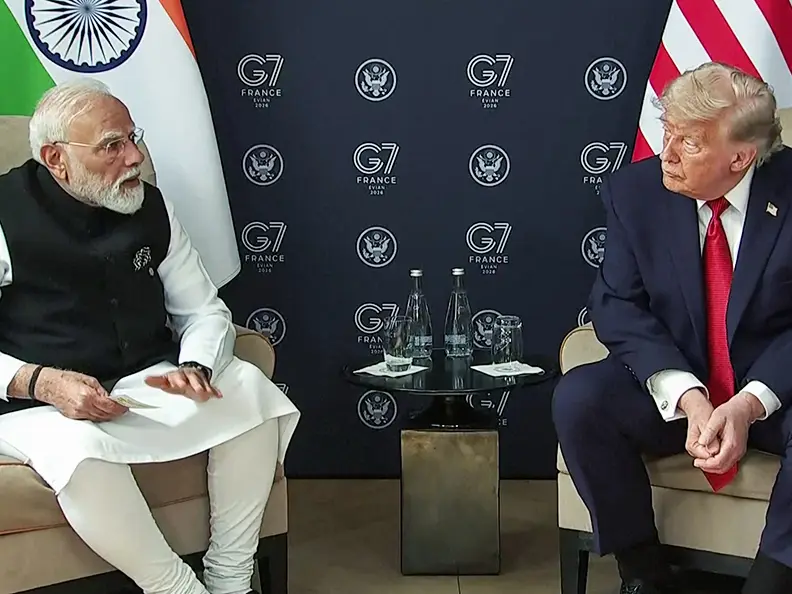
Prime Minister Narendra Modi and US President Donald Trump hold a bilateral meeting on the sidelines of the G7 Summit 2026 Photograph: (ANI)
A sweeping Russia sanctions bill has cleared the US House, giving Donald Trump a new mechanism to impose tariffs of up to 100% on major buyers of Russian energy. India and China could fall under the provision.
The US House of Representatives on Wednesday (Sep 16) passed a sweeping Russia sanctions bill that gives President Donald Trump new authority to impose tariffs of up to 100 per cent on major buyers of Russian oil and gas, including India and China.
The Lindsey O. Graham Sanctioning Russia and Iran Act of 2026 cleared the House by 262 votes to 159, sending the measure to the White House. This comes after the Senate approved it by an 86-11 vote in August. The legislation now only requires Trump's signature to become law.
The bill is named in honour of the late Republican Senator Lindsey Graham, who championed the sanctions package. It would expand sanctions on Russian officials, financial institutions and the country's energy and defence sectors, while targeting vessels used in Russia's so-called shadow fleet to move oil in an effort to evade Western restrictions.
India and China face potential tariff action
One of the most consequential provisions gives the administration authority to impose tariffs of up to 100 per cent on goods from countries that rank among the largest importers of Russian crude oil and natural gas.
Trending Stories
)
)
)
)
)
)
)
)
)
)
)
)
)
)
)
)
)
)
)
)
)
)
)
)
)
)
)
)
)
)
)
)
&im=FitAndFill=(700,400))
)
&im=FitAndFill=(700,400))
The legislation does not itself impose a 100 per cent tariff on Indian goods. Instead, it establishes a statutory mechanism under which the US administration can levy such duties if the required conditions are met. A Congressional Research Service analysis said the US Trade Representative would reassess every 180 days which countries are among the five largest importers of Russian crude and natural gas.
Given India and China's status as major buyers of Russian energy, the two nations could potentially come under the tariff provisions. The legislation also covers countries identified as facilitating the evasion of Russian oil sanctions.
Notably, the 100 tariff threat is just that, a threat. The tariff rate can be set above zero and up to 100 per cent, with the law allowing it to be adjusted depending on whether countries take significant steps to increase or reduce their purchases of Russian oil or gas.
Bill also targets Iran
The package includes additional measures against Iran and extends the Iran Sanctions Act for five years.
The legislation's passage marks a significant congressional effort to increase economic pressure on Moscow and limit revenues that support Russia's war in Ukraine. Ukrainian President Volodymyr Zelensky had urged lawmakers to approve the measure ahead of the vote.
“During the war, it is sometimes better to make a not-so-perfect decision than to do nothing,” Zelensky said in a social media post.
Democrats raise concerns over tariff powers
The bill also drew opposition in the House, including from Democrats who argued that the measure gives Trump overly broad tariff authority.
Rep. Gregory Meeks, the senior Democrat on the House Foreign Affairs Committee, warned that the language could allow the president to use sanctions-related provisions against countries beyond Russia's immediate trading partners.
The debate comes after the Trump administration has increasingly turned to tariffs as a tool of foreign policy and trade negotiations. The new legislation would provide another statutory route for imposing duties following legal challenges to some of Trump's earlier tariff measures.

