US President Trump embarks on Middle East tour with focus on business & regional tensions

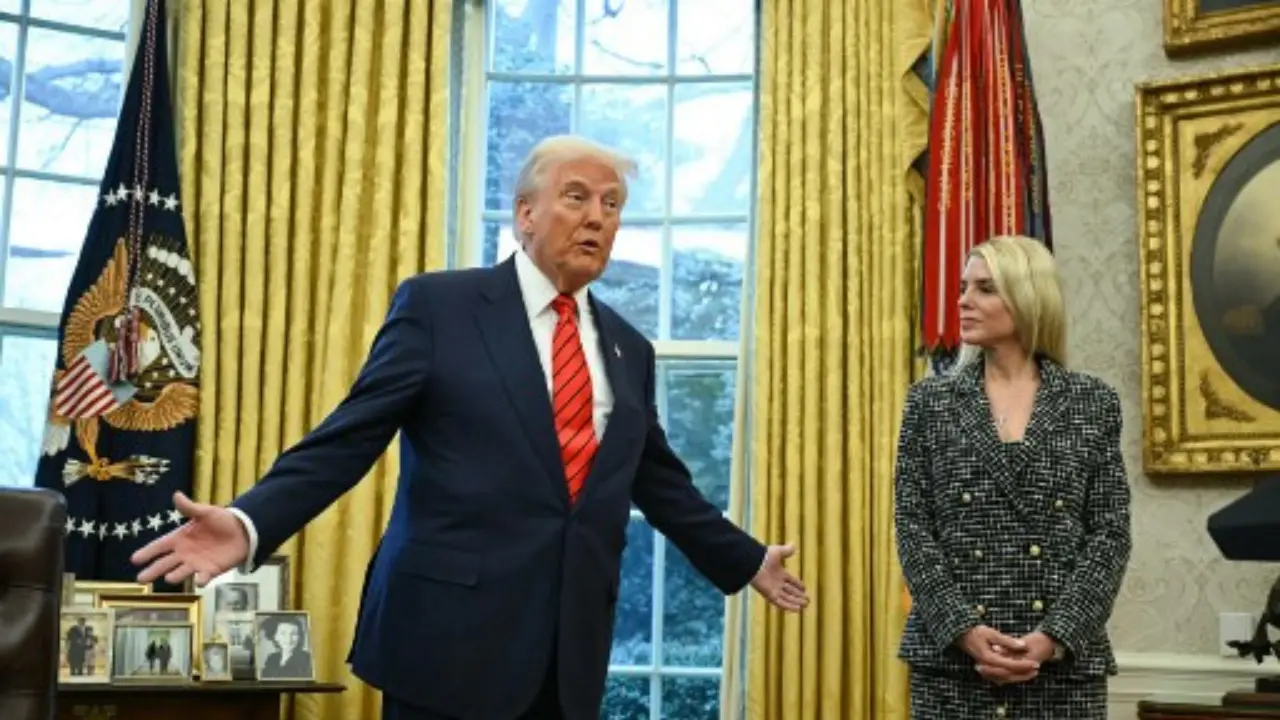
World: 8 years ago Trump also chose Riyadh for his first overseas trip as president -- when he memorably posed over a glowing orb with leaders of Egypt and Saudi Arabia
US President Donald Trump will visit Saudi Arabia, Qatar, and the United Arab Emirates on Monday (May 12), beginning his first significant foreign trip of his second term with a packed agenda of business agreements, even though longstanding regional rivalries are likely to predominate.
While Israel’s war in Gaza and Iran’s nuclear ambitions remain front and center, the White House has framed the visit as a “historic return” to a region Trump first visited as president in 2017—when he famously posed over a glowing orb with Saudi and Egyptian leaders in Riyadh.
By choosing again to begin his overseas travels within the oil-producing Gulf—instead of with long-standing Western partners—Trump is demonstrating the rising geopolitical influence of the region, and also emphasising his long-established personal and commercial connections there.

"It's hard for me to escape the idea that President Trump is going to the Gulf because this is his happy place," said Jon Alterman, director of the Middle East program at the Center for Strategic and International Studies.
"His hosts will be generous and hospitable. They'll be keen to make deals. They'll flatter him and not criticize him, and they'll treat his family members as past and future business partners."
A historic return
&imwidth=180&imheight=135&format=webp&quality=medium)
New Cold War: Why is China buying more gold? Explained
&imwidth=180&imheight=135&format=webp&quality=medium)
'I will not be silenced': Ilhan Omar alleges political intimidation after federal officers search her Washington home
&imwidth=180&imheight=135&format=webp&quality=medium)
Robotic surgery, advanced treatment: What is coming to this small Gujarat town?
&imwidth=180&imheight=135&format=webp&quality=medium)
Opposition’s 10 demands in Supreme Court petition range from stay on SIR to audit of voter rolls
&im=FitAndFill=(700,400)&imwidth=180&imheight=135&format=webp&quality=medium)
How does a robot decide what to do next?
&im=FitAndFill=(700,400)&imwidth=180&imheight=135&format=webp&quality=medium)
Navratri 2026: 9 days, 9 forms of Goddess Durga and 9 colours- Check the complete list
&imwidth=180&imheight=135&format=webp&quality=medium)
Girl 'dead' for 8 hours wakes up at her own funeral, dad insists she wasn't breathing
&imwidth=180&imheight=135&format=webp&quality=medium)
Houthis warns US of 'painful response' if Washington joins Saudi war in Yemen as airlines suspend flights to Saudi Arabia
&imwidth=180&imheight=135&format=webp&quality=medium)
‘This is just the start’: Maaya Rajeshwaran on historic ITF title, confidence boost and future goals
&imwidth=180&imheight=135&format=webp&quality=medium)
India's Ajit Doval, Iran's Mohsen Rezaei hold talks amid escalating West Asia tensions, discuss 'issues of mutual interest'
&imwidth=180&imheight=135&format=webp&quality=medium)
'Almost certainly': UK Prime Minister Andy Burnham says Iran's IRGC behind RAF Fairford threat
&imwidth=180&imheight=135&format=webp&quality=medium)
China’s gold rush puts billion in focus
&imwidth=180&imheight=135&format=webp&quality=medium)
Congress demands action against chief election commissioner
&imwidth=180&imheight=135&format=webp&quality=medium)
'I am thoroughly unamused': Judge slams Trump administration after 400 trees cut at Washington golf course
&imwidth=180&imheight=135&format=webp&quality=medium)
BCCI rejects venue shift reports, India vs Sri Lanka 1st ODI to remain in Delhi
&imwidth=180&imheight=135&format=webp&quality=medium)
Korean peninsula tensions escalate as North Korea launches multiple ballistic missiles, PACOM says 'no threat to US personnel'
&imwidth=180&imheight=135&format=webp&quality=medium)
Sidhu Moose Wala’s younger brother wins hearts by recreating late singer’s signature move at Toronto Hologram Show
&im=FitAndFill=(700,400)&imwidth=180&imheight=135&format=webp&quality=medium)
The world’s best places to live in 2026: Is your city on the list? Top 7 ranked
&imwidth=180&imheight=135&format=webp&quality=medium)
Trump weighs firing Kimberly Guilfoyle as US ambassador to Greece amid misconduct allegations: Report
&imwidth=180&imheight=135&format=webp&quality=medium)
Rahul Gandhi's plea against Election Commission delayed as Supreme Court registry flags 14 ‘defects’
&imwidth=180&imheight=135&format=webp&quality=medium)
1,500 drones illuminate Mumbai sky as Cordelia Cruises unveils second ship, Cordelia Sky
&imwidth=180&imheight=135&format=webp&quality=medium)
'Turn approver, resign, we'll forgive you': Rahul Gandhi claims receiving messages from CEC Gyanesh Kumar
&imwidth=180&imheight=135&format=webp&quality=medium)
Delhi protest: CJI Surya Kant declines to meet India Bloc leaders
&imwidth=180&imheight=135&format=webp&quality=medium)
'Absolutely disgusting': Australia slams US plan to livestream Nidal Hasan's execution; Mike Johnson raises concerns, warns of terrorist propaganda
&imwidth=180&imheight=135&format=webp&quality=medium)
Elon Musk pumps $276 million into Republican campaigns ahead of US midterm elections
&imwidth=180&imheight=135&format=webp&quality=medium)
Trump says he 'may' meet North Korean leader Kim Jong Un during upcoming Asia trip
&im=FitAndFill=(700,400)&imwidth=180&imheight=135&format=webp&quality=medium)
New OTT releases this week (October 12-18, 2026): Sacrifice, Koffee with Karan S9, Roadies Rebirth- 6 titles coming on Netflix, JioHotstar and more
&imwidth=180&imheight=135&format=webp&quality=medium)
‘Fortress breached, reclaimed’: CJP leaders enter Jantar Mantar a day after loss of protest venue status | WATCH
&imwidth=180&imheight=135&format=webp&quality=medium)
I.N.D.I.A. Bloc lists 10 requests to Supreme Court
&imwidth=180&imheight=135&format=webp&quality=medium)
Pakistan's government blames PTI for rise of terrorism in Khyber Pakhtunkhwa
&imwidth=180&imheight=135&format=webp&quality=medium)
UK school ditches technology, shifts from screen to pen and paper for learning
&imwidth=180&imheight=135&format=webp&quality=medium)
Anti-SIR protest in Mumbai: Protestors wear black masks & ribbons in Mumbai
&imwidth=180&imheight=135&format=webp&quality=medium)
'Ouch!!! That must hurt': Kangana Ranaut hails Kamal Haasan's sharp reply to Elon Musk over Starlink row
&imwidth=180&imheight=135&format=webp&quality=medium)
UK PM Andy Birnham renews claims of Russian meddling in Brexit vote
Riyadh, Doha, and Abu Dhabi are making preparations for a lavish reception for Trump, who stopped by Rome briefly to attend Pope Francis's funeral. The Gulf states are likely to present a combination of ceremonial pomp and wide-reaching commercial deals in defense, aviation, energy, and artificial intelligence.
"The president looks forward to embarking on his historic return to the Middle East" to promote a vision where "extremism is defeated in place of commerce and cultural exchanges," spokeswoman Karoline Leavitt said Friday.
Nevertheless, serious regional crises will be impossible to avoid. Trump will be called upon to speak to the continuing conflict in Gaza, the ascendance of the Iran-backed Huthi rebels in Yemen, and instability in Syria after the collapse of the Assad regime.
Trump will meet with the leaders of the six Gulf Cooperation Council (GCC) countries: Saudi Arabia, the UAE, Bahrain, Qatar, Kuwait, and Oman, during his visit. Israel, Washington's most important ally in the region, is strangely absent from the list, fueling speculation regarding the strained relationship between Trump and Israeli Prime Minister Benjamin Netanyahu.
"Trump is coming to the Gulf first because this region has become a geopolitical and financial center of gravity," Anna Jacobs, non-resident fellow at the Arab Gulf States Institute in Washington, was quoted saying to AFP.
Israel has also reportedly given Trump's visit a deadline to consider a possible ceasefire with Hamas, warning it of a major assault in Gaza unless an agreement is reached. Nonetheless, Trump has adopted a hands-off approach, while American officials indicate they're cooperating with Israel on a new Gaza aid corridor.
Iran and 'Monetizing MAGA'
Iran will also be a critical focus. On Sunday, the US and Iran are set to resume indirect nuclear talks in Oman. Tehran has expressed outrage after Trump floated the idea of renaming the Persian Gulf to the “Gulf of Arabia,” a move that would likely escalate tensions further.
In the meantime, while Trump's camp maintains that his businesses are not on the agenda, his family's expanding commercial presence in the region indicates otherwise. The Trump Organisation recently closed a luxury real estate transaction in Qatar and unveiled a $1 billion skyscraper development in Dubai that takes cryptocurrency payments.
Eric Trump has been touting crypto businesses in the UAE, and Donald Trump Jr. will be speaking at a Doha event called "Monetizing MAGA."
But the White House denied Trump was cashing in."It's frankly ridiculous that anyone... would even suggest that President Trump is doing anything for his own benefit," Leavitt said.

