US Navy's secret weapon? WION Decodes 'sea drones' used by America in first-of-its-kind rescue mission near Iran

&imwidth=600&imheight=450&format=webp&quality=medium "US Navy's secret weapon? WION Decodes 'sea drones' used by America in first-of-its-kind rescue mission near Iran")
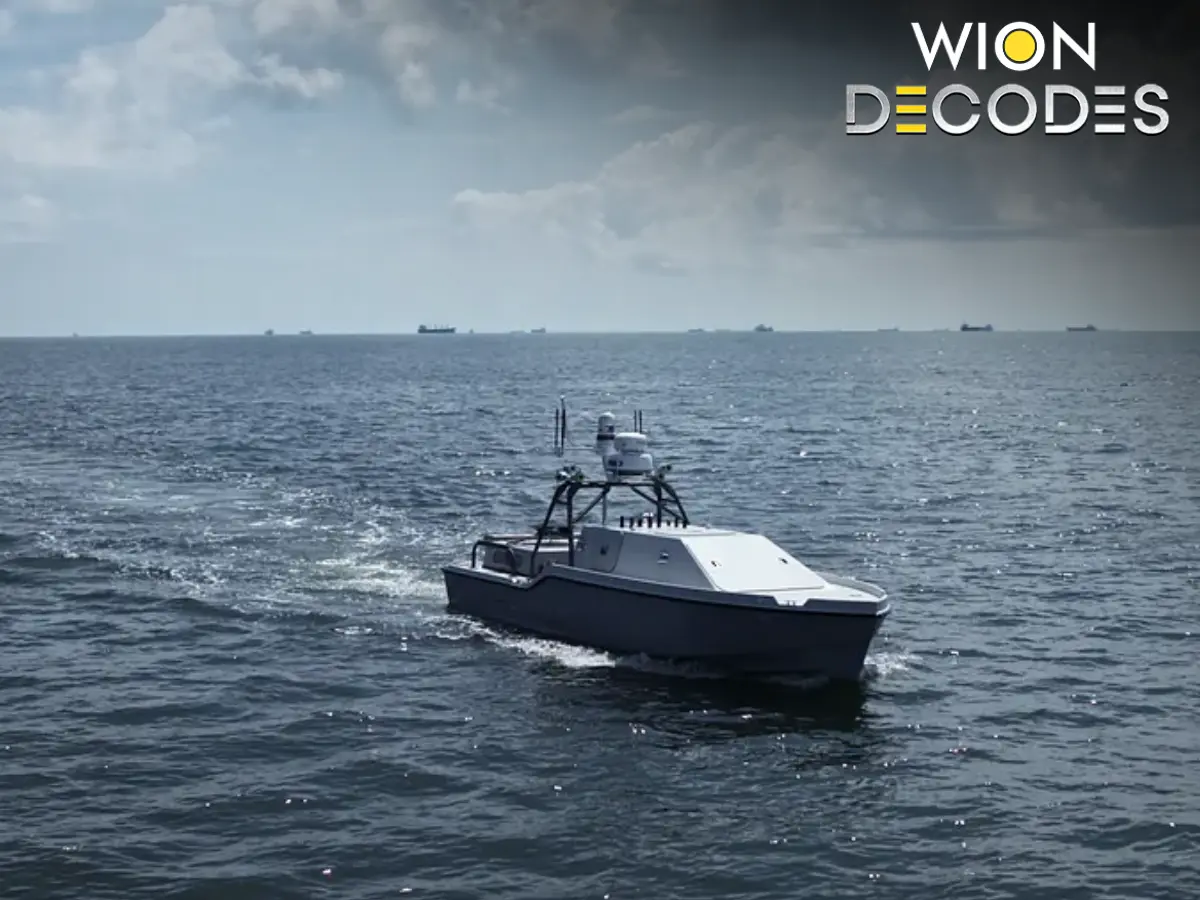
Saronic's Corsair, a 24-foot Autonomous Surface Vessel (ASV) Photograph: (Saronic Technologies/Medium)
After two US Army Apache pilots crashed into Gulf waters near the Strait of Hormuz, an unlikely rescuer came to their aid: a 24-foot autonomous sea drone. The operation may mark the first known use of a drone to recover personnel during a real-world military mission. All you need to know.
The US Navy used a little-known military technology to rescue two US Army helicopter crew members in the waters near the Strait of Hormuz. This, according to reports, may be the first known US use of an unmanned military vessel to recover personnel at sea. The US military has publicly confirmed that US Navy Corsair, an unmanned naval vessel, commonly known as a sea drone, was used to locate and rescue personnel in a real-world operation. Here's all you need to know about the groundbreaking technology.
US rescues Apache helicopter pilots from Strait of Hormuz
Two US pilots had to be rescued after their AH-64 Apache helicopter crashed while patrolling regional waters near Oman. Blaming Iran for the attack, the US carried out "proportional" strikes against Iran on Tuesday (Jun 9). "The mission is a proportional response to unjustified Iranian aggression," said US Central Command (CENTCOM).
According to CENTCOM, the two crew members spent nearly two hours in the water before being located and rescued by a US Navy autonomous vessel. Corsair, a 24-foot-long autonomous surface vessel, aka a sea drone, manufactured by Texas-based defence company Saronic Technologies, was used for the rescue.
What exactly is a sea drone?
Trending Stories
&imwidth=280&imheight=210&format=webp&quality=medium)
&imwidth=280&imheight=210&format=webp&quality=medium)
&imwidth=280&imheight=210&format=webp&quality=medium)
&imwidth=280&imheight=210&format=webp&quality=medium)
&imwidth=280&imheight=210&format=webp&quality=medium)
&imwidth=280&imheight=210&format=webp&quality=medium)
&imwidth=280&imheight=210&format=webp&quality=medium)
&imwidth=280&imheight=210&format=webp&quality=medium)
&imwidth=280&imheight=210&format=webp&quality=medium)
&imwidth=280&imheight=210&format=webp&quality=medium)
&imwidth=280&imheight=210&format=webp&quality=medium)
&imwidth=280&imheight=210&format=webp&quality=medium)
&imwidth=280&imheight=210&format=webp&quality=medium)
&imwidth=280&imheight=210&format=webp&quality=medium)
&im=FitAndFill=(700,400)&imwidth=280&imheight=210&format=webp&quality=medium)
&imwidth=280&imheight=210&format=webp&quality=medium)
&imwidth=280&imheight=210&format=webp&quality=medium)
&imwidth=280&imheight=210&format=webp&quality=medium)
&imwidth=280&imheight=210&format=webp&quality=medium)
&imwidth=280&imheight=210&format=webp&quality=medium)
&imwidth=280&imheight=210&format=webp&quality=medium)
&imwidth=280&imheight=210&format=webp&quality=medium)
&imwidth=280&imheight=210&format=webp&quality=medium)
&imwidth=280&imheight=210&format=webp&quality=medium)
&imwidth=280&imheight=210&format=webp&quality=medium)
&imwidth=280&imheight=210&format=webp&quality=medium)
&imwidth=280&imheight=210&format=webp&quality=medium)
&imwidth=280&imheight=210&format=webp&quality=medium)
&imwidth=280&imheight=210&format=webp&quality=medium)
&imwidth=280&imheight=210&format=webp&quality=medium)
&imwidth=280&imheight=210&format=webp&quality=medium)
Sea drones are unmanned vessels that operate on the water's surface or beneath it without carrying a human crew on board. Similar to aerial drones, they can be controlled remotely or operate autonomously using sensors, cameras, artificial intelligence and satellite communications.
The United States has increasingly invested in these systems as part of a broader effort to modernise its military and reduce risks to personnel in dangerous environments.
Who operates the US Navy Corsair?
The rescue vessel belonged to Task Force 59, a Bahrain-based US Navy unit established in 2021. It is the first American naval formation dedicated exclusively to integrating unmanned systems into maritime operations.
Task Force 59 began deploying Corsair vessels across the Middle East earlier this year as tensions in regional waterways intensified.
Also read | 'He was in charge': Pam Bondi REVEALS who was really behind the botched Epstein files release
What can these sea drones do?
The US Navy Corsair is capable of carrying up to 1,000 pounds (453.5kg) over 1,000 nautical miles with a top speed of 35 knots. While the latest mission involved a rescue operation, sea drones are designed for a much wider range of tasks. They can monitor shipping lanes, track suspicious vessels, conduct surveillance, detect naval mines and gather intelligence in areas where sending crewed ships may be risky or costly.
Some military planners also envision future versions carrying weapons or supporting combat missions alongside conventional warships.
Have sea drones been used in combat?
To date, the US has largely used them for surveillance and maritime security; however, recent conflicts have demonstrated their offensive potential.
Earlier, Ukrainian forces were reported to have used unmanned boats to damage Russian warships, disrupt naval operations and even reportedly bring down a helicopter. The successful rescue near the Strait of Hormuz marks another milestone in the technology's evolution.

