US approves $825M ERAM missile sale to Ukraine: Key features, specifications

&imwidth=600&imheight=450&format=webp&quality=medium "US approves $825M ERAM missile sale to Ukraine: Key features, specifications")
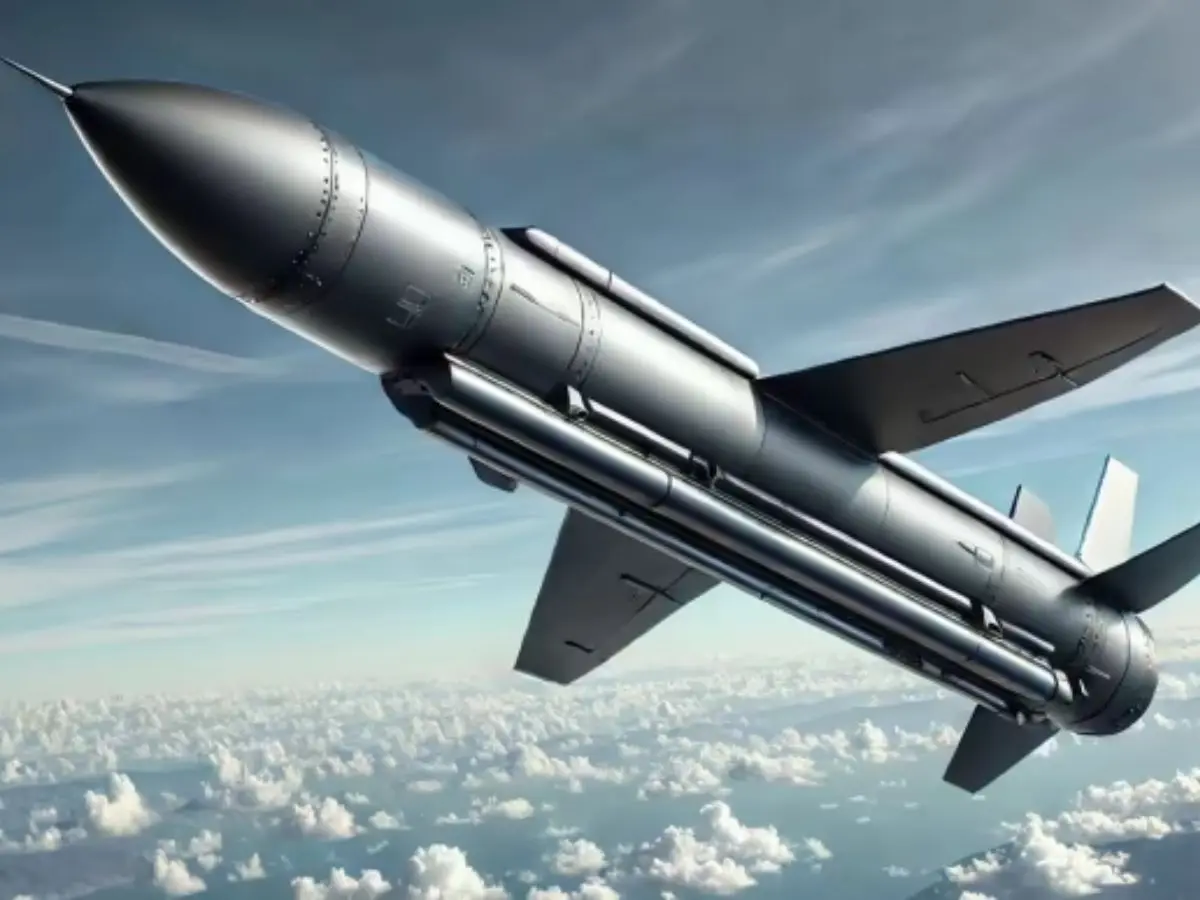
Representive image of an ERAM missile Photograph: (Army Recognition)
The US has approved an $825 million sale of ERAM missiles to Ukraine, enhancing long-range strike capabilities. Explore key features, specifications, and strategic importance.
The US Department of Defence has approved the sale of 3,350 ERAM (Extended Range Attack Munition) air-launched cruise missiles to Ukraine, worth approximately $825 million. The acquisition is supposed to bolster the long-range air strike capability of Ukraine, specifically beyond visual range capability to strike within Russian territories. Earlier in August, Ukraine's President Volodymyr Zelensky said that Ukraine has secured $1.5 billion in investment from European allies to purchase U.S. weapons.
What are ERAM missiles?
Russian state media TASS have claimed that the ERAM missile has a range of 240–450 km (150–280 miles), with a 500-pound warhead. According to the US government agency DSCA, it will have an Embedded Global Positioning System (GPS)/Inertial Navigation Systems (INS) (EGI) with a Selective Availability Anti-Spoofing Module (SAASM), Y-Code, or M-Code. Manufactured by Zone 5 Technologies and CoAspire, the missile is primarily compatible with the F-16 Fighting Falcon and other Ukrainian aircraft like MiG-29, Su-27/30 family.
What are the strategic implications?
ERAM missile will assist Ukraine in engaging in beyond visual range combat, by enabling it to target the Russian supply depots, command centres, and critical infrastructure deep inside occupied territories, including Crimea. At roughly $246,000 per unit, the missile is affordable compared to other air-launched cruise missiles like Flamingo, Storm Shadow (SCALP) and JASSM-ER, which exceed $1 million per unit. This allows Ukraine to deploy it in large numbers. Its compatibility with existing Ukrainian aircraft ensures a seamless integration into current military operations.
The Russia-Ukraine war remains intense with a Russian missile strike on Thursday killing at least 23 people and injuring over 50. Zelensky has set a Monday deadline for Russia to agree on a bilateral talk; unable to meet it will lead to further escalation. On the other hand, European Commission President Ursula von der Leyen has little hope for a settlement in the near future and urged European readiness, cautioning against Russian President Putin's ongoing aggressive behaviour.
Trending Stories
)
)
)
&im=FitAndFill=(700,400))
)
)
)
)
)
)
&im=FitAndFill=(700,400))
)
)
&im=FitAndFill=(700,400))
&im=FitAndFill=(700,400))
)
)
&im=FitAndFill=(700,400))
)
)
)
&im=FitAndFill=(700,400))
&im=FitAndFill=(700,400))
)
)
&im=FitAndFill=(700,400))
)
)
)
)
)

