Twitter has become a scary place for Turks who critique Erdogan

?Click now to report a user to the police!? Turkish police introduce new app to encourage people to inform on those criticising Erdogan.
Previously, fashion designer Barbaros Sansal was briefly jailed for “inciting hatred” after tweeting a video. Social media screenshots are routinely used as “evidence” in lawsuits against Kurdish journalists, such as Ali Baris Kurt, who was sentenced recently to 28 months in prison.

Twitter has become a scary place for Turkish users, landing many who disagree with the current government straight in jail. Although frequent bans by the Erdogan government have failed to keep residents off the platform, the intimidation is getting more serious.
Since the coup attempt one year ago, which was blamed on one-time Erdogan ally, cleric Fetullah Gülen, Turkish police have started encouraging internet users to inform on others. In December 2016, Aksam, a newspaper owned by Ethem Sancak, a functionary in Erdogan’s Justice and Development Party (AKP), announced hotline apps and accounts launched by the police.
The app urged users to “Click the link to report a Twitter user to the police now”“. Since then, thousands of Twitter users critical of the government have been reported to the police’s @EmniyetGM Twitter account.

How does a GPU actually work? The technology behind modern graphics and AI

Macron’s awkward embrace with Iceland PM Kristrún Frostadóttir goes viral – What happened?

Aliens near US military base? Woman captures bizarre jellyfish-like UFO in Alaska | WATCH

'Miracle on the Mississippi': Cruise boat capsizes after colliding with tanker in New Orleans, all 180 passengers aboard safe

Why are modern GPUs so expensive? 7 things that drive graphics card prices

Why do graphics cards have thousands of small processing cores?

'Don’t f–k around!' Travis Barker opens up on quitting smoking after precancer diagnosis

CPU vs GPU vs NPU: Which processor does your computer actually need?

After Venezuela and Iran, Trump sets sights on another military intervention before leaving office

'Forbidden' light proposed 40 years ago detected for first time in the universe

Avril Lavigne welcomes first child, keeps baby's name and partner's identity private

Why did the FAA suddenly ground flights across the US? Officials reveal what went wrong

Reply 1988 star Ko Kyung Pyo under police investigation after drunk-driving collision in Seoul

Shape-shifting UFO sighting in Oregon leaves mother-daughter sick: 'Fell like a dead bird'

Vaaste singer Dhvani Bhanushali announces engagement to esports entrepreneur Yash Bhanushali; see pics

From chipmakers to cloud giants: How is Nvidia's stock crash shaking the AI industry?

Crystal-clear Ganga water in Haridwar? Viral video creates buzz online | WATCH

Move over Ram and Ravan, Kunal Kapoor's Lord Indra in Ramayana is stealing hearts in Thailand

Nvidia scandal exposes cracks in Trump admin as Bessent blames Lutnick over Megaspeed blacklist delay

Chris Hemsworth and Elsa Pataky's Australian home targeted by burglars; 3 cars stolen

Trump, Putin and Xi to hold historic trilateral meeting at APEC Summit in China

'Don't hike rates': US Treasury Secretary Bessent warns Fed against rate increase amid Iran war

Ukraine's NATO membership in exchange for ceding territory to Russia: Zelensky reveals US proposal

Jensen Huang seen with wife Lori in Paris in photos shared by daughter Madison

A$AP Rocky's New York event disrupted by on-camera brawl, NYPD steps in

24 hours and counting: Microsoft says 'sorry' for global outage

CM Suvendhu Adhikari turns Bengal's Chhath ghats into launchpad for UP campaign

Mohamed Salah becomes Egypt’s all-time top scorer with brace against Malawi

Video captures horrifying moment Brooklyn apartment building collapses, killing eight people

Colombia 'false positives' scandal: 5 retired army men sentenced over killing of 35 civilians

'It exploded in his mouth': Man dies after friend gives him bomb disguised as rasgulla on Diwali in Madhya Pradesh's Dindori

Why do powerful graphics cards need so much electricity?

Indian student sentenced to 30 years in UK for online grooming of over 70 children
According to the independent news website Diken, as of July 2017 seven people, a day is taken into custody GetOldTweets software returned more than 3,500 tweets reporting a user to the police.

Screenshot of the police call
While the Turkish government has previously tried to censor tweets through court orders, calling for denunciation by citizens is new and chilling.
Censorship of traditional media
It’s difficult to imagine these days that Twitter was once a thriving place for free expression in Turkey. For many Turkish speakers, Twitter is a "grey market” news source, able to fill in the blanks left by mainstream media.

‘General directorate of security warns citizens 'You may report social media profiles and pages supporting terrorist activities along with their links and screenshots to the e-mail addresses below.’ Directorate General of Press and Information Turkish Government, Author provided
Around 6.5 million Turks are estimated to use Twitter, according to 2015 data. Though this number pales in comparison to 46 million Turkish Facebook users, Twitter has proved its worth repeatedly as a news source and political communication tool.
Twitter’s rise started after the 2010 constitutional referendum when Erdogan’s AKP, together with then-allies Gülenists, eliminated its secular rivals in the civil-military bureaucracy. By the following year, Erdogan was instructing mainstream media bosses on how to cover “news on terror”, his term for clashes between the Turkish army and Kurdish guerrillas.
In December 2011, the Turkish air force killed 34 Kurdish civilians near the Iraqi border. But the news was not covered by mainstream media until the next day when the Turkish general staff claimed responsibility for the airstrike.
A voice for the silenced ones
Soon, other silenced groups, such as leftists, environmentalists, and even Kemalists started to use Twitter. In June 2013, Turkish Twitter made a giant leap with the Gezi Protests, which began as an environmentalist action in Istanbul and turned into a millions-strong movement.

The June 2013 Taksim Gezi Park protests were boosted by the use of Twitter and other social networks.
To counter anti-government tweets, he hired thousands of pro-AKP Twitter users, but to no avail. Erdogan’s base was still most present on Facebook, while Twitter attracted young, urban, secular users (in part because its platform was not available in the Turkish language until 2011).
Twitter as Erdogan’s enemy

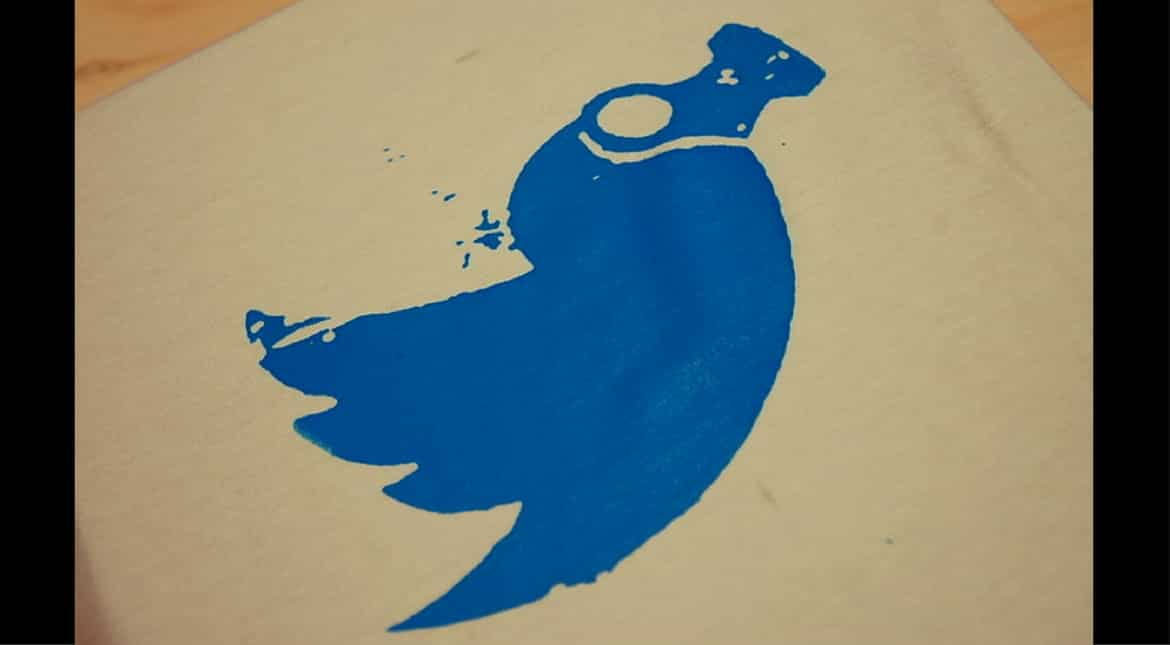
Turkey tries to turn off Twitter, after François-Léon Benouville, 2014.
Pressure increased again following the 2016 coup attempt. Since Erdogan became president in 2014 after 11 years as prime minister, Article 299 of the Turkish Penal Code has often been used to stifle dissent. After the attempted coup, this statute, which forbids insulting the president, has been coupled with terror charges. The result is often a serious prison sentence.
They continue to amplify hashtag campaigns in support of the government and contribute to the complaints against individual Twitter users. Their presence, combined with the AKP’s zealous chase of online opponents for “terrorism” punishment, has made Turkish Twitter a truly dangerous place.
 On the Internet, the saying goes, nobody knows you are a dog. But in today’s Turkey, where journalists, lawyers, human rights defenders and academics can be declared terrorists arbitrarily, you may still find yourself chained.