

&imwidth=800&imheight=600&format=webp&quality=medium "Global tsunami alert: Why do some tsunamis hit in minutes while others take hours?")
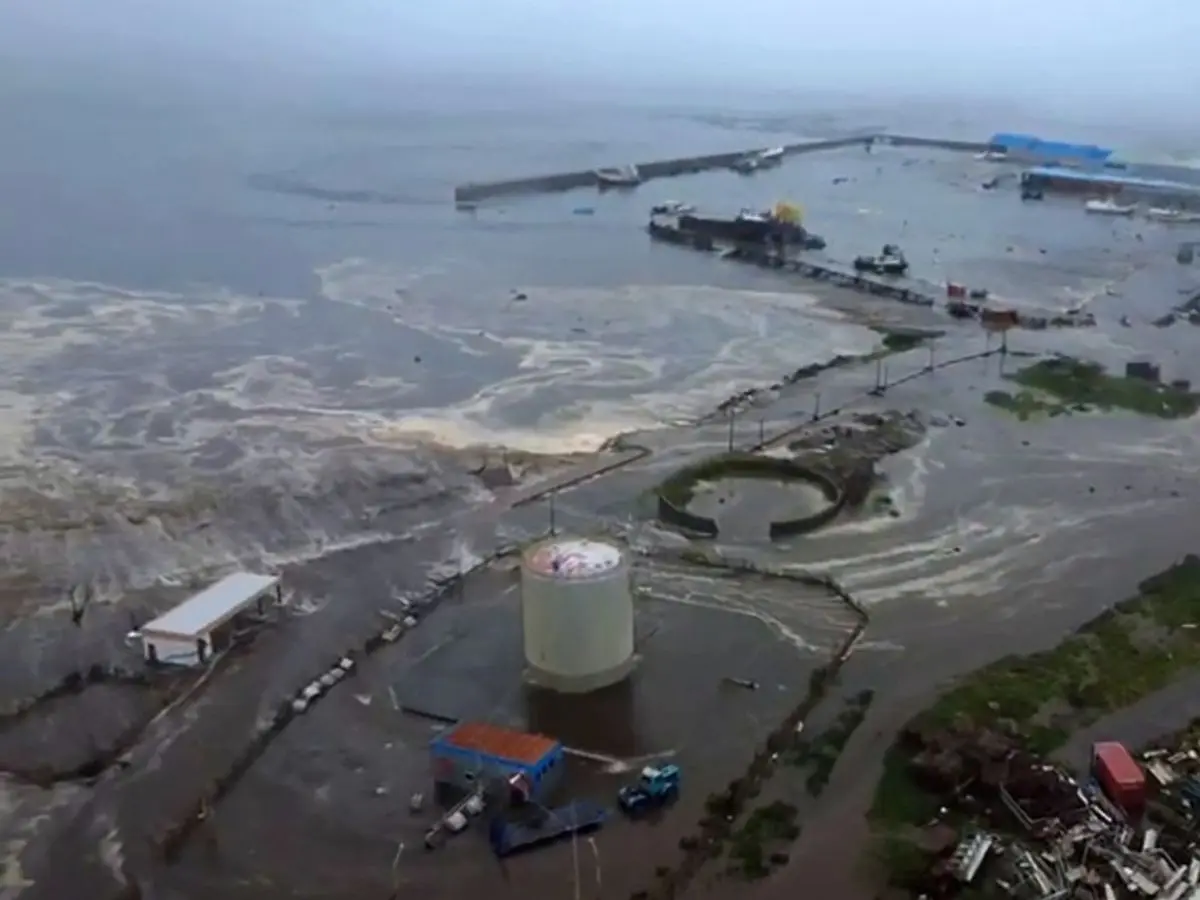
A massive 8.8 magnitude earthquake hit the eastern coast of Russia in Kamchatka Peninsula on July 30, recording the sixth strongest ever recorded. Evacuation warnings have been issued across the Pacific. As residents move to higher ground, leaving the coastal zones, they wait for the tsunami to strike. There are speculations about the prospective height of the wave and speed with which it will strike, reviving a crucial question: why do some tsunamis hit the coastline in minutes while others take hours to arrive?
The earthquake hit at 4:15 am local time in Russia, and within minutes, 13-foot-long waves were observed along the coastlines, prompting widespread evacuation. Soon after, Japan, Hawaii, the U.S. West Coast, Mexico, and parts of South America issued tsunami advisories with warnings, expecting the tsunami to reach the coast within 3-20 hours of the initial tremors.
Tsunami travel time
The travel time of the Tsunami depends on its speed, which is directly proportional to the depth and the distance from the epicentre. The deeper the water, the faster the waves. It can reach up to the speed of a jet in deep water (500 mph), while in shallow water it slows to the speed of (20-30mph). Coastal areas near the quake, like parts of Kamchatka and the Kuril Islands, saw waves arrive in under 15 minutes. The areas close to the epicentre of the earthquake are likely to face the Tsunami first. The rupture direction of the waves, ie the energy release, also influences which regions are hit the hardest. Japan’s northern coast was directly in the wave’s path and recorded wave activity with 0.4-meter-long waves in under an hour.
Where has the Tsunami reached?
The Tsunami hit Russia's Kamchatka within minutes of the earthquake, and waves up to 4 meters were observed.
Trending Stories
&imwidth=180&imheight=135&format=webp&quality=medium)
India’s naval priorities: Ex-Navy Chief calls for third aircraft carrier, more warships and submarines
&imwidth=180&imheight=135&format=webp&quality=medium)
Netanyahu defies Trump, blocks Gaza military base for Board of Peace | Gravitas
&imwidth=180&imheight=135&format=webp&quality=medium)
Was Trump in danger at Alaska rally? Viral video shows Secret Service agents reacting
&imwidth=180&imheight=135&format=webp&quality=medium)
'Turn approver, resign, we'll forgive you': Rahul Gandhi claims receiving messages from CEC Gyanesh Kumar
&imwidth=180&imheight=135&format=webp&quality=medium)
Girl 'dead' for 8 hours wakes up at her own funeral, dad insists she wasn't breathing
&imwidth=180&imheight=135&format=webp&quality=medium)
Is America trying to ‘destabilise’ India or change its regime? How influence operations became a recurring theme in political rhetoric
&imwidth=180&imheight=135&format=webp&quality=medium)
Russian woman and Bihar boy's love story goes viral after she reaches India to marry him
&imwidth=180&imheight=135&format=webp&quality=medium)
'White supremacist' terror plot against Illinois Hindu temple foiled by jammed gun: Who is Alexandros Paporakis?
&imwidth=180&imheight=135&format=webp&quality=medium)
NASA captures strange structure with tentacle-like formation from space
&imwidth=180&imheight=135&format=webp&quality=medium)
‘My president, I mean my husband’: Trump's new press secretary Katie Zacharia's first briefing goes off the rails in 14 minutes
&imwidth=180&imheight=135&format=webp&quality=medium)
US considering use of ‘mother of all bombs’ in its war with Iran: Report
&imwidth=180&imheight=135&format=webp&quality=medium)
Researchers believe AI could cure cancer patients around the world
&imwidth=180&imheight=135&format=webp&quality=medium)
Aga Ruhullah, Iltija Mufti, Mehraj Malik condemn misconduct against woman KAS officer
&imwidth=180&imheight=135&format=webp&quality=medium)
Leap second could go by 2027. What it means, as timekeepers gather in Versailles
&imwidth=180&imheight=135&format=webp&quality=medium)
'Ukraine must get all it needs to protect civilians and infrastructure': Macron
&imwidth=180&imheight=135&format=webp&quality=medium)
Nine former FBI employees fired over investigation into Trump's classified records sue Kash Patel, DOJ over alleged unlawful dismissal
&imwidth=180&imheight=135&format=webp&quality=medium)
Turkey Floods: Heavy rains flood homes and submerge vehicles in Istanbul
&imwidth=180&imheight=135&format=webp&quality=medium)
Mumbai gears up for Marco Rubio’s visit as US Secretary of State prepares for India trip
&imwidth=180&imheight=135&format=webp&quality=medium)
‘False accusations’: Maduro, wife plead not guilty to new US torture charges
&imwidth=180&imheight=135&format=webp&quality=medium)
Australian woman charged for adding snail poison to lover's curry at work
&imwidth=180&imheight=135&format=webp&quality=medium)
Katie Zacharia, White House Press Secretary admits she never passed bar exam amid credentials controversy
&im=FitAndFill=(700,400)&imwidth=180&imheight=135&format=webp&quality=medium)
World's 7 most innovative countries in 2026 REVEALED: Did India make the list? | In Pics
&imwidth=180&imheight=135&format=webp&quality=medium)
Oregon school shooting: 16-year-old identified as suspect after at least four killed, including three children
&imwidth=180&imheight=135&format=webp&quality=medium)
US sanctions Cuban state-owned bank BICSA over alleged financial links to Iran
&imwidth=180&imheight=135&format=webp&quality=medium)
Trump's tariff strategy faces new test: India wants preferential access and tariff stability
&imwidth=180&imheight=135&format=webp&quality=medium)
Arijit Singh 9-city India stadium tour to start from January: Check venue and ticket prices
&imwidth=180&imheight=135&format=webp&quality=medium)
US midterms 2026: FBI investigates suspicious mailings containing 'unknown substance' sent to election offices
&imwidth=180&imheight=135&format=webp&quality=medium)
Central Park in Delhi shut on October 16, 17 amid CJP's protest call
&imwidth=180&imheight=135&format=webp&quality=medium)
Abhishek Sharma sets all-time record for most T20I sixes in a year
&imwidth=180&imheight=135&format=webp&quality=medium)
Saudi Arabia executes two Bangladeshi nationals over ‘immoral acts’ inside Mecca mosque
&imwidth=180&imheight=135&format=webp&quality=medium)
'Don't ever mess with nature!': Trump’s tiger attack post triggers social media backlash as victim's family issues heartbreaking tribute
&imwidth=180&imheight=135&format=webp&quality=medium)
Who is Abu Dhabi royal Mahrah Al Nahyan, found unconscious on London street with toddler after cocaine use
&imwidth=180&imheight=135&format=webp&quality=medium)
Ukraine running out of patriot missiles as Russian ballistic attacks intensify: Report
&im=FitAndFill=(700,400)&imwidth=180&imheight=135&format=webp&quality=medium)
Inside the Peshawar school tragedy: 34 dead, building's condition under scrutiny and owner arrested. Here's what all happened

Kashmir scholars oppose Waqf Board’s common 'khutbah' proposal, allege political interference in mosques
&imwidth=180&imheight=135&format=webp&quality=medium)
Ukraine blinded: Musk deflects blame on Trump, Putin sharpens attack | Gravitas
&imwidth=180&imheight=135&format=webp&quality=medium)
India to overtake Japan, become 4th-largest economy by 2027? What IMF’s latest projection reveals
&imwidth=180&imheight=135&format=webp&quality=medium)
Portland stabbing: Multiple people reportedly stabbed hours after deadly Bend school shooting
"Unfortunately, there are some people injured during the seismic event. Some were hurt while running outside, and one patient jumped out of a window. A woman was also injured inside the new airport terminal,” Oleg Melnikov, the regional health minister, quoted by TASS.
The wave activity reached Hokkaido, Japan, within an hour, with 0.4-meter-long waves. Evacuation alerts were issued for over 900,000 residents. It is expected to hit Hawaii and Alaska within 5-7 hours, and California and Mexico within 10-14 hours. Ports and harbours remain on alert, and emergency services have asked citizens to stay on higher ground.

