Thousands protest against Poland's plan to discipline judges


EU flags, Poland
Thousandsof people, includingjudgesand lawyers from many EU member states, marched through Warsaw on Saturday toprotestagainstwhat they say are government attempts to curb the powers of the judiciary in Poland.
Last monthPoland'slower house of parliament approved a draft law that would allowjudgeswho question the government's reforms to bedisciplined.
The European Commission has said theplanned legislation would imperil the rule of law, deepening a standoff with the ruling Law and Justice (PiS) party.


In 2017 the European Parliament invoked Article 7 of its governing treatyagainstPoland for persistently flouting democratic rules, the first time it had used the procedure.
The latest legislation was drawn up after somejudgesquestioned the independence of peers nominated by a panel set up by the PiS-dominated parliament after nationalists won the 2015 elections.
)
India ‘deeply concerned’ as Houthi strikes hit Saudi civilian & energy sites
)
Three labourers killed as DU student loses control of his car, rams into them on Dwarka Expressway
)
Pentagon revives mandatory testosterone testing for male troops aged 30 and above
)
FACT CHECK: Why did PM Modi ask Xi ‘is it okay’ at BRICS Summit? New video reveals...
)
India seeks to build a full semiconductor supply chain
)
North Korea's last nuclear test in 2017 set off 1,399 earthquakes over 8 years, each stronger than previous
&im=FitAndFill=(700,400))
From Abhishek Sharma to Sahil Chauhan, 5 batters with fastest T20I hundreds
)
Indian activist-lawyer Prashant Bhushan's post brings focus on ‘conflict of interest’ appointments of ex-govt officials at Reliance, Adani groups
)
Former India player Diana Edulji wants Smriti Mandhana to replace Harman as skipper at the earliest
&im=FitAndFill=(700,400))
Meet top 5 batters in the latest ICC T20I Rankings
)
UNGA 2026 theme explained: What does ‘Restoring trust, managing transformation: A United Nations that delivers for all’ mean?
)
Godfather of AI Geoffrey Hinton gives US lawmakers a one-year warning on AI
)
US F-16 fighter jet crashes in Michigan during training mission, pilot ejects safely
)
Xi-Trump summit may boost military links
)
Shivakumar attends 79th Kalyana Karnataka Utsav in Kalaburagi
)
A first in 100 years: New cat species discovered in Bolivia is incredibly tiny
)
Trump signs Russia sanctions law: India faces fresh 100% tariff threat over Russian oil
)
Hong Kong extends newborn cash support scheme by three years
)
How did an Australian river with 500 crocodiles pass the Olympic test? Here's how
)
‘Will go to any extent’: Pakistan vows to defend Saudi Arabia amid Houthi attacks
)
'He will always be ahead': India coach Gambhir says Sooryavanshi won't walk into team ahead of Samson
)
The Verdict | When precision fails: US commits war crime in Minab school strike, UN finds
&im=FitAndFill=(700,400))
New Friday OTT releases (September 18, 2026): Lust Stories 3, You+Me, Best of the Best- 8 new titles coming on Netflix, Prime Video and more
&im=FitAndFill=(700,400))
Which country has the most F-35s outside America?
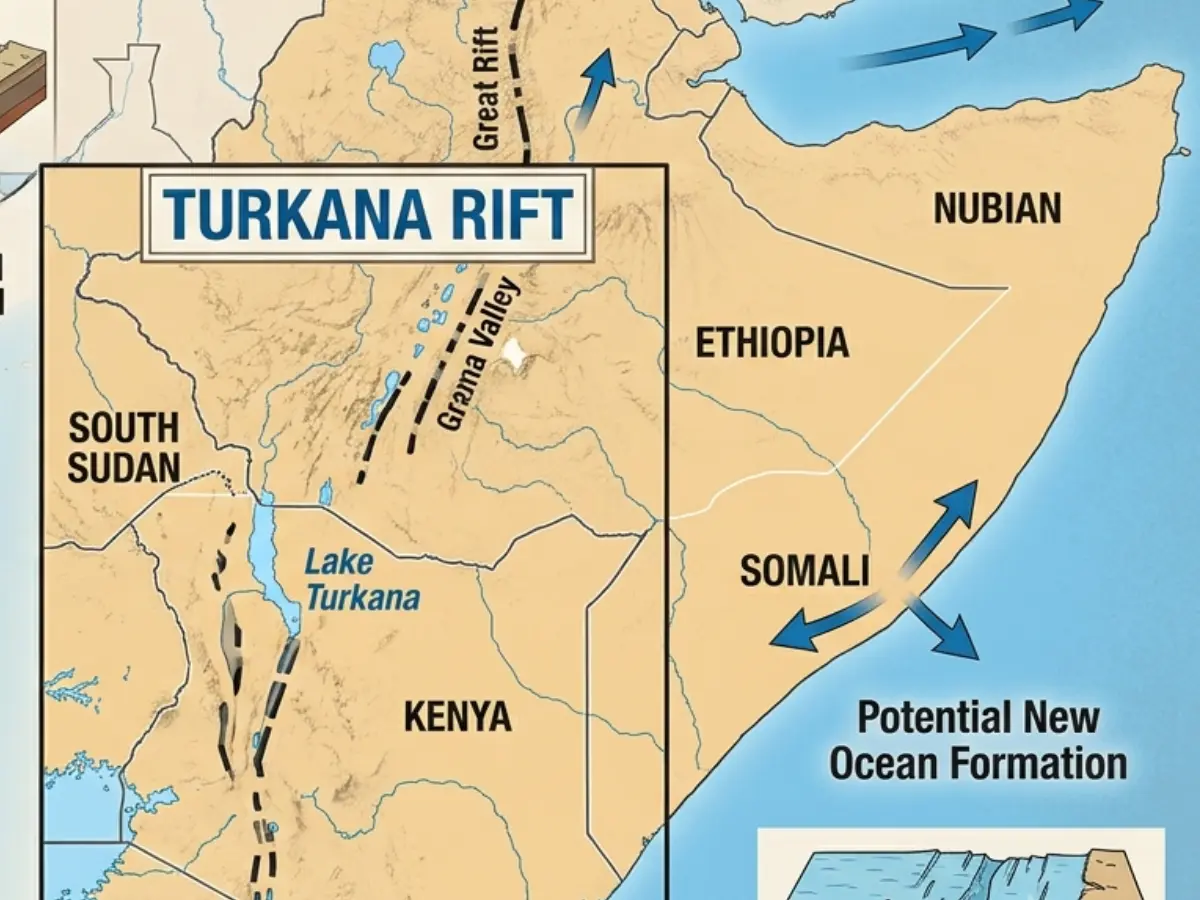)
Africa is splitting, and a lot sooner than estimated, giving way to a new ocean
)
'Gangsta' crab shoves knife blade at man and his dog in Florida - Watch
)
Trump bans CNN, MS NOW and Politico from White House over ‘FAKE NEWS’
)
Trump 2.0: Dark days ahead for America’s ‘imperial presidency’
)
Laura Wolvaardt sets new world record for most WT20I runs in a year
)
Drone strikes cooling tower at Russia's Kursk Nuclear Plant, IAEA confirms
)
Who is Khalilur Rahman? All you need to know about 81st UN General Assembly President
&im=FitAndFill=(700,400))
Meet top 5 bowlers in latest ICC T20I rankings
)
Cristiano Ronaldo returns to Portugal squad for Nations League under new coach
&im=FitAndFill=(700,400))
Meet top 5 Indian batters with fastest T20I centuries
)
Ukraine plans record $109 bn defence spending, nearly two thirds of budget amid Russia war
PiS says the new law is necessary to make the judiciary more efficient.
But critics say it will curb thejudges' independence, putting pressure on them to rule in favour of government policies.Poland'sSupreme Court said in December Warsaw could end up leaving the EU over the dispute.
Saturday'sprotest, tagged as "1,000 Robes March", was headed by a group ofjudgeswearing robes and carrying banners that read "The right to independence" and "The right to Europe".

"It is not usual for us to go out in robes toprotestagainstdepriving people of their right to courts," said Krystian Markiewicz, President of the PolishJudgesAssociation Iustitia, one of the march organisers.
"We are doing this for the citizens."
Judgesfrom 22 European countries, including Germany, France, and Spain, participated in theprotest, Iustitia said.
The march started in front of the Supreme Court, passed the president's office and ended at the parliament building to symbolise the principle of separation of powers, which the organisers say is now under threat.
"The situation is very serious, at least in our judgment, and that's why we are here," Jose Igreja Matos, President of the European Association ofJudges, told Reuters.
A government spokesman told Reuters: "We believe that the bills that are being adopted in Poland regulate the stability of the legal system."
Ahead of the march, a PiS spokesman was quoted by private broadcaster TVN24 as saying thatjudgesshould not get involved in politics.
"We've come here to support Polishjudges. We are here for the rule of law, not for politics," John MacMenamin, a judge of the Supreme Court of Ireland, told a press conference ahead of theprotest.
The upper house of parliament where the opposition has a slim majority could reject the draft legislation, but the PiS-controlled lower house would still have the power to overturn any changes.