

&imwidth=800&imheight=600&format=webp&quality=medium "Takaichi was advised against making Taiwan remark in parliament fearing China's backlash? What's the truth")
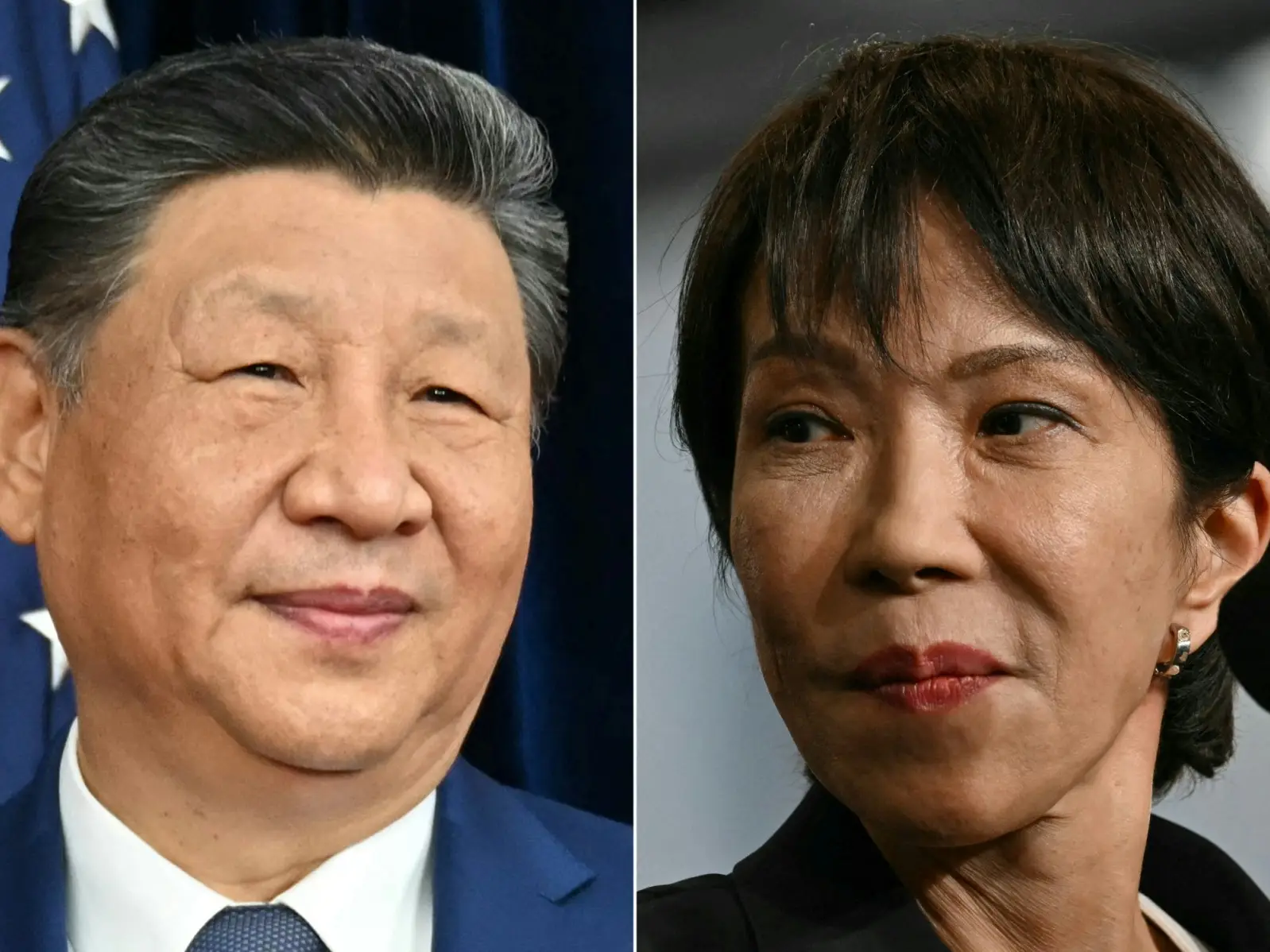
China and Japan are embroiled in one of the most serious diplomatic tussle in years over Japanese PM Sanae Takaichi's remark on Taiwan. A new report has now revealed that Takaichi was advised against making any such remark in the parliament that could antagonise Beijing. Critics are blaming Takaichi for this misstep, as it has put the peace and security of the Asia Pacific region in jeopardy, with war clouds hovering over it.
Documents obtained by opposition lawmaker Kiyomi Tsujimoto shown to Bloomberg reveals that the script prepared for Takaichi by the showed that the planned response for any queries related to Taiwan was for her to decline to comment. In Japan, bureaucrats prepare answers for cabinet members before they take questions in parliament or at press conferences. The includes both questions submitted in advance by lawmakers and the recommended responses. The Japanese PM was advised to avoid discussing Taiwan.
“The Cabinet Secretariat’s response was the same as that of previous administrations, and she should have said she would refrain from answering hypothetical questions about a Taiwan emergency,” Tsujimoto told Bloomberg after posting images of the script on X. Bloomberg reported that the Cabinet Secretariat declined to confirm over the phone the authenticity of the documents posted on Tsujimoto’s X account, but acknowledged disclosing documents to her. Chief Cabinet Secretary Minoru Kihara deflected a question on whether Takaichi’s Taiwan comments were prepared beforehand, asking reporters to direct such questions to the relevant department. However, Tsujimoto also revealed that a written response from Cabinet Secretariat states that the premier’s answers in parliament were largely in line with the government’s stance.
What was Takaichi's statement?
On Nov 14, Takaichi was asked by an opposition lawmaker in parliament about “survival-threatening situations.” In response, Takaichi gave an example that an attempt to bring Taiwan completely under the control of Beijing using battleships and military force could constitute such a situation. She also added that an attack on US warships sent to break any Chinese blockade on Taiwan could require Tokyo to intervene militarily to defend itself and its ally.
What is the meaning of ‘survival-threatening situations’?
Trending Stories
&imwidth=180&imheight=135&format=webp&quality=medium)
Other Mommy leads North American box Office as Verity, Resident Evil round out top four
&im=FitAndFill=(700,400)&imwidth=180&imheight=135&format=webp&quality=medium)
Navratri 2026: 9 days, 9 forms of Goddess Durga and 9 colours- Check the complete list
&im=FitAndFill=(700,400)&imwidth=180&imheight=135&format=webp&quality=medium)
Is sending robots to Mars easier than sending humans?
&imwidth=180&imheight=135&format=webp&quality=medium)
A watchdog rated 'ChatGPT for Teens' an unacceptable risk and says keep under-18s off it
&imwidth=180&imheight=135&format=webp&quality=medium)
1,500 drones illuminate Mumbai sky as Cordelia Cruises unveils second ship, Cordelia Sky
&imwidth=180&imheight=135&format=webp&quality=medium)
'Just coincidence': Police mistakes protester as AISA chief Neha Bora, arrests her from site
&imwidth=180&imheight=135&format=webp&quality=medium)
Anthropic's AI invented a murder witness and sent the fake tip to Philadelphia police
&imwidth=180&imheight=135&format=webp&quality=medium)
CJI Surya Kant declines INDIA bloc leaders’ request for meeting ahead of march to SC, asks them to file petition
&imwidth=180&imheight=135&format=webp&quality=medium)
'Turn approver, resign, we'll forgive you': Rahul Gandhi claims receiving messages from CEC Gyanesh Kumar
&imwidth=180&imheight=135&format=webp&quality=medium)
Aamir Khan's niece, actress Zayn Marie shares injury pictures after being detained with Imran Khan at Mumbai protest
&imwidth=180&imheight=135&format=webp&quality=medium)
One Indian killed in Riyadh airport attack; 11 others injured : MEA
&imwidth=180&imheight=135&format=webp&quality=medium)
Nathan Lyon completes 1,000 Test runs at No. 10 to script rare cricket feat
&imwidth=180&imheight=135&format=webp&quality=medium)
Top AI models flunked a test of inventing new AI research, so much for self-improving AI
&imwidth=180&imheight=135&format=webp&quality=medium)
Wasim Jaffer blames Ajit Agarkar-led selection panel for Virat Kohli’s Test retirement
&imwidth=180&imheight=135&format=webp&quality=medium)
'Ouch!!! That must hurt': Kangana Ranaut hails Kamal Haasan's sharp reply to Elon Musk over Starlink row
&imwidth=180&imheight=135&format=webp&quality=medium)
Sidhu Moose Wala’s younger brother wins hearts by recreating late singer’s signature move at Toronto Hologram Show
&imwidth=180&imheight=135&format=webp&quality=medium)
Meta's Muse AI could be a security nightmare for India's billion-plus users
&imwidth=180&imheight=135&format=webp&quality=medium)
UK school ditches technology, shifts from screen to pen and paper for learning
&imwidth=180&imheight=135&format=webp&quality=medium)
IND vs WI, 3rd T20I: Abhishek Sharma smashes 18-ball fifty, sets record for fastest to 2,000 T20I runs
&imwidth=180&imheight=135&format=webp&quality=medium)
Houthis claim Riyadh airport attacks, Aramco strikes; issue fresh warning to airlines, travellers and workers
&imwidth=180&imheight=135&format=webp&quality=medium)
Portugal Federation confirms Cristiano Ronaldo’s return to national team despite suspension
&imwidth=180&imheight=135&format=webp&quality=medium)
Delhi protests: 'Court should not be dragged into political activity', says CJI Surya Kant
&im=FitAndFill=(700,400)&imwidth=180&imheight=135&format=webp&quality=medium)
New OTT releases this week (October 12-18, 2026): Sacrifice, Koffee with Karan S9, Roadies Rebirth- 6 titles coming on Netflix, JioHotstar and more
&imwidth=180&imheight=135&format=webp&quality=medium)
Microsoft's Nadella says treat every AI model as already hacked, and build an 'emergency brake'
&imwidth=180&imheight=135&format=webp&quality=medium)
Delhi protest: CJI Surya Kant declines to meet India Bloc leaders
&imwidth=180&imheight=135&format=webp&quality=medium)
China imposes first-ever sanctions on ministers from Taiwan allies: What this means
&imwidth=180&imheight=135&format=webp&quality=medium)
McSweeney reveals how studying Virat Kohli’s YouTube clips helped Australia A conquer India
&imwidth=180&imheight=135&format=webp&quality=medium)
Maharashtra appoints FDA commissioner Tukaram Mundhe as secretary of committee for MPSC overhaul amid stir
&imwidth=180&imheight=135&format=webp&quality=medium)
Iran: US accepted some conditions, Clarity needed on others
&imwidth=180&imheight=135&format=webp&quality=medium)
Nana Patekar's cause of death confirmed; here's what his postmortem report says
&imwidth=180&imheight=135&format=webp&quality=medium)
iPhone Duo price index: Tracking Apple’s latest pricing trends
&imwidth=180&imheight=135&format=webp&quality=medium)
'Say no to Muse': Meta has no control over its own moderation AI while it forces a security nightmare on everyone
&imwidth=180&imheight=135&format=webp&quality=medium)
Delhi wakes up to heavy rain, thunderstorms; yellow alert in place; temperature drops
The term ‘survival-threatening situation’ used by Japanese Prime Minister Takaichi refers to a specific legal term in Japanese law that was made under the 2015 security legislation. It describes a situation where an armed attack on a foreign country closely related to Japan poses a threat to Japan's survival and clearly endangers the fundamental rights of the Japanese people. Under the law, the Japan Self-Defense Forces (JSDF) can retaliate alongside the US and other nations based on their right of collective self-defence, even if Japan itself is not under attack. To make the law effective, three conditions must be met: first, an armed attack occurs against a country closely related to Japan; second, there is a clear danger to Japan’s existence; and third, there are no other appropriate means available. When these conditions are met, the government will resort to the “minimum necessary use of force.”

