South Korean President Lee Jae Myung to visit India next week to boost trade and shipbuilding ties

&imwidth=600&imheight=450&format=webp&quality=medium "South Korean President Lee Jae Myung to visit India next week to boost trade and shipbuilding ties")
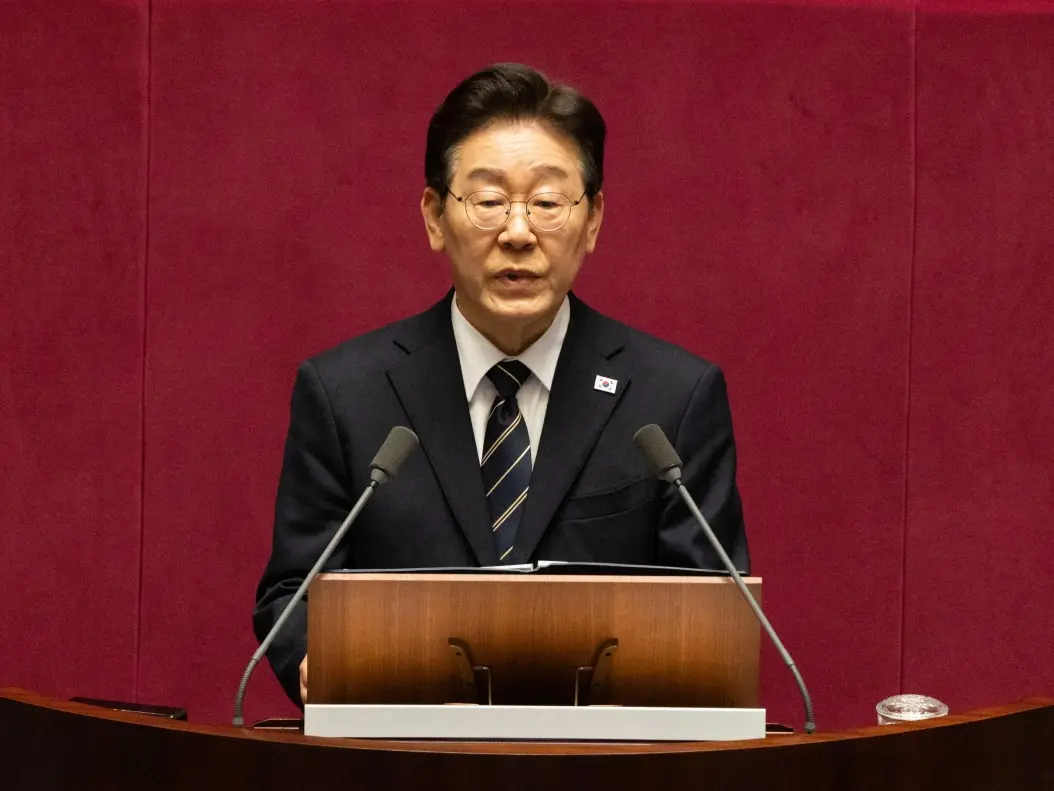
South Korean President Lee Jae Myung Photograph: (AFP)
The visit comes amid growing momentum in bilateral ties. Bilateral trade between India and South Korea stood at $21.5 billion from January to October 2025, with South Korea ranking among India's top foreign investors.
New Delhi: South Korean President Lee Jae Myung is set to visit India next week, with the main day of engagements on 20 April, in a trip expected to deepen the two countries' Special Strategic Partnership through fresh commitments on trade, investment and shipbuilding.
The visit comes amid growing momentum in bilateral ties. Bilateral trade between India and South Korea stood at $21.5 billion from January to October 2025, with South Korea ranking among India's top foreign investors. Major Korean firms such as Samsung, Hyundai and POSCO have significant operations in India, particularly in automobiles, electronics and manufacturing. A CEOs' roundtable during the visit is likely to explore new business opportunities.
Shipbuilding is expected to feature prominently. New Delhi is keen to tap Seoul's world-leading expertise in the sector, especially as disruptions to global shipping routes have highlighted the strategic importance of resilient maritime supply chains. Discussions are also anticipated on semiconductors, artificial intelligence, green hydrogen, critical minerals and supply chain cooperation. Both sides have previously identified potential in emerging technologies and defence ties.
The trip builds on recent high-level contacts. Prime Minister Narendra Modi and President Lee met on the sidelines of the G7 Summit in Canada in June 2025, agreeing to collaborate on commerce, investment, technology and shipbuilding. In February 2026, the sixth India-Republic of Korea Foreign Policy and Security Dialogue took place in Seoul, co-chaired by India's Secretary (East) P Kumaran and South Korea's First Vice Foreign Minister Park Yoon-joo, reviewing the full spectrum of ties.
Trending Stories
&imwidth=280&imheight=210&format=webp&quality=medium)
&imwidth=280&imheight=210&format=webp&quality=medium)
&imwidth=280&imheight=210&format=webp&quality=medium)
&imwidth=280&imheight=210&format=webp&quality=medium)
&imwidth=280&imheight=210&format=webp&quality=medium)
&imwidth=280&imheight=210&format=webp&quality=medium)
&imwidth=280&imheight=210&format=webp&quality=medium)
&imwidth=280&imheight=210&format=webp&quality=medium)
&imwidth=280&imheight=210&format=webp&quality=medium)
&imwidth=280&imheight=210&format=webp&quality=medium)
&imwidth=280&imheight=210&format=webp&quality=medium)
&imwidth=280&imheight=210&format=webp&quality=medium)
&imwidth=280&imheight=210&format=webp&quality=medium)
&imwidth=280&imheight=210&format=webp&quality=medium)
&imwidth=280&imheight=210&format=webp&quality=medium)
&imwidth=280&imheight=210&format=webp&quality=medium)
&imwidth=280&imheight=210&format=webp&quality=medium)
&imwidth=280&imheight=210&format=webp&quality=medium)
&imwidth=280&imheight=210&format=webp&quality=medium)
&imwidth=280&imheight=210&format=webp&quality=medium)
&im=FitAndFill=(700,400)&imwidth=280&imheight=210&format=webp&quality=medium)
&imwidth=280&imheight=210&format=webp&quality=medium)
&imwidth=280&imheight=210&format=webp&quality=medium)
&imwidth=280&imheight=210&format=webp&quality=medium)
&imwidth=280&imheight=210&format=webp&quality=medium)
&imwidth=280&imheight=210&format=webp&quality=medium)
&imwidth=280&imheight=210&format=webp&quality=medium)
&imwidth=280&imheight=210&format=webp&quality=medium)
&imwidth=280&imheight=210&format=webp&quality=medium)
Beyond economics, the relationship carries a deep cultural resonance. According to the 13th-century Korean text Samguk Yusa, Princess Suriratna from Ayodhya travelled to ancient Korea in 48 AD. She married King Kim Suro and became Queen Heo Hwang-ok. Many Koreans trace their ancestry to this union, and some scholars suggest Buddhism may have reached the peninsula partly through this maritime link. A memorial to the queen stands in Ayodhya, symbolising people-to-people bonds that stretch back two millennia.
India also played a notable role in Korea's modern history, chairing a UN commission for elections after 1945 and deploying a medical unit during the Korean War that treated hundreds of thousands of patients.
