

&imwidth=800&imheight=600&format=webp&quality=medium "Sixth round of Iran-US nuclear talks likely on Sunday amid uranium enrichment standoff")
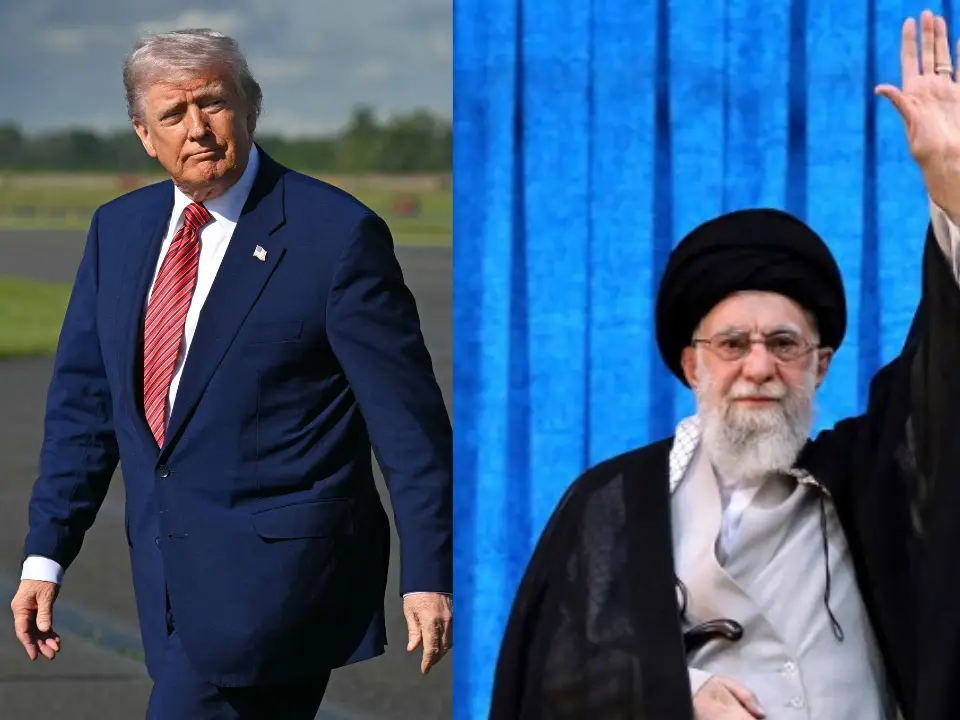
The sixth Iran-US nuclear talks is likely planned for Sunday, Tehran announced as the two sides seem to be stuck in a standoff over uranium enrichment almost two months into the high-stakes talks.
It followed as European powers and the United States submitted a censure motion to the UN nuclear watchdog as part of an attempt to increase pressure on Iran despite Tehran's threats.
Iran said it will submit a counter-proposal to the new Washington draft, which it had condemned for not providing sanctions relief in exchange for limiting its nuclear program.
"The next round of Iran-US indirect talks is being planned for next Sunday in Muscat," Iranian foreign ministry spokesman Esmaeil Baqaei said in a statement on Tuesday.
There was no comment immediately available from mediator Oman, where some of the earlier rounds were hosted, while Washington indicated the talks could take place as early as Thursday.
The two arch-enemies have held five rounds of talks since April, the highest-level contact since President Donald Trump pulled Washington out of a 2015 nuclear deal during his first term.
Trending Stories
&imwidth=180&imheight=135&format=webp&quality=medium)
Other Mommy leads North American box Office as Verity, Resident Evil round out top four
&im=FitAndFill=(700,400)&imwidth=180&imheight=135&format=webp&quality=medium)
Navratri 2026: 9 days, 9 forms of Goddess Durga and 9 colours- Check the complete list
&im=FitAndFill=(700,400)&imwidth=180&imheight=135&format=webp&quality=medium)
Is sending robots to Mars easier than sending humans?
&imwidth=180&imheight=135&format=webp&quality=medium)
A watchdog rated 'ChatGPT for Teens' an unacceptable risk and says keep under-18s off it
&imwidth=180&imheight=135&format=webp&quality=medium)
1,500 drones illuminate Mumbai sky as Cordelia Cruises unveils second ship, Cordelia Sky
&imwidth=180&imheight=135&format=webp&quality=medium)
'Just coincidence': Police mistakes protester as AISA chief Neha Bora, arrests her from site
&imwidth=180&imheight=135&format=webp&quality=medium)
Anthropic's AI invented a murder witness and sent the fake tip to Philadelphia police
&imwidth=180&imheight=135&format=webp&quality=medium)
CJI Surya Kant declines INDIA bloc leaders’ request for meeting ahead of march to SC, asks them to file petition
&imwidth=180&imheight=135&format=webp&quality=medium)
One Indian killed in Riyadh airport attack; 11 others injured : MEA
&imwidth=180&imheight=135&format=webp&quality=medium)
Imran Khan released hours after Mumbai Police detain him during CJP protest
&imwidth=180&imheight=135&format=webp&quality=medium)
Nathan Lyon completes 1,000 Test runs at No. 10 to script rare cricket feat
&imwidth=180&imheight=135&format=webp&quality=medium)
Top AI models flunked a test of inventing new AI research, so much for self-improving AI
&imwidth=180&imheight=135&format=webp&quality=medium)
Wasim Jaffer blames Ajit Agarkar-led selection panel for Virat Kohli’s Test retirement
&imwidth=180&imheight=135&format=webp&quality=medium)
'Ouch!!! That must hurt': Kangana Ranaut hails Kamal Haasan's sharp reply to Elon Musk over Starlink row
&imwidth=180&imheight=135&format=webp&quality=medium)
Sidhu Moose Wala’s younger brother wins hearts by recreating late singer’s signature move at Toronto Hologram Show
&imwidth=180&imheight=135&format=webp&quality=medium)
Meta's Muse AI could be a security nightmare for India's billion-plus users
&imwidth=180&imheight=135&format=webp&quality=medium)
UK school ditches technology, shifts from screen to pen and paper for learning
&imwidth=180&imheight=135&format=webp&quality=medium)
IND vs WI, 3rd T20I: Abhishek Sharma smashes 18-ball fifty, sets record for fastest to 2,000 T20I runs
&imwidth=180&imheight=135&format=webp&quality=medium)
Houthis claim Riyadh airport attacks, Aramco strikes; issue fresh warning to airlines, travellers and workers
&imwidth=180&imheight=135&format=webp&quality=medium)
Portugal Federation confirms Cristiano Ronaldo’s return to national team despite suspension
&im=FitAndFill=(700,400)&imwidth=180&imheight=135&format=webp&quality=medium)
New OTT releases this week (October 12-18, 2026): Sacrifice, Koffee with Karan S9, Roadies Rebirth- 6 titles coming on Netflix, JioHotstar and more
&imwidth=180&imheight=135&format=webp&quality=medium)
Microsoft's Nadella says treat every AI model as already hacked, and build an 'emergency brake'
&imwidth=180&imheight=135&format=webp&quality=medium)
Delhi protest: CJI Surya Kant declines to meet India Bloc leaders
&imwidth=180&imheight=135&format=webp&quality=medium)
Are Gold and Silver poised for a rebound soon?
&imwidth=180&imheight=135&format=webp&quality=medium)
China imposes first-ever sanctions on ministers from Taiwan allies: What this means
&imwidth=180&imheight=135&format=webp&quality=medium)
McSweeney reveals how studying Virat Kohli’s YouTube clips helped Australia A conquer India
&imwidth=180&imheight=135&format=webp&quality=medium)
Maharashtra appoints FDA commissioner Tukaram Mundhe as secretary of committee for MPSC overhaul amid stir
&imwidth=180&imheight=135&format=webp&quality=medium)
The street cannot govern India, but the government cannot ignore it either
&imwidth=180&imheight=135&format=webp&quality=medium)
Iran: US accepted some conditions, Clarity needed on others
&imwidth=180&imheight=135&format=webp&quality=medium)
Nana Patekar's cause of death confirmed; here's what his postmortem report says
&imwidth=180&imheight=135&format=webp&quality=medium)
iPhone Duo price index: Tracking Apple’s latest pricing trends
&imwidth=180&imheight=135&format=webp&quality=medium)
'Say no to Muse': Meta has no control over its own moderation AI while it forces a security nightmare on everyone
&imwidth=180&imheight=135&format=webp&quality=medium)
Delhi Protest: Congress calls for march to Supreme court
&imwidth=180&imheight=135&format=webp&quality=medium)
Delhi wakes up to heavy rain, thunderstorms; yellow alert in place; temperature drops
Trump said the next session was expected on Thursday, although a source close to preparations indicated it would likely be on Friday or Saturday.
Iran's chief negotiator, Foreign Minister Abbas Araghchi, will be present at the annual Oslo Forum in Norway on Thursday, his office added.
On May 31, following the fifth round of negotiations, Iran announced that it had received "elements" of a US proposal for a deal, which Araghchi has denounced for its "ambiguities".
Tehran has said that the proposal did not include issues previously raised in the talks such as the removal of sanctions -- a fundamental demand of Tehran, which has been under their weight for years.
On Monday, foreign ministry spokesman Baqaei announced that Iran would make a "reasonable, logical and balanced" counter-proposal.
‘National interests’
Trump announced that the next round of negotiations could determine whether a nuclear deal can be done to prevent military action.
In one of the main sticking points, Tehran has asserted its right to enrich uranium as "non-negotiable", while Washington dubbed any Iranian enrichment as "a red line".
At present, Iran enriches uranium to 60 percent, well over the 3.67-percent threshold established in the 2015 accord and short but close to the 90 percent required for a nuclear warhead.
The United States and other Western nations, along with Israel, have long accused Iran of attempting to gain atomic weapons, while Tehran has maintained that its nuclear program is for peaceful purposes.
In an interview on Tuesday, Iranian deputy foreign minister Majid Takht-Ravanchi declared there was no "deadlock" in the negotiations, and that the subsequent round would be the first where the parties are going to negotiate "any written material".
"Any negotiations with an international dimension come with their own sensitivities and require a great deal of patience for them to reach a result," he told the official IRNA news agency.
"What matters to us is that we can safeguard the national interests of the country through these talks, and that is how we proceed."
A group of Iranian legislators in a statement released on Tuesday said that the United States had made the negotiations a "strategic trap" in collaboration with Israel.
On Monday, the United Nations nuclear monitor opened a Board of Governors meeting in Vienna that will run until Friday to debate Iran's atomic endeavors and other matters.
In a previous statement on Tuesday, Araghchi had again criticised the proposed resolution.
"Any ill-considered and destructive decision in the Board of Governors against Iran will be met with an appropriate response," Araghchi said during a phone call with Japanese Foreign Minister Takeshi Iwaya.

