Russia secretly sending drones to Iran in covert shipment that includes food and medicines, claims report

&imwidth=600&imheight=450&format=webp&quality=medium "Russia secretly sending drones to Iran in covert shipment that includes food and medicines, claims report")
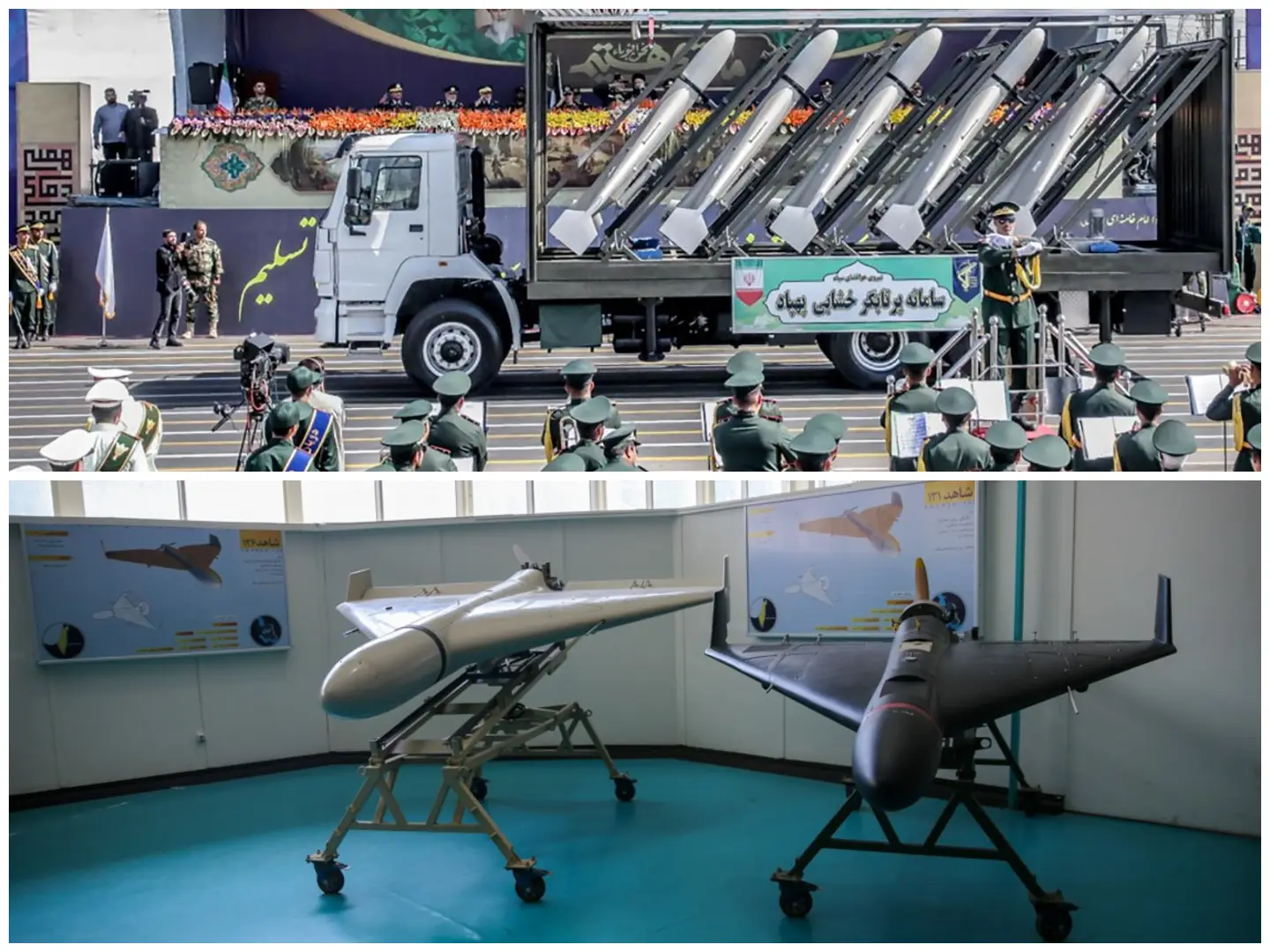
Iran has a vast array of drones including the Shahed series Photograph: (Others)
A report has claimed that Russia is sending drones to Iran in covert shipments. This, if confirmed, signals deeper military ties, potential lethal support, and a shift in their strategic partnership amid Iran-US-Israel war
The Financial Times, citing Western intelligence sources and experts, reported that Russia is completing a phased, covert delivery of drones to Iran in shipments that also include medicine and food. The discussions on the transfers reportedly started days after the US-Israeli joint strikes on Iran. The shipments would conclude this month. Here is what the report claimed:
Russia giving lethal military support to Iran?
The report raises the question of whether Russia is providing lethal military aid to Iran. This would also be a reversal of roles, if confirmed, as Iran had been supplying drones—mainly from the Shahed series—to Russia for use in its war on Ukraine.
Kremlin calls news of drone deliveries to Iran fake
Rejecting the news, Kremlin spokesperson Dmitry Peskov said: “There are a lot of fakes going around right now. One thing is true — we are continuing our dialogue with the Iranian leadership.”
Russia has publicly confirmed that it has delivered humanitarian aid, including over 13 tonnes of medicine to Iran via Azerbaijan, and further shipments are planned.
Russia appears keen to give stability to Iran regime
Trending Stories
)
)
)
)
)
)
)
)
)
)
)
)
)
)
)
)
)
)
&im=FitAndFill=(700,400))
)
)
)
&im=FitAndFill=(700,400))
)
&im=FitAndFill=(700,400))
&im=FitAndFill=(700,400))
)
The FT report cited Western officials as saying that Moscow’s objective goes beyond battlefield assistance, as it aims to “underwrite the broader political stability of Tehran’s regime.”
This means Russia is possibly combining military reinforcement and economic support to Iran.
Iran used drones to lethal effect in ongoing war
Russian shipments of drones to Iran, if confirmed, would be significant as Tehran has heavily relied on these unmanned aerial vehicles in its counterstrikes. More than 3,000 one-way attack UAVs have been used by Iran across the Middle East since the conflict began on February 28.
A central part of Iran’s military doctrine, drones are low-cost, easy to produce, and widely deployable.
Russia has used Iranian technology to shape its own drone capabilities, having mass-produced these based on Iranian designs since 2023.
Iran is seeking upgraded drones from Russia
Russia has also modified the UAVs to evade air defences and given them the capability to carry heavier payloads. Iran is possibly seeking these Russian upgrades: improved engines, better navigation systems, and anti-jamming technology. “They don’t need more drones. They need better drones. They are after the more advanced capabilities,” the FT report cited analyst Antonio Giustozzi as saying.
Eventually, Iran might reverse-engineer the improvements in the Russian drones, according to scholar Nicole Grajewski. “These systems are already more advanced than the ones Iran was producing domestically,” the FT report quoted Grajewski as saying.
Russia may be supplying Geran-2 drones to Iran
Which drones are being transferred to Iran is not clear, but the report said it could be the Geran-2, a modified version of Iran’s Shahed-136, upgraded for greater effectiveness.
The drone supply news came days after reports that Israel attacked a key weapons transfer route located on the Caspian Sea.
Russia may be supplying satellite imagery and targeting intelligence
The FT report, citing intelligence officials, claimed that Russia may be offering other military logistical support to Iran, such as satellite imagery and targeting intelligence.
Russia had already planned deliveries of air defence systems like 500 Verba launchers and 2,500 missiles over three years. But Moscow has still refused to supply the advanced S-400 system, possibly to avoid direct confrontation with the US, as its operation could require Russian personnel involvement.
Perspective: Russia-Iran strategic partnership is active though not on paper
Russia and Iran signed a cooperation agreement in 2025, but it does not include a mutual defence clause. Yet, the exchange of weapons, technology, and intelligence is growing, a sign of a deeper strategic alliance.
Disclaimer: WION takes utmost care to accurately and responsibly report ongoing conflicts in West Asia involving Israel, Iran, US, Gulf nations and non-state actors like Hezbollah, Hamas, Houthis, Islamic State, and others. Claims and counterclaims, disinformation and misinformation are being made online and offline. Given this context, WION cannot independently verify the authenticity of all statements, social media posts, photos and videos.

