
&imwidth=800&imheight=600&format=webp&quality=medium "Nvidia has taken $99 billion in equity stakes across AI in a year")
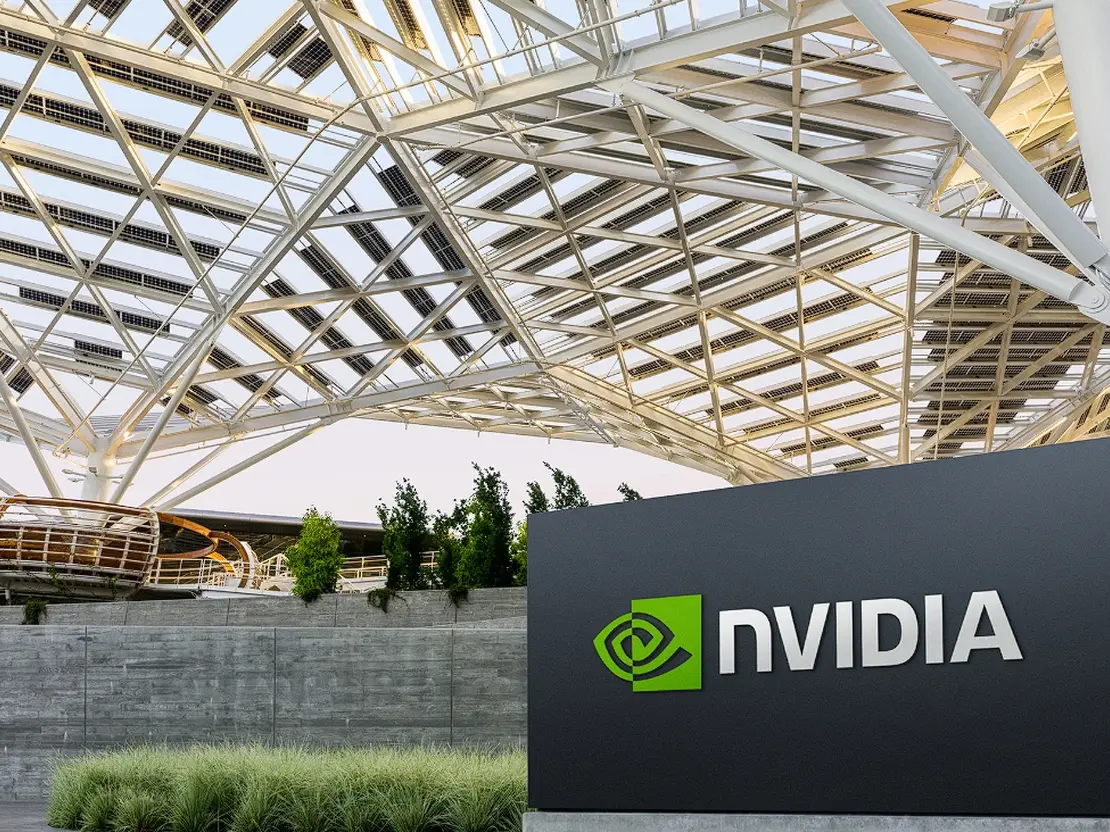
Nvidia's equity investments in AI companies stood at roughly $99 billion as of late July, according to a CNBC tally. A year earlier the figure was about $7 billion.
That is a fourteen-fold expansion in twelve months, and it has made the world's most important chip supplier simultaneously one of the largest investors in the companies that buy its chips.
Where The Money Went

The single largest position is OpenAI, where Nvidia invested $30 billion as part of a $110 billion funding round.
Beyond that, its 2026 equity commitments run past $40 billion across the stack, including seven multi-billion-dollar stakes in public companies — among them up to $3.2 billion for Corning and $2.1 billion for IREN. Separately, the company has signed memoranda of understanding targeting more than $500 billion of third-party capital over time.
The Structural Detail
Trending Stories
)
The Early Spring is proof not everyone can talk about their real feelings, and it is perfectly OK
)
UN votes to ‘correct the map’ as India backs fairer world view
)
Nigerian Navy discovers 99,000 litres of suspected stolen, illegally refined products as it intensifies anti-crude oil theft operations
)
Who is Aditi Paudel? 17-year-old becomes Japan's first literacy ambassador
)
Bengaluru: Officials find 40 kg expired chilli at chairman's club
)
Jaishankar rejects trade link to ending Ukraine war
)
Israeli strikes on Lebanon kill three, injure 23 despite truce
)
Alpine glacier was covered with sheep wool sheets to prevent melting. It worked
)
South Korea mulls deploying military assets to Strait of Hormuz
)
World's fifth-largest economy, British army can't afford to train
)
Breaking | Vance takes the podium: First White House briefing since Leavitt's exit
)
Taiwan raises 'concerns' over China's missile test
)
BRICS 2026: $1 trillion sovereign capital set to converge in Delhi for first iBRICS Summit
)
What is Iran's Pickaxe Mountain that Trump has again threatened to bomb?
)
UN votes to correct world map that visually shrank Africa for 450 years
)
Former NewJeans member Danielle launches YouTube channel, hints at new solo journey
)
Bangladesh batter Towhid Hridoy creates history with 350 not out in South Africa
)
Brendan Fraser’s transformation fuels The Mummy 4 excitement as fans welcome back Rick O’Connell
&im=FitAndFill=(700,400))
Krishna Janmashtami 2026: From Dhaniya Panjiri to Makhana Kheer- 5 best sweet dishes perfect for celebrating Lord Krishna’s birth
)
Donald Trump plans to travel to Ireland on Qatari-donated jet amid security concerns
)
Nazi-looted art to return to Jewish heirs
)
Eight killed in Kerala’s Thrissur after car rams into lorry parked on highway
&im=FitAndFill=(700,400))
Why Russian fighter jets use bulky, low-pressure tyres compared to US jets
)
FBI-wanted fraud accused arrested in Jalandhar over $600,000 scam
&im=FitAndFill=(700,400))
Why US tanks weigh over 20 tons more than Russian tanks
&im=FitAndFill=(700,400))
New Friday OTT releases (September 4, 2026): GDN, Dhamaal 4, Jagamae Sangeetham- Watch 6 new movies and TV shows on Netflix, Prime Video and more
)
Killing the Himalayas slowly: Human urine is melting a glacier on Mount Everest
The most consequential fact about this strategy is what it is not.
Nvidia has vertically integrated the AI economy without acquiring any of the participants. Every position is a minority equity stake, not a purchase — which means none of it passes through merger review, in any jurisdiction, at any threshold.
An acquisition of comparable scope would attract antitrust scrutiny in Washington, Brussels and Beijing simultaneously. A minority stake attracts almost none, while delivering a substantial share of the strategic benefit: influence over roadmaps, early visibility into demand, and a claim on the upside of customers whose growth Nvidia's own supply enables.
This is not a loophole in any illegal sense. It is a straightforward reading of where the regulatory perimeter sits, and a decision to operate just inside it.
The Circularity Problem
There is a criticism of this arrangement that has been made repeatedly, and it is not baseless.
When a supplier invests billions in its own customers, some portion of the revenue those customers generate for the supplier was funded by the supplier. Demand of that kind is real in an accounting sense but is not independent evidence that the underlying market is as large as the revenue suggests.
Nvidia's counter is that these are minority positions in companies with substantial independent funding, that it has no control over purchasing decisions, and that the AI infrastructure buildout would proceed with or without its participation. Both readings can be partly true, and the honest position is that nobody outside the companies involved can currently separate the two.
What it does mean is that anyone reading Nvidia's demand figures as a clean signal of independent market appetite should discount them somewhat, and the size of that discount is unknown.
The Risk It Creates
The strategy concentrates a second kind of exposure on top of the first.
Nvidia already carries the risk that AI infrastructure demand slows. It now additionally carries the mark-to-market risk on $99 billion of equity in companies whose valuations depend on the same demand. Those risks are not independent — they would arrive together, and a correction in AI valuations would hit both sides of the balance sheet at once.
For a company of Nvidia's size that is survivable. It is still a materially different risk profile from selling chips for cash.
What To Watch
Whether regulators show any interest in minority stakes at this concentration, which would be a novel application of merger doctrine. Whether the $500 billion of memoranda converts into deployed capital or stays aspirational. And how much of Nvidia's reported demand can be traced to entities it has itself funded — a disclosure no one currently requires it to make.
