

&imwidth=800&imheight=600&format=webp&quality=medium "'No toilet, no bed, no room to stand': What 35 hours inside a B-52 cockpit actually feels like")
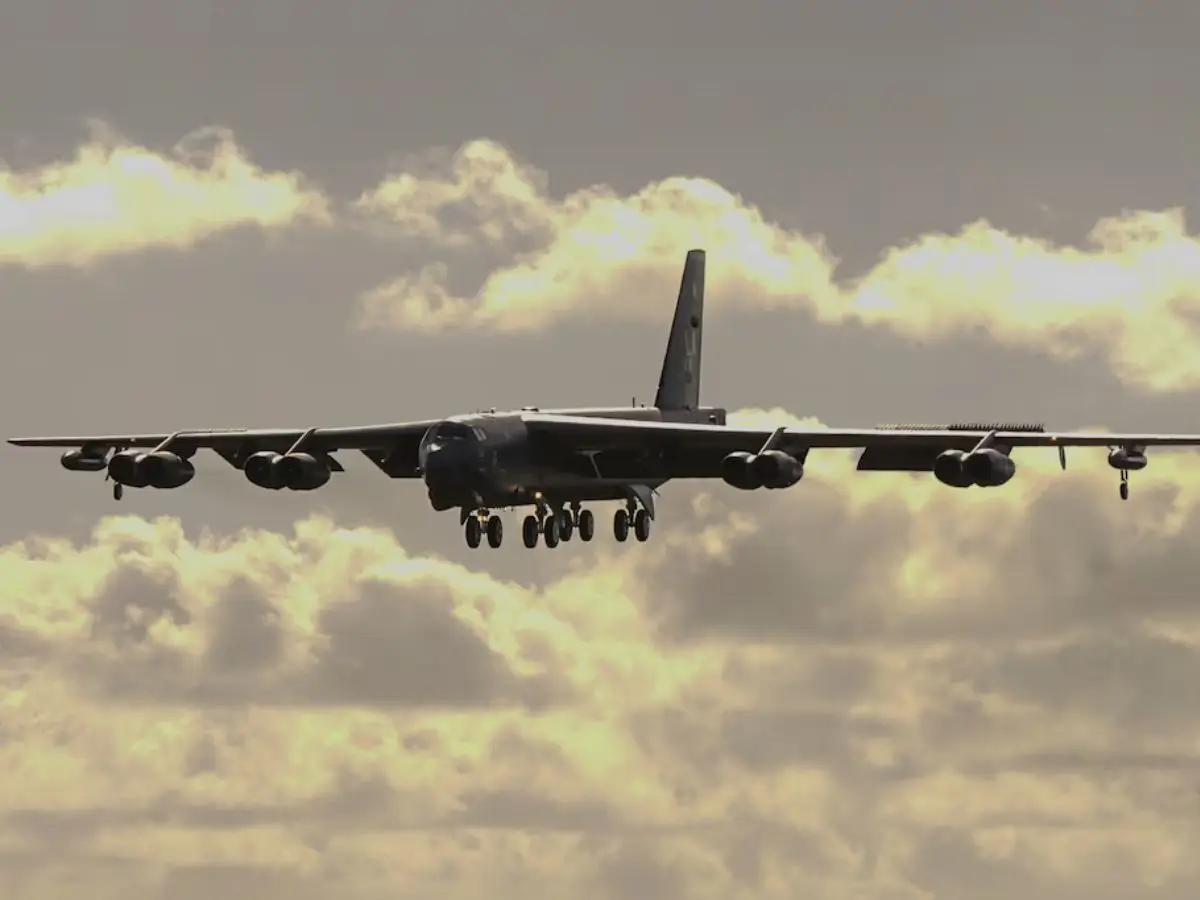
The B-52 Stratofortress is one of the most powerful weapons platforms ever built. It can carry 32,000 kilograms of ordnance across 14,000 kilometres. It has served in every major American conflict since Vietnam. And for the five crew members who fly it on missions that can last well over 30 hours, it is also one of the most physically uncomfortable aircraft in military service.
The Cockpit Time Forgot
The B-52H's crew compartment was designed in the late 1950s, and until the current B-52J upgrade programme began, much of the interior had not been substantially changed since the 1960s. The flight deck is cramped by modern standards: the pilot and co-pilot sit side by side in the upper deck, while the navigator, radar navigator, and electronic warfare officer work on the lower deck beneath them. The space is tight, the lighting is dated, and the instrument panels, until the ongoing avionics upgrade, featured analogue dials and switches that would have been familiar to a crew member from the Vietnam War era. The cockpit was not designed for comfort. It was designed for a nuclear war that was expected to be short.
No Toilet, No Shower, No Kitchen
The B-52 has no lavatory. On missions lasting 24 to 35 hours, which are routine for long-range deterrence patrols and were standard during Cold War-era Operation Chrome Dome flights, crew members use portable containers. There is no shower, no galley, and no space to prepare food beyond heating pre-packaged meals. Water and rations are brought aboard before takeoff. The aircraft was built around a bomb bay and weapons systems, not human endurance, and the crew compartment reflects that priority clearly.
Sleeping In Ejection Seats
Trending Stories
&imwidth=180&imheight=135&format=webp&quality=medium)
Putin says Russia is ready to resume Ukraine-US peace talks but rejects 'short ceasefire' amid deadly attacks
&imwidth=180&imheight=135&format=webp&quality=medium)
France reports first human case of livestock virus Shamonda, patient dies; what we know so far
&imwidth=180&imheight=135&format=webp&quality=medium)
GRAVITAS | Putin fires nuclear-capable hypersonic missiles, Zelensky ready to surrender 25% territory
&im=FitAndFill=(700,400)&imwidth=180&imheight=135&format=webp&quality=medium)
New Friday OTT releases (October 23, 2026): Gajab Raat, Dorothy, Chaar Yaar- Watch these 6 new movies and TV shows on Netflix, Prime Video and more
&imwidth=180&imheight=135&format=webp&quality=medium)
One man, 8 months of work, and a river dirty again: Why Bittu Tabahi may quit
&imwidth=180&imheight=135&format=webp&quality=medium)
Ilhan Omar breaks silence over alleged marriage to her brother; Trump thinks it's 'really good answer'
&imwidth=180&imheight=135&format=webp&quality=medium)
SA vs AUS 2nd Test: Temba Bavuma reveals 'Tendulkar inspiration' behind career-best 179
&imwidth=180&imheight=135&format=webp&quality=medium)
WATCH: Trump demands Ilhan Omar removal from Congress for 'using fake name to be sworn in'. So what is her real name?
&imwidth=180&imheight=135&format=webp&quality=medium)
Horrific video shows the moment 18-year-old fell to her death from Mexico amusement park ride
&imwidth=180&imheight=135&format=webp&quality=medium)
India-China face-off continues near Arunachal’s Taksing, reveals ITBP chief in first official confirmation of tensions
&imwidth=180&imheight=135&format=webp&quality=medium)
Netanyahu dials PM Modi, invites him and Capt Smit Machchhar to light torch on Israel’s Independence Day
&imwidth=180&imheight=135&format=webp&quality=medium)
'That was great, who threw that punch?': Trump asks as protester punched at rally
&imwidth=180&imheight=135&format=webp&quality=medium)
China's dancing robot turns violent bodyguard, lifts cars and fights intruders - Watch
&imwidth=180&imheight=135&format=webp&quality=medium)
Saudi Arabia targeted yacht carrying 14 Indians in Red Sea, rescue underway, Houthis claim
&imwidth=180&imheight=135&format=webp&quality=medium)
Christa Pike's failed execution: Tennessee team struggled to insert IV lines, lawyer says
&imwidth=180&imheight=135&format=webp&quality=medium)
'This is despicable': Amy Acton hits back at Vivek Ramaswamy over Ohio campaign ad featuring her estranged mother
&imwidth=180&imheight=135&format=webp&quality=medium)
Meghan Markle’s father Thomas under investigation over alleged child abuse images: Report
&imwidth=180&imheight=135&format=webp&quality=medium)
US midterms 2026: US Supreme Court allows New Hampshire to restrict student IDs for voting
&imwidth=180&imheight=135&format=webp&quality=medium)
'Vivek should keep it up': Trump defends Ramaswamy's controversial campaign ad targeting Amy Acton
&imwidth=180&imheight=135&format=webp&quality=medium)
What is the ‘heat ray’ weapon? Pete Hegseth reportedly authorises DHS to test it at US-Mexico border
&imwidth=180&imheight=135&format=webp&quality=medium)
ENG vs SL: Harry Brook breaks Shubman Gill’s record for fastest ODI double century
&imwidth=180&imheight=135&format=webp&quality=medium)
From Agni-V to Project Kusha: How are India’s indigenous missile systems and defence shield reshaping modern warfare
&im=FitAndFill=(700,400)&imwidth=180&imheight=135&format=webp&quality=medium)
Serbia elections: Nearly 150,000 people take to streets in massive rally against Aleksandar Vucic | In pics
&imwidth=180&imheight=135&format=webp&quality=medium)
Two BrahMos missiles on Tejas, triple the range and 100% indigenisation, says former BrahMos CEO
&imwidth=180&imheight=135&format=webp&quality=medium)
Viral video shows cross falling on Colombia priest, no official confirmation | WATCH
&imwidth=180&imheight=135&format=webp&quality=medium)
Koffee With Karan 9: Rashmika Mandanna calls trolling over South Indian accent ‘unreasonable’
&imwidth=180&imheight=135&format=webp&quality=medium)
ENG vs SL: Harry Brook’s 202 goes in vain as Sri Lanka pull off second-highest ODI chase
&imwidth=180&imheight=135&format=webp&quality=medium)
A secret code, a midnight escape and 300 deaths: The Russian officer who turned on Putin
&imwidth=180&imheight=135&format=webp&quality=medium)
'It's a crime not to see this scene': Tehran puts Trump 'behind bars'
&imwidth=180&imheight=135&format=webp&quality=medium)
Finance influencer dies by suicide in Chennai; father accuses tech CEO, who denies charge
&imwidth=180&imheight=135&format=webp&quality=medium)
Watch: India rejects ‘imprecise and unsupported’ references in UN migrant rights report
&imwidth=180&imheight=135&format=webp&quality=medium)
US midterms 2026: Elon Musk’s political spending hits $445 million as Republicans battle to retain Senate control
&imwidth=180&imheight=135&format=webp&quality=medium)
US to get 850 F-35 stealth fighter jets under 10-year Pentagon-Lockheed deal
&imwidth=180&imheight=135&format=webp&quality=medium)
Trump ordered to answer questions under oath in BBC defamation lawsuit by December 11
On long missions, crew members sleep in shifts, but there is no bunk, no cot, and no dedicated rest area. Sleep happens in the crew position, typically in an ejection seat. The seats were designed to save lives in an emergency, not to support rest during a 30-hour patrol. Crew members describe the experience as intermittent dozing at best, punctuated by turbulence, communications checks, and the constant hum of eight jet engines. During the Cold War, when B-52s flew round-the-clock nuclear-armed patrols under Operation Chrome Dome, crews were expected to maintain combat readiness throughout these marathon flights — alert enough to execute a nuclear strike order at any point during a mission that might last longer than a full day and night.
Why It Matters
The physical reality of flying the B-52 is a part of its story that rarely gets told. The aircraft's technical specifications, its range, its payload, its decades of service, are well documented. What those numbers obscure is the human cost of operating a 1950s airframe on 21st-century missions: the fatigue, the discomfort, and the mental discipline required to remain operationally effective for 35 hours in a cockpit that was never designed for it. The B-52J upgrade programme will modernise the crew compartment along with the engines and avionics — but for the generations of airmen who have flown the BUFF as it is, the experience of a long-range B-52 mission has always been as much an endurance test as a combat operation.
