Many Western arms firms couldn't ramp up production capacity in 2022 due to Ukraine war: Report

File photo.
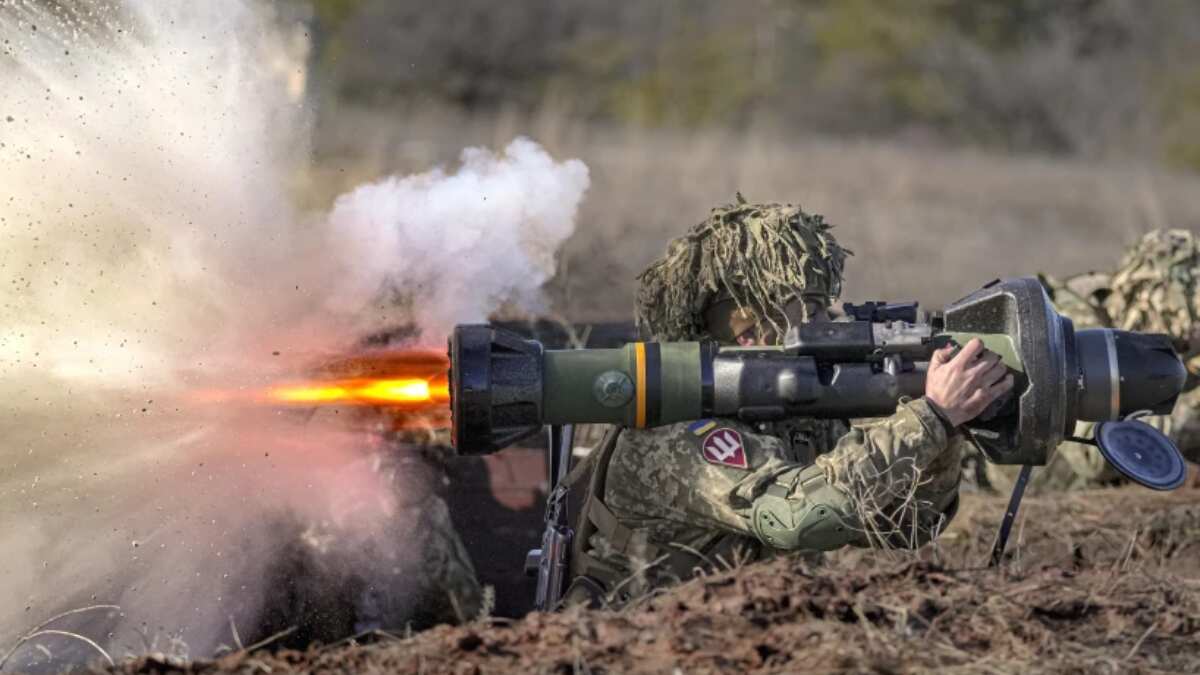
Many US and European arms companies could not significantly ramp up their production capacity in 2022 due to the Ukraine war, the Stockholm International Peace Research Institute (SIPRI) said in a report on Monday (Dec 4). As per the report, Russia's offensive in Ukraine (which started in February 2022), and geopolitical tensions around the world fuelled a strong increase in demand for weapons and military equipment last year.
"However, despite receiving new orders, many US and European arms companies could not significantly ramp up production capacity because of labour shortages, soaring costs and supply chain disruptions that were exacerbated by the war in Ukraine," the report said. "In addition, countries placed new orders late in the year and the time lag between orders and production meant that the surge in demand was not reflected in these companies’ 2022 revenues," it added.

Also read:Putin signs decree to add 170,000 troops to its armed forces as war with Ukraine takes toll
Dr Lucie Béraud-Sudreau, Director of SIPRI’s Military Expenditure and Arms Production Programme, said that many arms companies faced obstacles in adjusting to production for high-intensity warfare. "However, new contracts were signed, notably for ammunition, which could be expected to translate into higher revenue in 2023 and beyond," Dr Béraud-Sudreau added.
Asia, Oceania, Middle East see increased revenues
)
‘Kill all in the name of...’: FBI arrests 21-year-old over alleged ISIS-inspired mass-casualty attack plot
)
Space mines, lasers & robotic arms: Lt Gen Pannu decodes US disclosure of weapons in space
)
Bitter Zelensky snubs Trump for playing politics with Ukraine war | Gravitas
)
Passengers scream as Iran flight suffers mid-air scare: Boeing 737 shakes violently after take-off | VIDEO
)
US fires up to 70 interceptors against Iran attack on Jordan, putting supplies under pressure
)
India’s imports from Russia jump 57% in five months; China remains top import source
)
‘US military task force aiding Saudi Arabia forces with intel, planning support’: Official
)
OpenAI boss Sam Altman repeats AI 'slow down' call, says world 'right to be afraid'
)
Top military commanders from US, Israel, and 7 Arab nations held secret meeting on Iran War
)
Sydney Sweeney defends provocative ad choice, the internet is still not impressed
)
'Definitely feel bad for yourself': Kuldeep Yadav opens up on India Test snubs
)
Ex-India all-rounder Yuvraj Singh wants India to avoid 'massive changes' before ODI World Cup 2027
)
Ed Sheeran’s US tour loses all support acts after Macklemore’s removal | Controversy explained
)
China's property crisis deepens as investment plunges nearly 20%
)
Messi set to play in farewell match on October 6 in Argentina vs Benin friendly
)
2,200 people donate Rs 1.5 crore for 'docile' Georgia donkey 'HeeHaw' shot dead by police officer
)
Putin-linked Russian oligarch, Melania links: Why Trump skipped his son’s Bahamas wedding bash?
)
800 million years old - Scientists discover 'fingerprints' of supercontinent Gondwana in ancient rocks
)
Saudi turns to Israel for intelligence help as Houthi attacks intensify: Report
)
Trump's name cannot return to Kennedy Center, US judge rules
)
Water equivalent to two Pacific Oceans could be stashed 2,900 km inside Earth
)
1,200 Indian and US troops begin high-altitude and desert drills
)
Ex-CIA officer caught with gold bars worth $40 million seeks plea deal | Gravitas
&im=FitAndFill=(700,400))
New OTT releases this week (September 14-20, 2026): Lust Stories 3, Waiting Hai, Irumudi- 5 new titles coming on Netflix, Prime Video and more
)
Trump's Iran war faces fresh House rebuke; 7 Republicans join Democrats in push to end conflict ahead of midterms
)
US Treasury yields cross 5% as Scott Bessent warns of ‘global issues’ impacting bonds
)
Who is Kalyan Bainsla, accused in the Gurugram hit-and-run case involving woman biker?
)
Saudi Arabia discovers 110 million tonnes of Uranium-rich ore in Madinah region
)
'Now Trump is copying us': Shivakumar links US $5,000 plan to Congress guarantees
)
Los Angeles helicopter crash: At least three dead, several injured; NTSB to investigate
)
West Bengal IPS officer Bushra Bano transferred after objections to ‘Assalamualaikum’, ‘Inshallah’
)
India summons top Pakistan diplomat after Pak Navy ship collides with Indian warship at high seas
)
Spanish officer sent home from NATO base over affair with 'Russian spy' | Gravitas
)
Saudi Arabia accuses Houthis of drone attack on Mecca, first-ever red alert in Islam's holiest site sparks panic
)
'Like a thug you are using agency to go after..': Kash Patel grilled by Senate Democrats over FBI firings, journalist investigations and hiring policy
Contrary to US and European arms companies, those in Asia, Oceania and the Middle East saw their arms revenues grow significantly last year, demonstrating their ability to respond to an increased demand within a shorter time frame, as per the SIPRI report.
Also read:Ukraine launches investigation into alleged Russian execution of surrendering Ukrainian soldiers
In 2022, the arms revenues of the 22 companies from Asia and Oceania listed inSIPRI's Top 100 ranking of arms producers and military services providersrose by 3.1 per cent to reach $134 billion. This was the second consecutive year where the Top 100 arms revenues for Asia and Oceania were higher than those for Europe.
Xiao Liang, a researcher with the institute's Military Expenditure and Arms Production Programme, said domestic demand and the reliance on local suppliers shielded Asian arms companies from supply chain disruptions last year.
"Companies in China, India, Japan and Taiwan all benefited from sustained government investment in military modernisation," Liang added.
US arms companies see drop in revenues due to production challenges
Monday's report said that arms revenues of the 42 American companies in the Top 100 fell by nearly 8 per cent to $302 billion in 2022. "Of the 42 US companies, 32 recorded a fall in year-on-year arms revenue, most commonly citing ongoing supply chain issues and labour shortages stemming from the COVID-19 pandemic," the report said.
Nan Tian, a senior researcher at SIPRI said that there was an influx of new orders linked to the Ukraine war and some major American companies, including Lockheed Martin and Raytheon Technologies, received new orders as a result.
"However, because of these companies’ existing order backlogs and difficulties in ramping up production capacity, the revenue from these orders will probably only be reflected in company accounts in two to three years’ time," Tian added.
European firms see modest revenue growth
The SIPRI report further said that European arms firms saw a modest growth in their revenues which rose by 0.9 per cent to reach $121 billion in 2022. "The war in Ukraine created a demand for material suited to a war of attrition, like ammunition and armoured vehicles. Many European producers of these items saw their revenues grow,"said Lorenzo Scarazzato, a researcher with the Military Expenditure and Arms Production Programme.