Loud explosion, rocket launchers, gunfire: Cambodia-Thailand conflict escalates hours after Trump's 'ceasefire' claims

&imwidth=600&imheight=450&format=webp&quality=medium "Loud explosion, rocket launchers, gunfire: Cambodia-Thailand conflict escalates hours after Trump's 'ceasefire' claims")
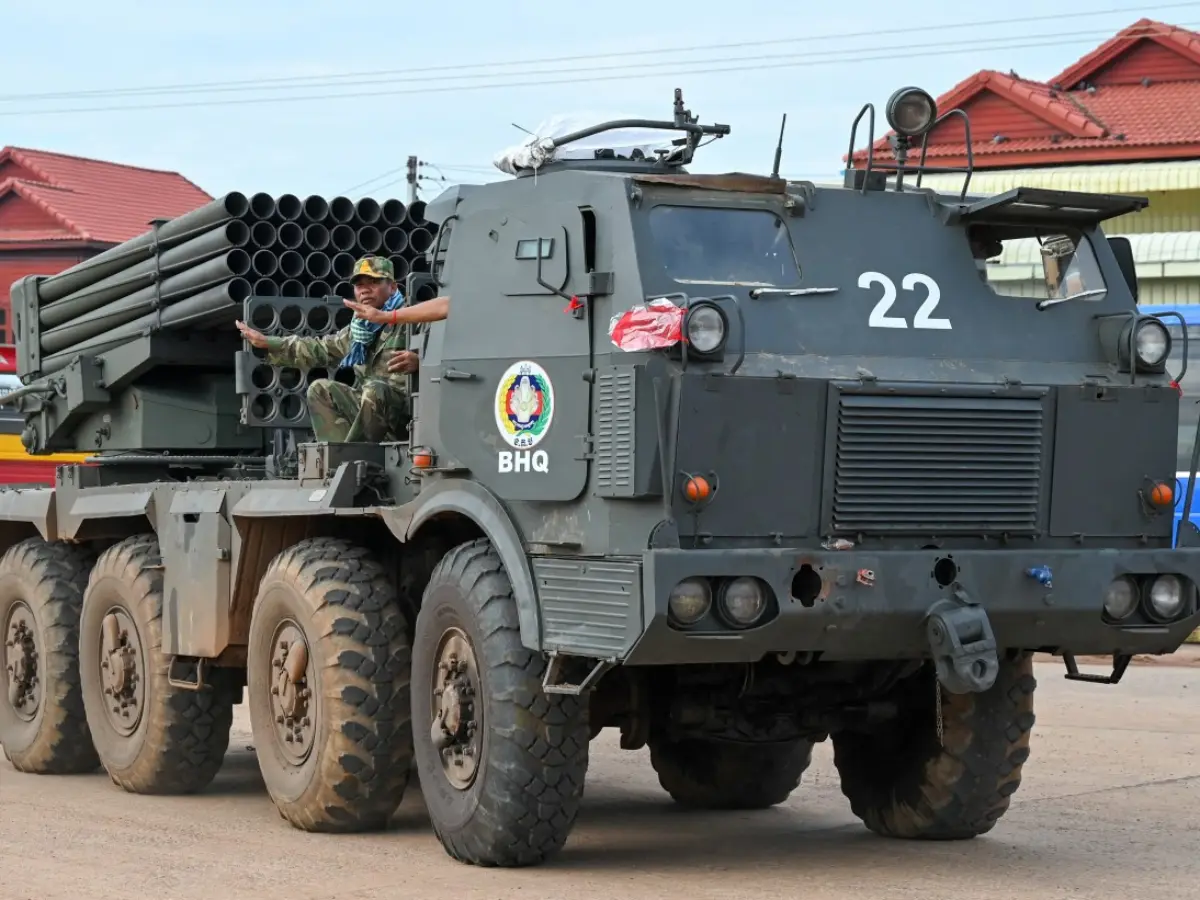
Cambodia-Thailand clash Photograph: (AFP)
Despite US ceasefire claims, tensions flared between Cambodia and Thailand near Ta Kwai temple in Surin, Thailand, early Sunday. Artillery and airstrikes were reported, and forces of both countries exchanged gunfire.
Despite United States Donald Trump's ceasefire claims, tensions between Cambodia and Thailand escalated early on Sunday (July 27) as an exchange of fire took place between the forces of both countries near Ta Kwai temple in Surin province of Thailand. This comes even as both Cambodia and Thailand signaled that they are on the path of an immediate ceasefire. Earlier, Trump announced that he spoke to Cambodian Prime Minister Hun Manet and Thai Acting Prime Minister Phumtham Wechayachai and will hand over trade deal letters to them once the fighting stops. He also likened the situation to the India-Pakistan conflict in May after Operation Sindoor and the Pahalgam terror attack. As per reports, the recent conflict has displaced more than 10,865 families from Cambodia and relocated around 37,635 people.
Tensions reignited between Thailand and Cambodia
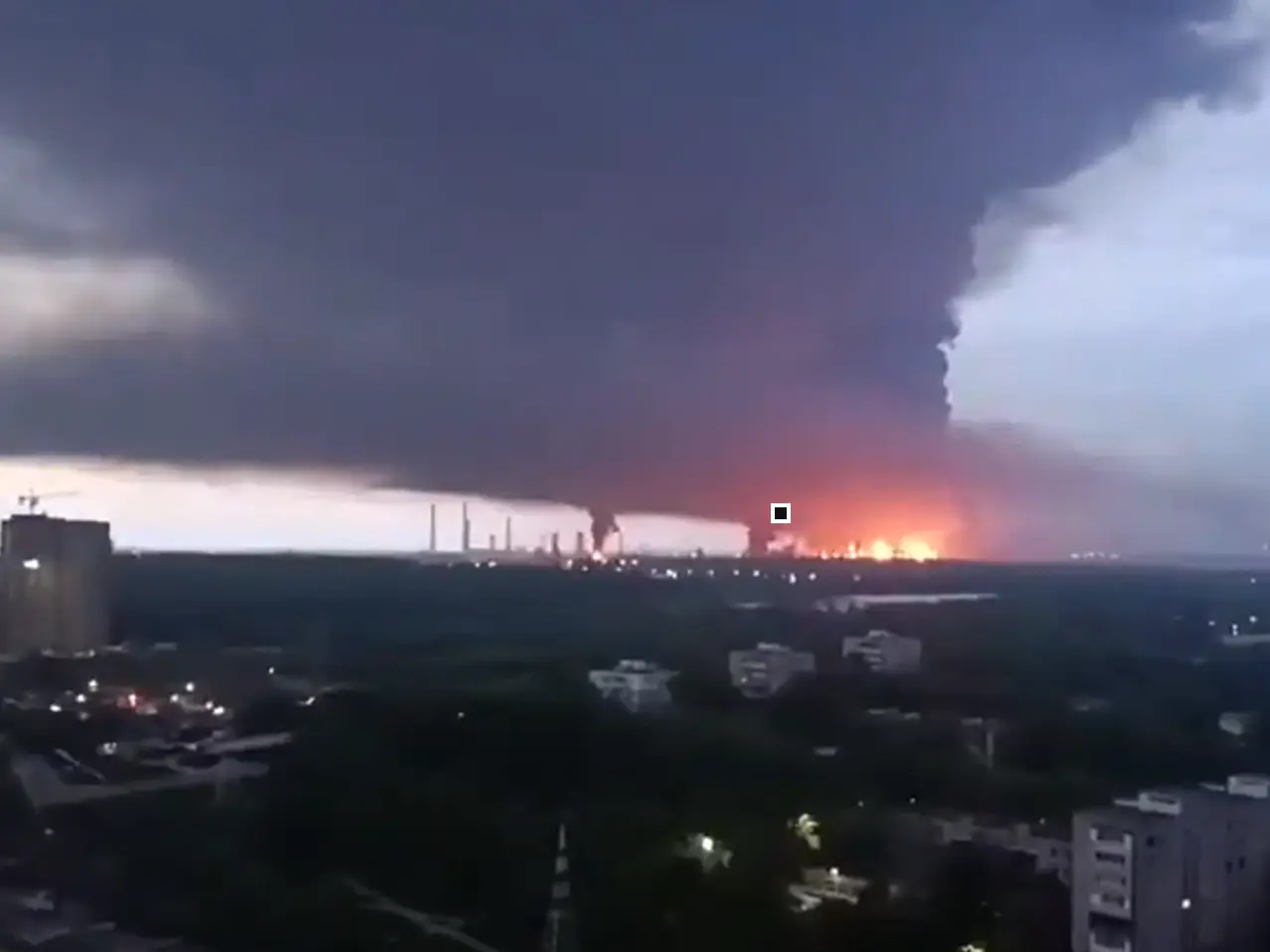
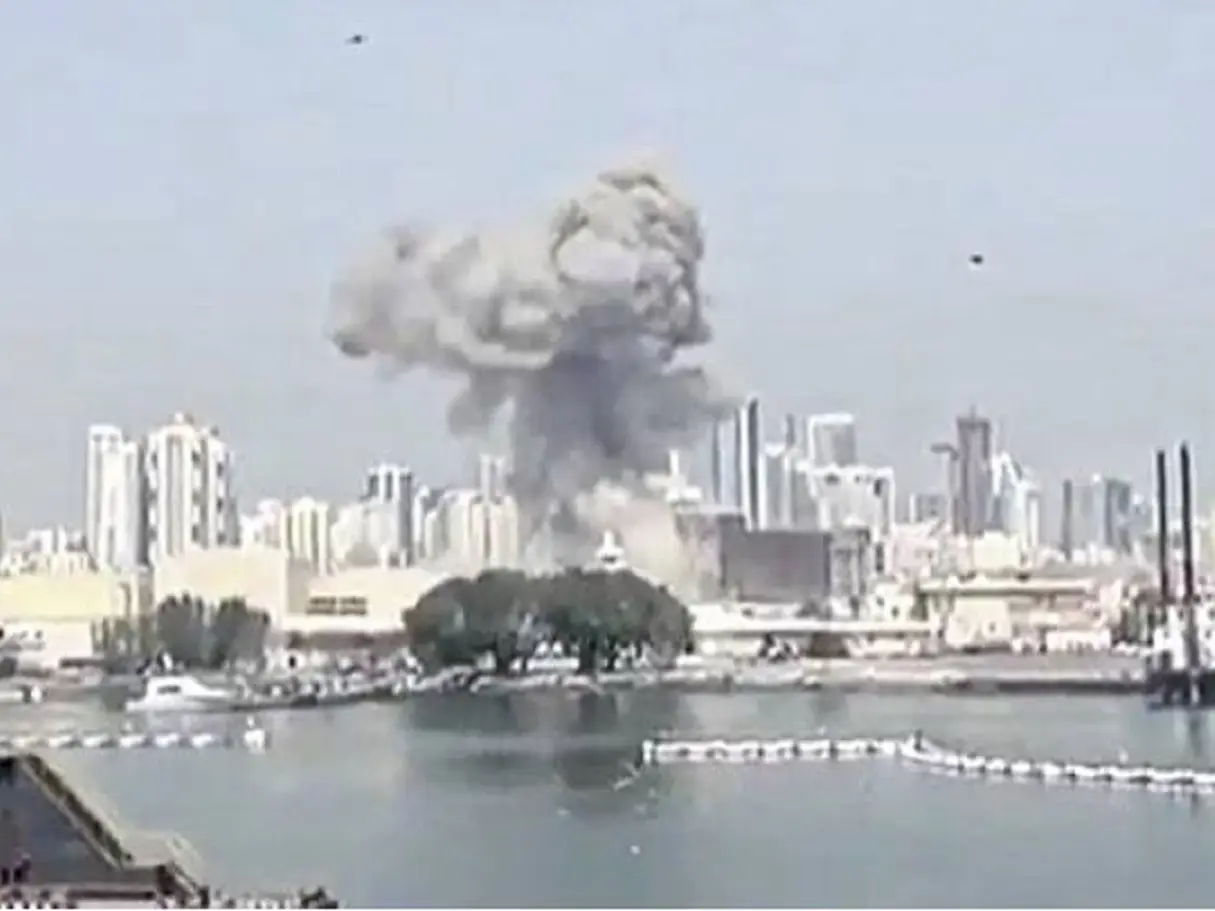
A report by Nation Thailand said that Cambodian forces opened fire across the frontier in Phanom Dong Rak district, Surin province. Artillery shells struck a residential area, sparking a fire that damaged several homes. Another report claimed that Royal Thai Air Force’s F-16 and Gripen jets successfully bomb Cambodian military positions at Ta Kwai Temple, with the mission completing safely and returning to base. Border tensions reignited around 4.30–4.40am, with loud explosions heard from the Cambodian side and incoming fire landing near Ta Kwai temple in Surin. Gunfire persisted sporadically on both sides and later spread toward the Chong Chom area. At around 5.30 am, heavy weapons — believed to include BM-21 multiple rocket launchers — were fired from Cambodia into Thai territory. Thai forces responded with heavy weapons. As of 7am, the exchange of fire continues intermittently, and the situation remains tense.
Donald Trump's 'ceasefire claims
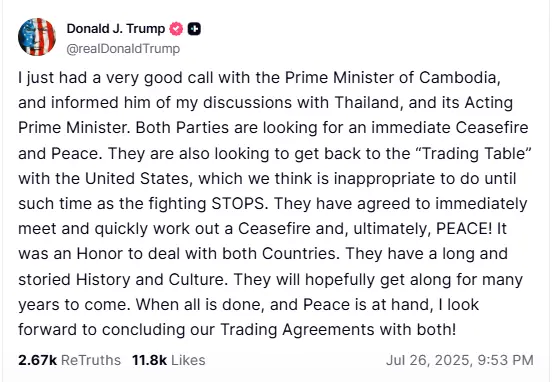
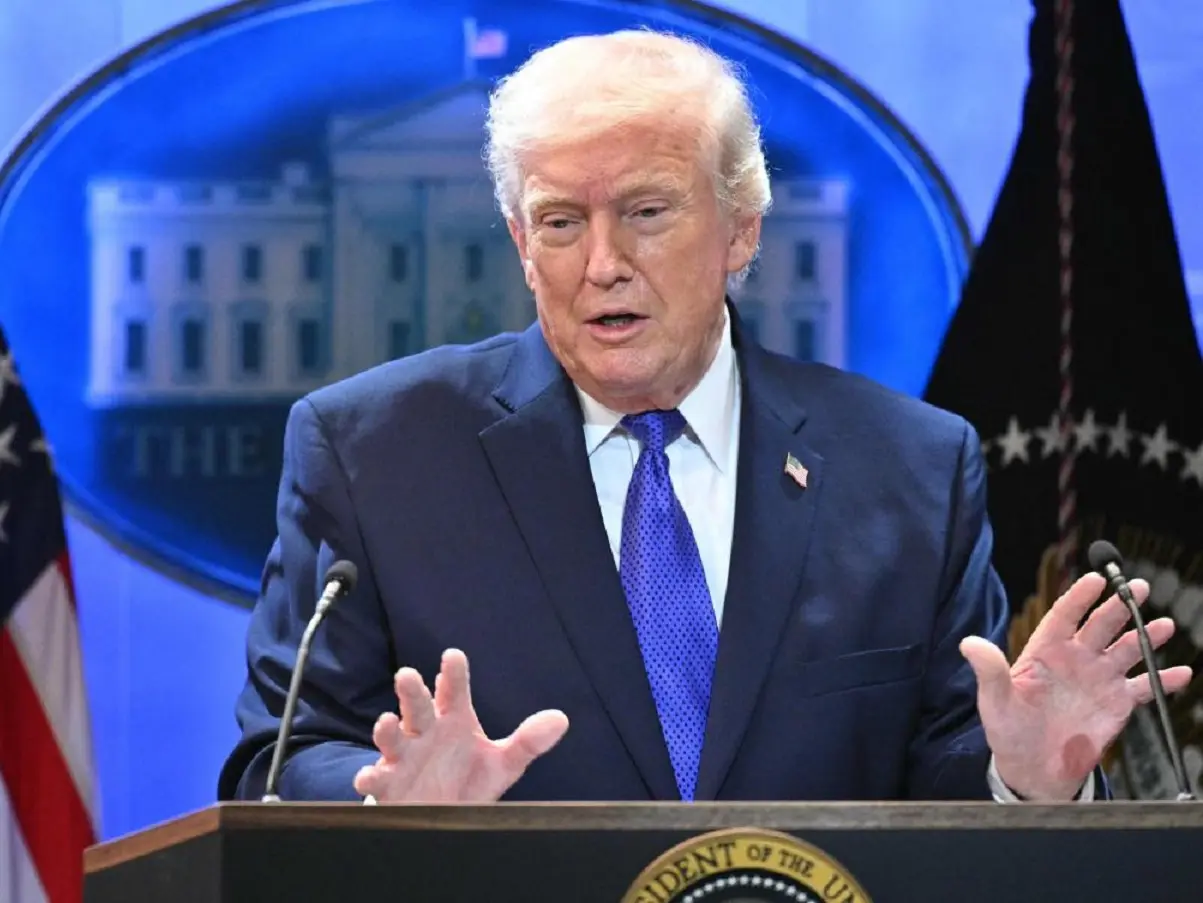
US President Donald Trump on Saturday claimed that he spoke to the leaders of Thailand and Cambodia and announced that both have agreed to a ceasefire amid escalating conflict. He said that both countries also want to get back to the trade table, but it is not impossible until the fighting stops. “They have agreed to immediately meet and quickly work out a ceasefire and, ultimately, PEACE!” he added. However, neither the White House nor the involved embassies have confirmed details of the upcoming talks.
Trending Stories
)
)
)
)
)
)
)
)
)
)
&im=FitAndFill=(700,400))
)
)
)
&im=FitAndFill=(700,400))
)
&im=FitAndFill=(700,400))
)
)
)
)
)
)
&im=FitAndFill=(700,400))
)
)
)
)
)
)
)
)
)
)
)
)
)
)
)
)
)
Thailand-Cambodia conflict
Thailand and Cambodia engaged in their worst fighting in over a decade this week, exchanging heavy artillery fire across their disputed border. Clashes broke out between the two countries early on Thursday (July 24) along a disputed area abutting an ancient temple, rapidly spilling over to other areas along the contested frontier and heavy artillery exchanges continued for a third straight day. The latest tensions rose over an 11th-century Hindu temple called Preah Vihear, or Khao Phra Viharn in Thailand - with both Bangkok and Phnom Penh claiming historical ownership over it. Tensions began rising between the Southeast Asian neighbours since May this year, following the killing of a Cambodian soldier during a brief exchange of gunfire. The incident triggered diplomatic spats, ultimately leading to armed clashes.
Thailand and Cambodia have for more than a century contested sovereignty at various un-demarcated points along their 817 km (508 miles) land border, which was first mapped by France in 1907 when Cambodia was its colony. That map, which Thailand later contested, was based on an agreement that the border would be demarcated along the natural watershed line between the two countries. In 2000, the two countries agreed to establish a Joint Boundary Commission to peacefully address overlapping claims, but little progress has been made towards settling disputes.

