Israel excavates 2800-year-old dam in East Jerusalem to strengthen claims on Palestinian land

&imwidth=600&imheight=450&format=webp&quality=medium "Israel excavates 2800-year-old dam in East Jerusalem to strengthen claims on Palestinian land")
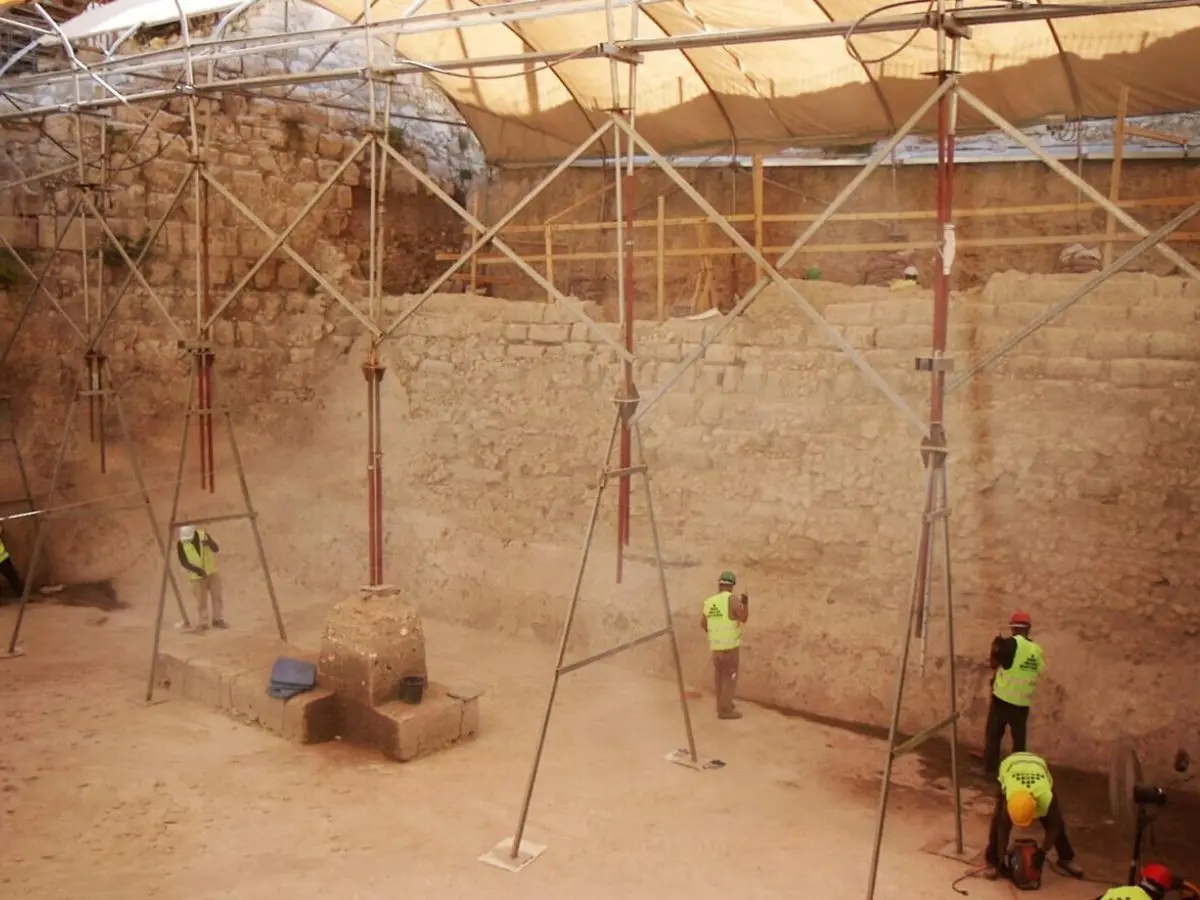
The massive dam wall uncovered in the Israel Antiquities Authority excavations at the Pool of Siloam in the City of David Photograph: (City of David)
Archaeologists in East Jerusalem uncovered a biblical-era dam, raising concerns over Israeli excavation practices and disputed Palestinian land claims.
Archaeologists in East Jerusalem claimed to have uncovered the largest dam in Israel, dating back as old as 9th century BCE. The dam was believed to be constructed 2800 years ago in the time of King Joash and Amaziah of Judah. King Joash is widely regarded as a historical figure among Jews, but most of his references were found in Biblical texts, particularly from the Old Testament.
Located near the Pool of Siloam in the City of David, the massive dam is 12 meters high, 8 meters wide, and 21 meters in length, making it the earliest massive dam found in Jerusalem. Archaeologists believed it to be a sophisticated water management system to tackle the climate challenges of that time, such as droughts and flash floods. It redirected water from the Gihon Spring and channelling it into the Siloam Pool. The discovery sheds light on some of the advanced engineering and urban planning capabilities of ancient Jerusalem. The dating of the dam was verified through radiocarbon dating and peer-reviewed by the Proceedings of the National Academy of Sciences of the United States.
Who is funding these excavations?
The excavation was primarily funded by the Ir David Foundation (Elad) in collaboration with the Israel Antiquities Authority (IAA) and Tel Aviv University. The foundation manages the City of David National Park and invests in archaeological research in the area. The Israeli Government has also allocated NIS 60 million for archaeological digs and preservation of the city. A portion of this is redirected towards the Israel Antiquities Authority for excavation purposes.
BBC News Arabic in September 2020 revealed, in an investigation that companies controlled by Abramovich donated approximately $100 million to Elad. Roman Abramovich is a Russian-Israeli oligarch and former owner of Chelsea Football Club, with close ties to Putin and is now banned in the UK.
Political Controversy around the Elad Foundation and archaeological digs in East Jerusalem
Trending Stories
&imwidth=280&imheight=210&format=webp&quality=medium)
&im=FitAndFill=(700,400)&imwidth=280&imheight=210&format=webp&quality=medium)
&imwidth=280&imheight=210&format=webp&quality=medium)
&imwidth=280&imheight=210&format=webp&quality=medium)
&imwidth=280&imheight=210&format=webp&quality=medium)
&imwidth=280&imheight=210&format=webp&quality=medium)
&imwidth=280&imheight=210&format=webp&quality=medium)
&imwidth=280&imheight=210&format=webp&quality=medium)
&imwidth=280&imheight=210&format=webp&quality=medium)
&imwidth=280&imheight=210&format=webp&quality=medium)
&imwidth=280&imheight=210&format=webp&quality=medium)
&imwidth=280&imheight=210&format=webp&quality=medium)
&imwidth=280&imheight=210&format=webp&quality=medium)
&imwidth=280&imheight=210&format=webp&quality=medium)
&imwidth=280&imheight=210&format=webp&quality=medium)
&imwidth=280&imheight=210&format=webp&quality=medium)
&imwidth=280&imheight=210&format=webp&quality=medium)
&im=FitAndFill=(700,400)&imwidth=280&imheight=210&format=webp&quality=medium)
&imwidth=280&imheight=210&format=webp&quality=medium)
&imwidth=280&imheight=210&format=webp&quality=medium)
&imwidth=280&imheight=210&format=webp&quality=medium)
&imwidth=280&imheight=210&format=webp&quality=medium)
&imwidth=280&imheight=210&format=webp&quality=medium)
&imwidth=280&imheight=210&format=webp&quality=medium)
&imwidth=280&imheight=210&format=webp&quality=medium)
&imwidth=280&imheight=210&format=webp&quality=medium)
&imwidth=280&imheight=210&format=webp&quality=medium)
&im=FitAndFill=(700,400)&imwidth=280&imheight=210&format=webp&quality=medium)
&imwidth=280&imheight=210&format=webp&quality=medium)
&imwidth=280&imheight=210&format=webp&quality=medium)
&imwidth=280&imheight=210&format=webp&quality=medium)
&imwidth=280&imheight=210&format=webp&quality=medium)
&imwidth=280&imheight=210&format=webp&quality=medium)
&imwidth=280&imheight=210&format=webp&quality=medium)
&imwidth=280&imheight=210&format=webp&quality=medium)
Archaeological digging in a turbulent political landscape like East Jerusalem is marred with controversy. The Silwan neighbourhood and the City of David area are considered part of the occupied Palestinian territory under international law. A part which Palestinians claim to be the future capital of a Palestinian state. It was annexed by Israel after the Six-Day War of 1967.
Human Rights Group and archaeologists have accused the Elad Foundation of using excavation as a political tool. American anthropologist and academic Nadia Abu El-Haj, known for her critical work on the intersection of archaeology, nationalism, and colonialism, has examined in her book ‘Facts on the Ground’ how archaeological practices in Jerusalem are shaped by ideological and cultural forces to shape national identity and political agenda. She shows with case studies how archaeological sites in the West Bank are used to assert territorial claims. She argued that Earth accumulates over time the top layer, the most recent history, lower layers, older history. She criticises the practices of the Elad Foundation, which uses horizontal tunnelling instead of the top-down method. Thus, purposefully mix artefacts from different layers, making it hard to determine their age or the correct historical context.
The Elad Foundation was formed with the mission to promote Jewish historical and archaeological presence in the area. It had forcibly acquired land from Palestinian families on numerous occasions, declaring them absent from the land, under the Absentee Property Law with the help of the Israeli government, even when families were residing in the place.
“We are a foundation whose goals are to house Jewish families in the City of David. These are the foundation’s stated objectives with the Registrar of Associations for which we receive donations. This is a main part of the foundation’s goals,” said David Be’eri, CEO of the Elad foundation, in an Israeli court during a lawsuit filed against the Palestinian resident of Silwan.

