Israel faces possible suspension from European rights body over new death penalty law

&imwidth=600&imheight=450&format=webp&quality=medium "Israel faces possible suspension from European rights body over new death penalty law")
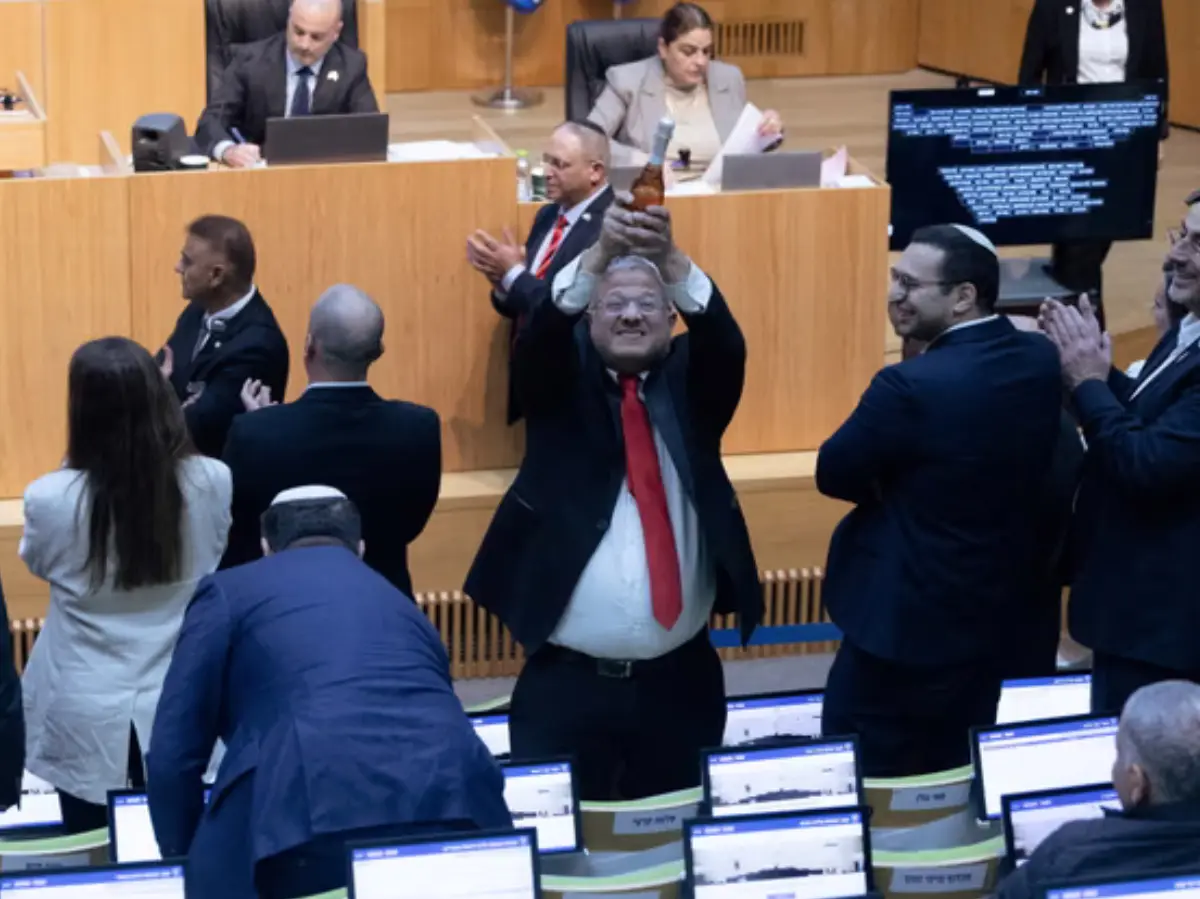
Israel’s national security minister, Itamar Ben-Gvir Photograph: (AFP)
The Council of Europe warned that Israel’s observer status may be suspended following a discriminatory new death penalty law, which violates the human rights body’s fundamental requirement for capital punishment abolition.
Israel’s observer status at the Parliamentary Assembly of the Council of Europe could be suspended following the passage of a controversial new law mandating the death penalty for Palestinians convicted of certain offences, the body’s president has warned.
Petra Bayr, president of the Parliamentary Assembly of the Council of Europe Pace, said that abandoning capital punishment was “really a requirement” for holding observer status at the Strasbourg-based human rights body, which is separate from the European Union.
“The Israeli parliament’s observer status might be suspended until there is a decision [against the law] or until it is clear that the law will not go into force,” Bayr said, speaking to the Guardian. “There are red lines … even a non-discriminatory death penalty is a no-go.”
Israel’s parliament, the Knesset, recently passed legislation mandating the death penalty for Palestinians convicted of deadly acts of terror in military courts in the occupied Palestinian territories. Palestinians tried in Israeli civilian courts could face either the death penalty or life imprisonment. The law includes a provision that effectively shields Jewish Israelis, applying only to murders committed with the “intent to deny the existence of the state of Israel”.
Human rights organisations have already petitioned the Supreme Court of Israel to strike down the legislation.
Trending Stories
&imwidth=280&imheight=210&format=webp&quality=medium)
&imwidth=280&imheight=210&format=webp&quality=medium)
&imwidth=280&imheight=210&format=webp&quality=medium)
&imwidth=280&imheight=210&format=webp&quality=medium)
&imwidth=280&imheight=210&format=webp&quality=medium)
&imwidth=280&imheight=210&format=webp&quality=medium)
&imwidth=280&imheight=210&format=webp&quality=medium)
&imwidth=280&imheight=210&format=webp&quality=medium)
&imwidth=280&imheight=210&format=webp&quality=medium)
&imwidth=280&imheight=210&format=webp&quality=medium)
&imwidth=280&imheight=210&format=webp&quality=medium)
&imwidth=280&imheight=210&format=webp&quality=medium)
&imwidth=280&imheight=210&format=webp&quality=medium)
&imwidth=280&imheight=210&format=webp&quality=medium)
&imwidth=280&imheight=210&format=webp&quality=medium)
&imwidth=280&imheight=210&format=webp&quality=medium)
&imwidth=280&imheight=210&format=webp&quality=medium)
&imwidth=280&imheight=210&format=webp&quality=medium)
&imwidth=280&imheight=210&format=webp&quality=medium)
&imwidth=280&imheight=210&format=webp&quality=medium)
&imwidth=280&imheight=210&format=webp&quality=medium)
&imwidth=280&imheight=210&format=webp&quality=medium)
&imwidth=280&imheight=210&format=webp&quality=medium)
&imwidth=280&imheight=210&format=webp&quality=medium)
&imwidth=280&imheight=210&format=webp&quality=medium)
&imwidth=280&imheight=210&format=webp&quality=medium)
&im=FitAndFill=(700,400)&imwidth=280&imheight=210&format=webp&quality=medium)
&imwidth=280&imheight=210&format=webp&quality=medium)
&imwidth=280&imheight=210&format=webp&quality=medium)
&imwidth=280&imheight=210&format=webp&quality=medium)
&imwidth=280&imheight=210&format=webp&quality=medium)
&imwidth=280&imheight=210&format=webp&quality=medium)
&imwidth=280&imheight=210&format=webp&quality=medium)
&imwidth=280&imheight=210&format=webp&quality=medium)
&imwidth=280&imheight=210&format=webp&quality=medium)
&imwidth=280&imheight=210&format=webp&quality=medium)
The Knesset has held observer status at Pace since 1957. The assembly brings together parliamentarians from 46 member states to promote democracy and human rights and oversees the European Court of Human Rights. Officials said they could not recall any parliament previously losing observer status.
However, precedent exists for punitive action within the wider Council of Europe framework. Russia was stripped of voting rights in 2014 following the annexation of Crimea and was later expelled after its full-scale invasion of Ukraine.
Israel’s status had already come under scrutiny after a cross-party motion last June urged Israeli authorities to comply with international humanitarian law in Gaza, citing concerns over starvation, limited medical access and lack of safe refuge for civilians. While such motions can take up to two years to translate into binding action, Bayr indicated the process could be accelerated, with a decision potentially brought forward in June.
She suggested that concerns over the death penalty law could be incorporated into the same text.
The assembly is also expected to debate the issue this month during a vote on capital punishment based on a report by Gala Veldhoen, a Dutch MP. The report urges Israel to maintain its long-standing abolition of the death penalty for ordinary crimes and to refrain from expanding capital punishment “in a discriminatory manner”.
Meanwhile, Meirav Ben-Ari, who leads Israel’s delegation to the PACE, criticised the legislation, calling it “entirely contrary to my worldview and that of many Israelis”. She said petitions had already been filed with the Supreme Court and expressed confidence that the judiciary would strike down significant parts of the law, “if not the law entirely”.
Ben-Ari also urged the assembly to avoid punitive steps, saying she hoped cooperation with Pace would continue to advance shared democratic values. Israel abolished the death penalty for most crimes in 1954 and has maintained a de facto moratorium for decades. The last execution carried out in the country was that of Nazi war criminal Adolf Eichmann in 1962.

