Iraq war, 20 years on | An American anti-war protestor remembers as world moves on

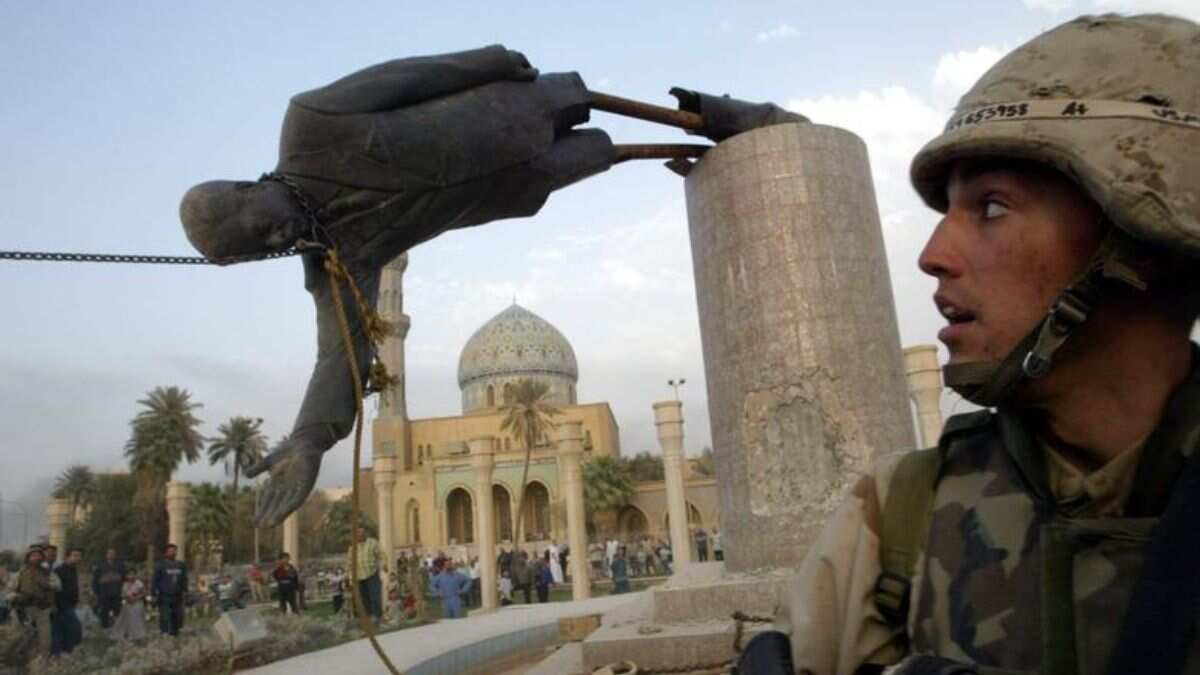
Iraq war 20 years on
In February 2003, a few weeks before the United States launched a full-scale invasion of Iraq, Alexander Phillips, an American then aged 18, participated in one of the anti-war protests which called upon the administration of President George W Bush against invading Saddam Hussein-led Iraq.
Alexander Phillips, with microphone, at an anti-war protest in Orange County, California, March 5, 2003 | Alexander Phillips
"We don't want a smoking gun to be a mushroom cloud," the US declared, and went on to invade Iraq, citing the presence of 'Weapons of Mass Destruction' in the country, and characterising the West Asian nation as a 'sanctuary for terrorism'.

Many years later, no such weapons were found. "The Iraqi weapons of mass destruction were no more than a bit of improvised sham, a con man's counterfeit goods," J.D. Maddox, an American intelligence officer who led the Iraq Survey Group that was assigned the task to search the supposed WMDs, wrote in 2020.
The Iraqi capital Baghdad fell to the US forces within two weeks of the invasion. Saddam Hussein was captured by US forces nine months later in December 2003.
In May 2003, the United States installed the Coalition Provisional Authority (CPA) government at a walled-off segment of Baghdad known as the Green Zone, setting up a capital-within-a-capital.
&imwidth=180&imheight=135&format=webp&quality=medium)
Selma Blair’s team responds to flight incident, says actress ‘did not intend to harm anyone’
&imwidth=180&imheight=135&format=webp&quality=medium)
Did Trump just fire Katie Zacharia as his new press secretary? Here’s what he said
&imwidth=180&imheight=135&format=webp&quality=medium)
Trump invokes national interest to waive new Russia sanctions, tariffs; India gets relief from 100% tariff threat
&imwidth=180&imheight=135&format=webp&quality=medium)
BCCI names India’s ODI squad for New Zealand tour, Gill and Iyer to share captaincy
&imwidth=180&imheight=135&format=webp&quality=medium)
India’s naval priorities: Ex-Navy Chief calls for third aircraft carrier, more warships and submarines
&imwidth=180&imheight=135&format=webp&quality=medium)
'Reason UN has lost credibility': Amid SIR protests India hits out at report alleging 'youth repression'
&imwidth=180&imheight=135&format=webp&quality=medium)
US midterms 2026: Ken Paxton may have Elon Musk to thank if he wins the Texas Senate race. Here's why
&imwidth=180&imheight=135&format=webp&quality=medium)
Israel examines Russia's Shahed-type drones sent by Ukraine to combat Iran | Gravitas
&imwidth=180&imheight=135&format=webp&quality=medium)
Abhishek Sharma sets all-time record for most T20I sixes in a year
&imwidth=180&imheight=135&format=webp&quality=medium)
Ukraine drone strike disrupts 22 Russian airports, over 200 flights
&imwidth=180&imheight=135&format=webp&quality=medium)
Vijay Deverakonda and Rashmika Mandanna's Ranabaali X Review: Netizens call it history-rich but overstuffed
&imwidth=180&imheight=135&format=webp&quality=medium)
‘My president, I mean my husband’: Trump's new press secretary Katie Zacharia's first briefing goes off the rails in 14 minutes
&imwidth=180&imheight=135&format=webp&quality=medium)
US midterms 2026: Alexandria Ocasio-Cortez donates $1 million to Abdul El-Sayed’s as Michigan race heats up
&im=FitAndFill=(700,400)&imwidth=180&imheight=135&format=webp&quality=medium)
Inside Tesla's Roadster: 10 features of Elon Musk's 'flying car' that push the limits of electric vehicles | In Pics
&imwidth=180&imheight=135&format=webp&quality=medium)
'We are not sitting in ivory towers, we are aware': SC issues notice to Rahul Gandhi, Akhilesh Yadav

Not Khan but Pal: Why did Imran Khan choose his mother's surname over his father's? Family tree explained
&imwidth=180&imheight=135&format=webp&quality=medium)
Gravitas | Iran threatens to hit key bridges in 7 countries if US resumes strikes
&imwidth=180&imheight=135&format=webp&quality=medium)
US budget deficit nears $2 trn as tariff refunds rise; debt crosses $40 trn
&imwidth=180&imheight=135&format=webp&quality=medium)
A secret code, a midnight escape and 300 deaths: The Russian officer who turned on Putin
&imwidth=180&imheight=135&format=webp&quality=medium)
Here’s who is eyeing the White House press secretary role after Katie Zacharia’s exit
&imwidth=180&imheight=135&format=webp&quality=medium)
IND-W vs ZIM-W, 1st T20I: Deepti Sharma, Niki Prasad shine as India beat Zimbabwe by four wickets
&im=FitAndFill=(700,400)&imwidth=180&imheight=135&format=webp&quality=medium)
Salman Khan-Karisma Kapoor reunion at Koffee with Karan season 9 sparks nostalgia: A look at their most loved films
&imwidth=180&imheight=135&format=webp&quality=medium)
India's Gen Z rebellion: Can the 'Lehra Do Tiranga' movement reshape the political order? | The Verdict
&imwidth=180&imheight=135&format=webp&quality=medium)
After ODIs, T20Is and Tests, cricket set to introduce a new format: All you need to know
&imwidth=180&imheight=135&format=webp&quality=medium)
China responds to Trump's Press Secretary Katie Zacharia after toilet remark: 'Visit China more often'
&imwidth=180&imheight=135&format=webp&quality=medium)
CJP's Tiranga march: People hit streets of Delhi again, reiterate call for Gyanesh Kumar's resignation
&imwidth=180&imheight=135&format=webp&quality=medium)
Starlink says 'ready to connect India with high-speed internet' amid Reliance row
&im=FitAndFill=(700,400)&imwidth=180&imheight=135&format=webp&quality=medium)
Who left the White House podium the fastest? Press secretaries with the shortest stints
&imwidth=180&imheight=135&format=webp&quality=medium)
Ankita Bhandari murder case: Parents meet CBI, seek impartial investigation
&imwidth=180&imheight=135&format=webp&quality=medium)
Pakistan to head IMF, World Bank boards after 74 years amid persistent economic crisis
&im=FitAndFill=(700,400)&imwidth=180&imheight=135&format=webp&quality=medium)
New Friday OTT releases (October 16, 2026): DC, Sacrifice, Aasha- 6 new movies and TV shows coming on Netflix, Zee 5, Prime Video and more
&imwidth=180&imheight=135&format=webp&quality=medium)
Group's fibre-optic drones pose new challenge for Israel
&imwidth=180&imheight=135&format=webp&quality=medium)
Delhi police places CJP's Abhijeet Dipke under preventive arrest over breach of peace, AISA Chief Neha Bora released
&imwidth=180&imheight=135&format=webp&quality=medium)
Oregon school shooting: 16-year-old shooter identified, used shotgun bought by mother; Trump praises bystander who shot gunman as 'great hero'
&imwidth=180&imheight=135&format=webp&quality=medium)
US midterms 2026: Dan Sullivan’s ‘gotcha’ attempt backfires against Mary Peltola in fiery Alaska Senate debate
&imwidth=180&imheight=135&format=webp&quality=medium)
China tells Israel to stop West Bank settlements, calls Palestine issue ‘historic injustice’
The new government was seen as insulated from the Iraqi people whose lives and livelihoods were at stake. While Americans and their few Iraqi allies enjoyed clean streets, air conditioning and even fast food chains, ordinary Iraqis were subject to looting and violence.
Three years later, after a trial widely seen as a sham, Hussein was hanged to death in January 2006.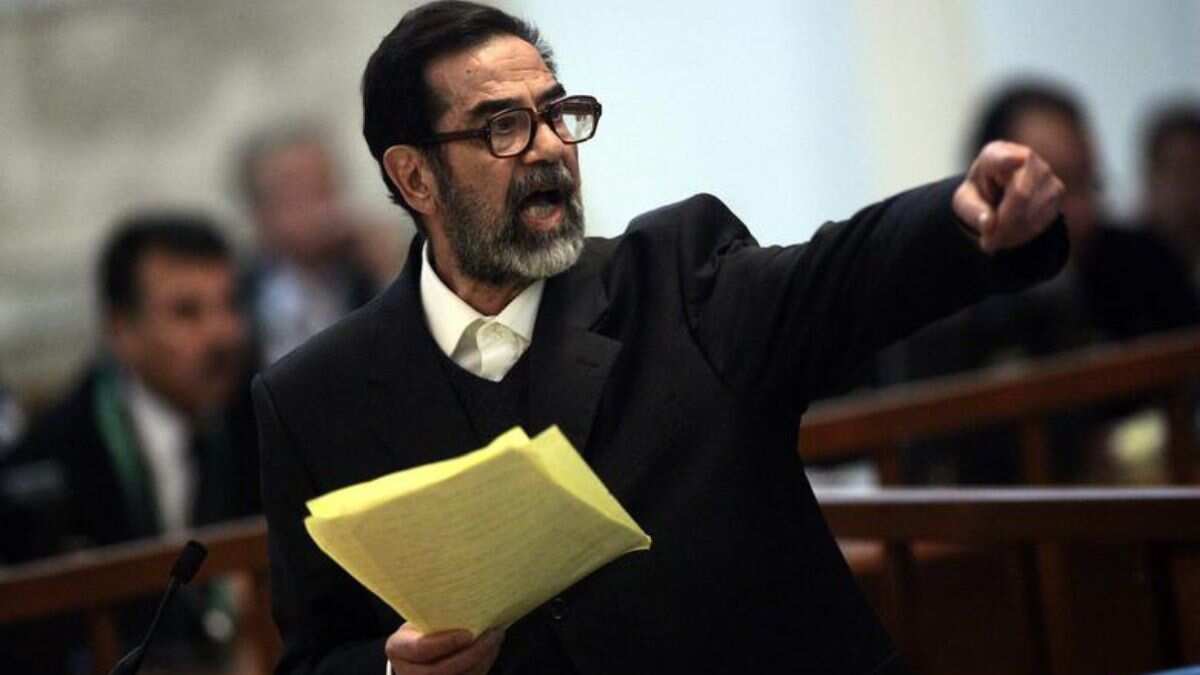
Former Iraqi President Saddam Hussein argues with prosecutors while testifying during cross-examination at his trial in Baghdad's Green Zone, April 5, 2006. He was hanged on December 30, 2006 | Reuters image
A cycle of political uncertainty followed.
The detractors of Hussein's mostly Sunni Ba'ath Party became part of armed groups based on sectarian allegiances, a move that was to snowball into the terror unleashed by Abu Baqr-al Baghdadi's 'Islamic State of Iraq and Syria' years later.
"Iraq was a combustible nation full of sectarianism that had the potential to be worse than civil wars in Syria and Lebanon," said Julian McBride, an anthropologist who tells the stories of victims of war through art and research, and is the founder and director of non-profit Reflections on War (ROW) Initiative.
While anti-war protestors like Alexander Phillips knew that it was unlikely that their protests were going to stop the impending invasion, the political climate post-9/11 terror attack of 2001 in the United States made it even more difficult for such a possibility to emerge in the first place.
Phillips told WION that he and his fellow protestors saw 'a lot of middle fingers' from the passersby at San Diego in February 2003.
ALSO READ |Pretext of Iraq war just an ‘excuse’: Tony Blair denounces Putin’s Ukraine invasion
"A lot of angry people were explaining to me that I was misguided. That in five years, Iraq would be a stable democracy," Phillips, 37, now an assistant professor of English at Ashoka University near New Delhi, told WION.
"We were going after war with the evidence that was flimsy at best. I think that it is too easy to say we were misled and that we were lied to," Phillips said, adding that the 'political and journalistic establishment seemed quite set on invading Iraq'.
Twenty years on, the assertions of the Bush administration have been proven false. Despite the commitment of over $60 billion in the US funds to reconstruction alone, Iraq remains fractured and vulnerable to violence.
"I would argue that anyone could have known this at the time. That case for going after the war was questionable at best. I understood this, as an 18-year-old. We could have all known this," Phillips added.
WATCH WION LIVE HERE
You can now write for wionews.com and be a part of the community. Share your stories and opinions with us here.