

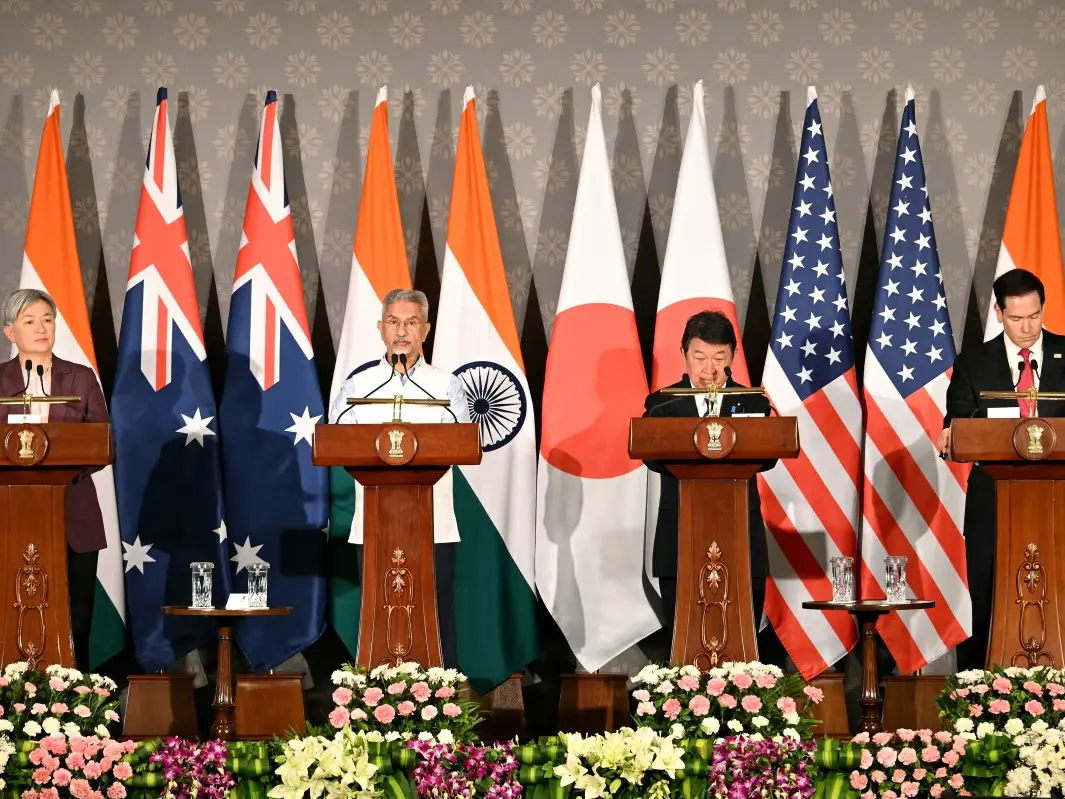
&imwidth=800&imheight=600&format=webp&quality=medium "Quad Foreign Ministers meeting: From terrorism to GDP - here's what ministers said in joint statement")
The Minister of External Affairs of India, S. Jaishankar, said on Tuesday (May 26) that in the coming days, the Indo-Pacific will become even more important to the world. Addressing a press conference after the Quad Foreign Ministers meeting, Jaishankar said that the discussions were primarily focused on the Indo-Pacific and that the maritime domain has seen a steady expansion of collaboration.
“We spent some time on the question of safe and unimpeded maritime commerce, and reaffirmed the significance of scrupulously observing international law,” the Indian minister added. The ministers also devoted their time to discussing the threat of terrorism. “Nations subject to terrorist attacks have the right to defend themselves," said Jaishankar.
Meanwhile, Australian Foreign Minister Penny Wong said that the Indo-Pacific region is facing acute economic stress. “We recognise the efforts of Secretary Rubio towards a diplomatic resolution to ensure that the freedom of navigation is restored," she said.
'Countries that are about a 3rd of world's GDP'
US Secretary of State Marco Rubio described the Quad as a grouping representing “about a third of the world’s GDP” and nearly two billion people, as the four Indo-Pacific democracies unveiled a series of initiatives on maritime security, port infrastructure and critical minerals cooperation. Speaking after the Quad Foreign Ministers’ Meeting in New Delhi hosted by External Affairs Minister S. Jaishankar, Rubio said the Quad was evolving into an action-oriented partnership focused on “real concrete achievables”.
He announced the launch of the Indo-Pacific Maritime Surveillance Cooperation Initiative to strengthen information sharing and expand maritime domain awareness capabilities across the region. Rubio also confirmed plans for a Quad-backed port infrastructure project in Fiji to address insufficient port capacity in Pacific Island nations, marking the first such joint initiative by the grouping.
On economic security, Rubio unveiled the Quad Critical Minerals Framework aimed at coordinating investments, strengthening mining and processing capabilities, and securing supply chains. Stressing the strategic importance of the Indo-Pacific, he noted that nearly 60 per cent of global maritime trade passes through the region and said the Quad’s collective agenda had become even more relevant amid recent global developments.
Trending Stories
&imwidth=180&imheight=135&format=webp&quality=medium)
Rahul Gandhi's plea against Election Commission delayed as Supreme Court registry flags 14 ‘defects’
&im=FitAndFill=(700,400)&imwidth=180&imheight=135&format=webp&quality=medium)
Navratri 2026: 9 days, 9 forms of Goddess Durga and 9 colours- Check the complete list
&imwidth=180&imheight=135&format=webp&quality=medium)
Korean peninsula tensions escalate as North Korea launches multiple ballistic missiles, PACOM says 'no threat to US personnel'
&imwidth=180&imheight=135&format=webp&quality=medium)
Trump weighs firing Kimberly Guilfoyle as US ambassador to Greece amid misconduct allegations: Report
&imwidth=180&imheight=135&format=webp&quality=medium)
Anti-SIR protest in Mumbai: Protestors wear black masks & ribbons in Mumbai
&imwidth=180&imheight=135&format=webp&quality=medium)
UK PM Andy Birnham renews claims of Russian meddling in Brexit vote
&imwidth=180&imheight=135&format=webp&quality=medium)
BCCI rejects venue shift reports, India vs Sri Lanka 1st ODI to remain in Delhi
&imwidth=180&imheight=135&format=webp&quality=medium)
'Absolutely disgusting': Australia slams US plan to livestream Nidal Hasan's execution; Mike Johnson raises concerns, warns of terrorist propaganda
&imwidth=180&imheight=135&format=webp&quality=medium)
1,500 drones illuminate Mumbai sky as Cordelia Cruises unveils second ship, Cordelia Sky
&imwidth=180&imheight=135&format=webp&quality=medium)
Houthis warns US of 'painful response' if Washington joins Saudi war in Yemen as airlines suspend flights to Saudi Arabia
&imwidth=180&imheight=135&format=webp&quality=medium)
Congress demands action against chief election commissioner
&imwidth=180&imheight=135&format=webp&quality=medium)
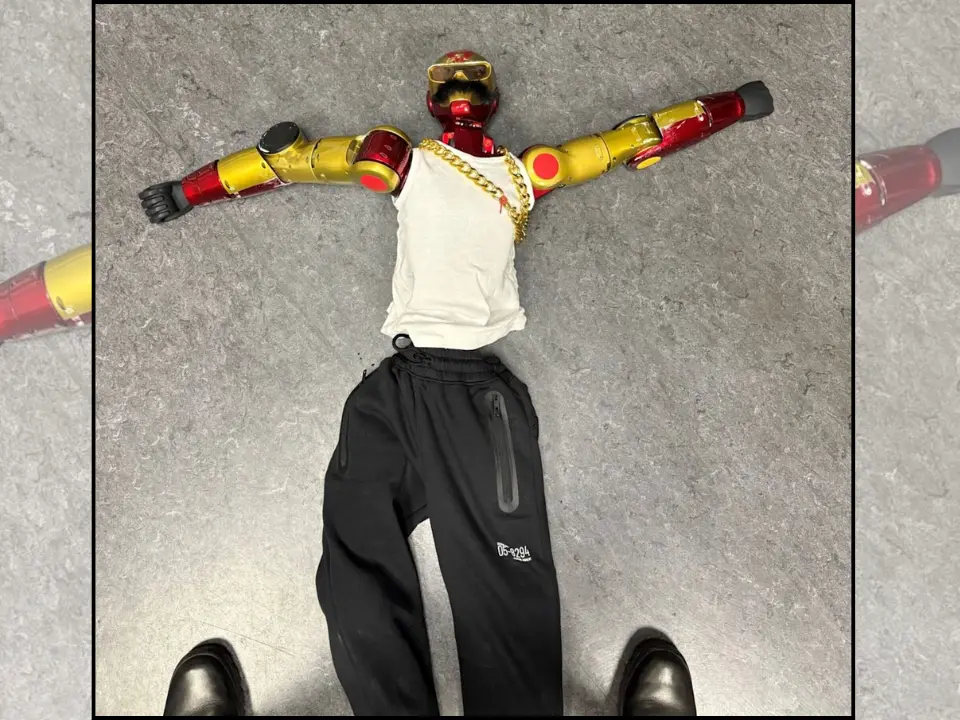
Robot gropes girl, makes thrusting movements in bizarre crime in Germany
&imwidth=180&imheight=135&format=webp&quality=medium)
'Turn approver, resign, we'll forgive you': Rahul Gandhi claims receiving messages from CEC Gyanesh Kumar
&imwidth=180&imheight=135&format=webp&quality=medium)
'I will not be silenced': Ilhan Omar alleges political intimidation after federal officers search her Washington home
&imwidth=180&imheight=135&format=webp&quality=medium)
Pakistan's government blames PTI for rise of terrorism in Khyber Pakhtunkhwa
&imwidth=180&imheight=135&format=webp&quality=medium)
‘This is just the start’: Maaya Rajeshwaran on historic ITF title, confidence boost and future goals
&imwidth=180&imheight=135&format=webp&quality=medium)
I.N.D.I.A. Bloc lists 10 requests to Supreme Court
&im=FitAndFill=(700,400)&imwidth=180&imheight=135&format=webp&quality=medium)
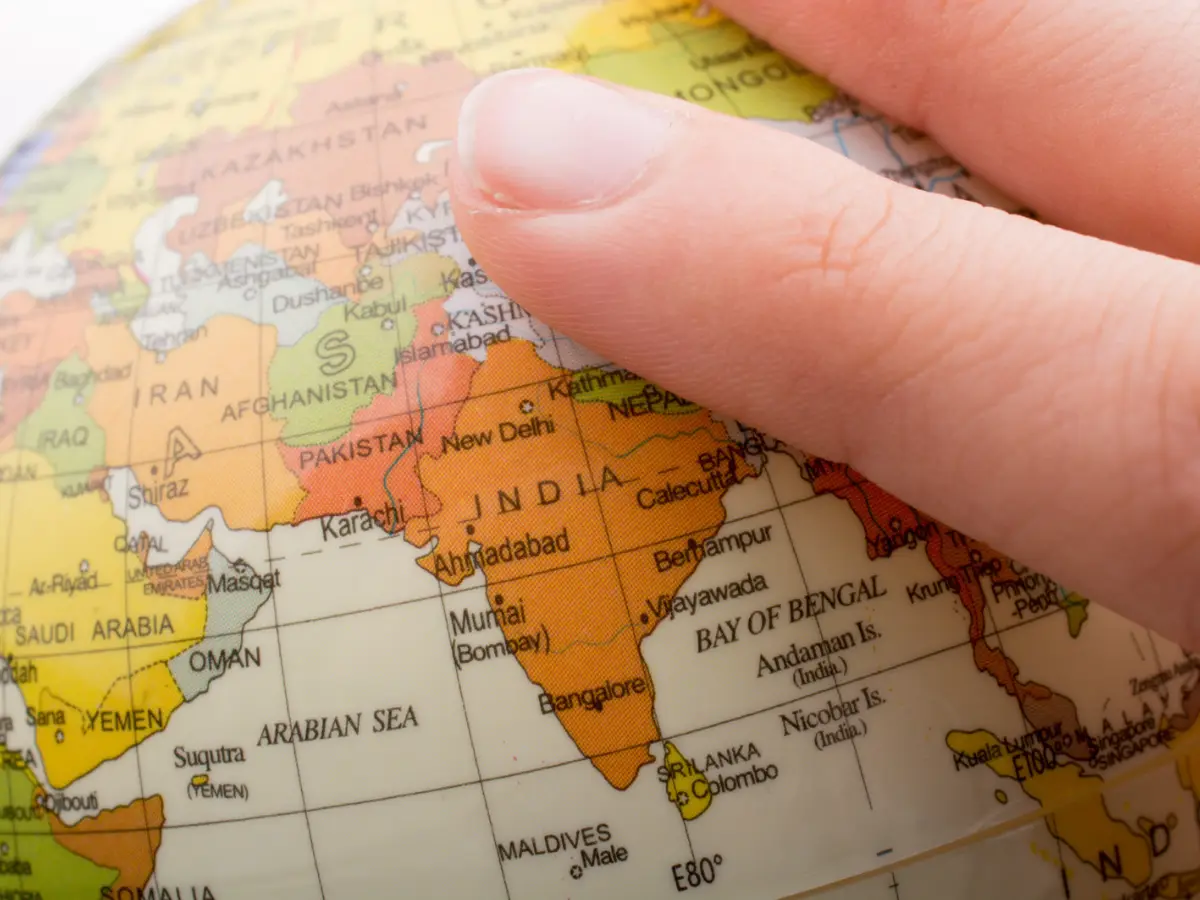
IMF World Economic Outlook: 10 economies to watch for growth in FY27 and FY28 - Where does India stand?
&im=FitAndFill=(700,400)&imwidth=180&imheight=135&format=webp&quality=medium)
How does a robot decide what to do next?
&imwidth=180&imheight=135&format=webp&quality=medium)
Is the AI chip boom already over? Global semiconductor stocks slide as investors question unbridled spending
&imwidth=180&imheight=135&format=webp&quality=medium)
L Murugan resigns as Union Minister, expresses wish to return to grassroots
&imwidth=180&imheight=135&format=webp&quality=medium)
Trump says he 'may' meet North Korean leader Kim Jong Un during upcoming Asia trip
&imwidth=180&imheight=135&format=webp&quality=medium)
'Ouch!!! That must hurt': Kangana Ranaut hails Kamal Haasan's sharp reply to Elon Musk over Starlink row
&imwidth=180&imheight=135&format=webp&quality=medium)
Sidhu Moose Wala’s younger brother wins hearts by recreating late singer’s signature move at Toronto Hologram Show
&imwidth=180&imheight=135&format=webp&quality=medium)
Girl 'dead' for 8 hours wakes up at her own funeral, dad insists she wasn't breathing
&imwidth=180&imheight=135&format=webp&quality=medium)
UK school ditches technology, shifts from screen to pen and paper for learning
&imwidth=180&imheight=135&format=webp&quality=medium)
Opposition’s 10 demands in Supreme Court petition range from stay on SIR to audit of voter rolls
&imwidth=180&imheight=135&format=webp&quality=medium)
'I am thoroughly unamused': Judge slams Trump administration after 400 trees cut at Washington golf course
&im=FitAndFill=(700,400)&imwidth=180&imheight=135&format=webp&quality=medium)
New OTT releases this week (October 12-18, 2026): Sacrifice, Koffee with Karan S9, Roadies Rebirth- 6 titles coming on Netflix, JioHotstar and more
&imwidth=180&imheight=135&format=webp&quality=medium)
China’s gold rush puts billion in focus
&imwidth=180&imheight=135&format=webp&quality=medium)
India's Ajit Doval, Iran's Mohsen Rezaei hold talks amid escalating West Asia tensions, discuss 'issues of mutual interest'
&imwidth=180&imheight=135&format=webp&quality=medium)
New Cold War: Why is China buying more gold? Explained
&imwidth=180&imheight=135&format=webp&quality=medium)
Anupam Kher joins Ranbir Kapoor's Ramayana as Jatayu, new poster unveiled
&imwidth=180&imheight=135&format=webp&quality=medium)
'Almost certainly': UK Prime Minister Andy Burnham says Iran's IRGC behind RAF Fairford threat
&imwidth=180&imheight=135&format=webp&quality=medium)
Elon Musk pumps $276 million into Republican campaigns ahead of US midterm elections
‘There must be zero tolerance for terrorism’
Jaishankar further said that the four maritime democracies exchanged views on deepening cooperation in surveillance, logistics networks, undersea cables, humanitarian assistance and disaster relief, as well as maritime domain awareness. He stressed the importance of “safe and unimpeded maritime commerce” and called for strict observance of international law. Highlighting the Quad nations as market economies, Jaishankar said discussions also centred on strengthening supply chains, promoting trusted technologies and enhancing production capacities amid ongoing concerns over energy and fertiliser availability.
He reiterated the Quad’s “zero tolerance” approach towards terrorism, asserting that countries facing terrorist attacks have the right to defend themselves. Jaishankar added that the Indo-Pacific would become increasingly central to global economic activity, energy trade and maritime commerce in the coming years, which would correspondingly expand the responsibilities of the Quad grouping.

