

&imwidth=800&imheight=600&format=webp&quality=medium "India bets on 'trust' to unlock China’s pharma and engineering markets, experts warn of 'carrots'")
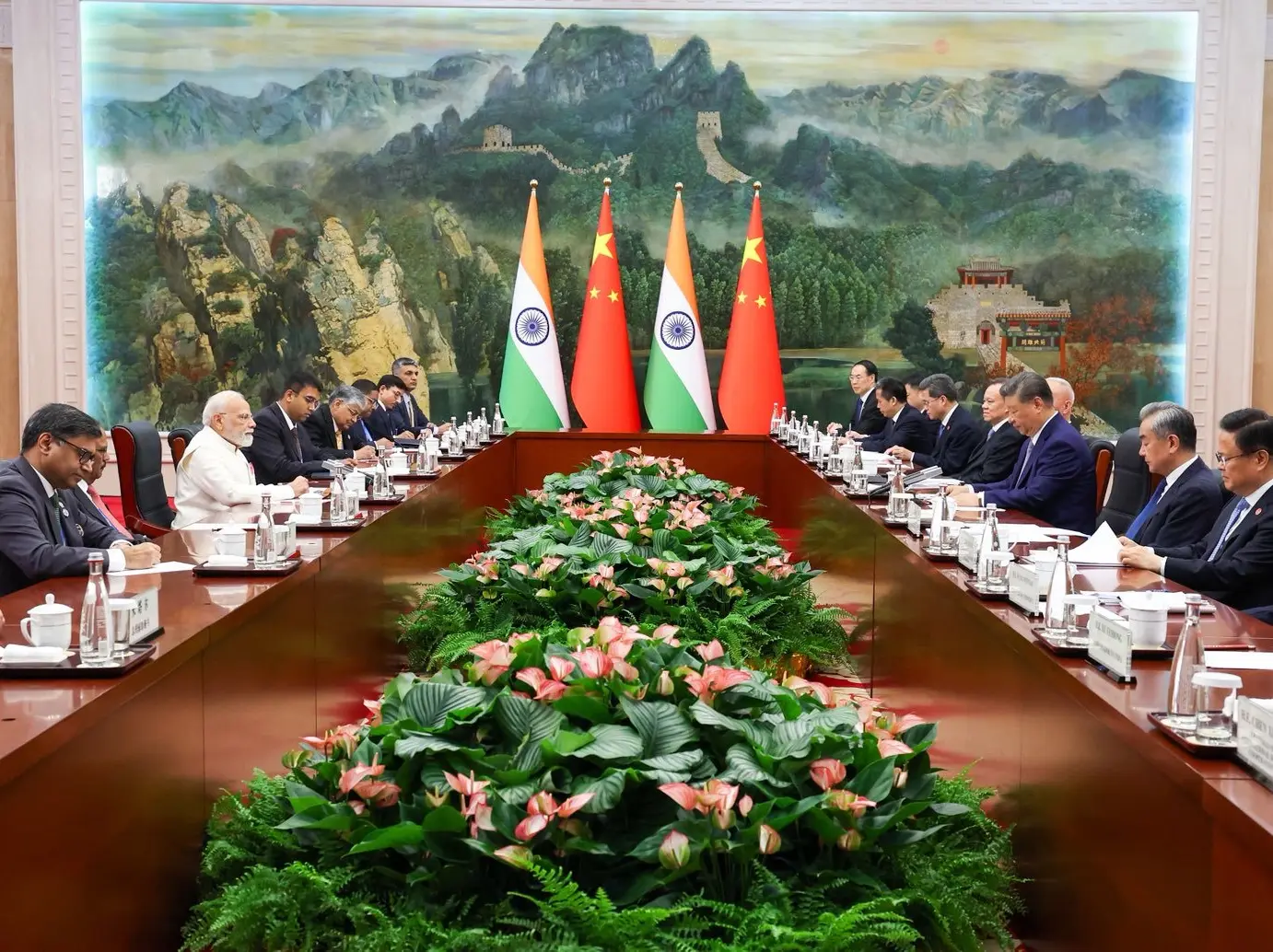
India and China have reopened one of their most consequential bilateral channels after years of silence. But as New Delhi pushes for greater market access in Beijing, experts are sounding a clear note of caution: diplomatic goodwill, however welcome, is not a substitute for structural leverage. Union Commerce and Industry Minister Piyush Goyal met his Chinese counterpart Wang Wentao on the sidelines of the World Trade Organisation Ministerial in Yaounde, Cameroon, last week, the first commerce ministerial-level interaction between Asia's two largest economies in nearly seven years. The meeting, Goyal said, was about more than trade volumes.
"I also met after a long time the Minister from China, with whom we have discussed ways to expand trade, move towards more balanced trade, and generate ‘trust’ to help smooth bilateral trade between China and India, and give greater opportunity for our exporters to export pharmaceuticals, to export engineering products, to export fish and pharma products. All in all, a good start, I would say, to generating greater opportunities for our exporters in China," the Minister said.
The Numbers Behind the Push
The urgency behind Minister Piyus Goyal's pitch is written in the trade data. India's merchandise exports to China for the financial year 2025-26, up to February 2026, stood at $17.5 billion. Its imports from Beijing over the same period were $119.56 billion, a gap that is not just large, but widening at a pace that diplomacy alone cannot match. Dr. Nisha Taneja, Senior Visiting Professor at the Indian Council for Research on International Economic Relations (ICRIER) and former member of the World Economic Forum's Global Future Council on Trade and Investment, puts the problem in great arithmetic. Despite a 38 percent surge in Indian exports between April 2025 and January 2026, exports rose by only USD 4.4 billion in absolute terms, against a USD 13.1 billion increase in imports during the same period.
"The widening trade deficit is driven by India's limited access to the Chinese market and its heavy reliance on Chinese imports, 85 percent of which are intermediate and capital goods essential for manufacturing," Dr. Nisha Taneja told WION. "Following Trump's tariff announcements, China has been aggressively diversifying exports, with India becoming a key target market."
The Pharma Wall: A Regulatory Deadlock
Trending Stories
&imwidth=180&imheight=135&format=webp&quality=medium)
Other Mommy leads North American box Office as Verity, Resident Evil round out top four
&im=FitAndFill=(700,400)&imwidth=180&imheight=135&format=webp&quality=medium)
Navratri 2026: 9 days, 9 forms of Goddess Durga and 9 colours- Check the complete list
&imwidth=180&imheight=135&format=webp&quality=medium)
Anti-SIR protest in Mumbai: Protestors wear black masks & ribbons in Mumbai
&imwidth=180&imheight=135&format=webp&quality=medium)
BCCI rejects venue shift reports, India vs Sri Lanka 1st ODI to remain in Delhi
&imwidth=180&imheight=135&format=webp&quality=medium)
Diljit Dosanjh’s Delhi concert gets a new date: When and where to catch the singer
&im=FitAndFill=(700,400)&imwidth=180&imheight=135&format=webp&quality=medium)
Is sending robots to Mars easier than sending humans?
&imwidth=180&imheight=135&format=webp&quality=medium)
A watchdog rated 'ChatGPT for Teens' an unacceptable risk and says keep under-18s off it
&imwidth=180&imheight=135&format=webp&quality=medium)
1,500 drones illuminate Mumbai sky as Cordelia Cruises unveils second ship, Cordelia Sky
&imwidth=180&imheight=135&format=webp&quality=medium)
'Just coincidence': Police mistakes protester as AISA chief Neha Bora, arrests her from site
&imwidth=180&imheight=135&format=webp&quality=medium)
Anthropic's AI invented a murder witness and sent the fake tip to Philadelphia police
&imwidth=180&imheight=135&format=webp&quality=medium)
Congress demands action against chief election commissioner
&imwidth=180&imheight=135&format=webp&quality=medium)
CJI Surya Kant declines INDIA bloc leaders’ request for meeting ahead of march to SC, asks them to file petition
&imwidth=180&imheight=135&format=webp&quality=medium)
Saif Ali Khan is finally on Instagram! Here's what he shared in his first post
&imwidth=180&imheight=135&format=webp&quality=medium)
'Turn approver, resign, we'll forgive you': Rahul Gandhi claims receiving messages from CEC Gyanesh Kumar
&imwidth=180&imheight=135&format=webp&quality=medium)
One Indian killed in Riyadh airport attack; 11 others injured : MEA
&imwidth=180&imheight=135&format=webp&quality=medium)
Top AI models flunked a test of inventing new AI research, so much for self-improving AI
&imwidth=180&imheight=135&format=webp&quality=medium)
Wasim Jaffer blames Ajit Agarkar-led selection panel for Virat Kohli’s Test retirement
&imwidth=180&imheight=135&format=webp&quality=medium)
'Ouch!!! That must hurt': Kangana Ranaut hails Kamal Haasan's sharp reply to Elon Musk over Starlink row
&imwidth=180&imheight=135&format=webp&quality=medium)
Sidhu Moose Wala’s younger brother wins hearts by recreating late singer’s signature move at Toronto Hologram Show
&imwidth=180&imheight=135&format=webp&quality=medium)
UK school ditches technology, shifts from screen to pen and paper for learning
&imwidth=180&imheight=135&format=webp&quality=medium)
Telangana ATM heist: Thieves in nighties arrive in ambulance, break into SBI ATM in Kamareddy - VIDEO
&imwidth=180&imheight=135&format=webp&quality=medium)
Houthis claim Riyadh airport attacks, Aramco strikes; issue fresh warning to airlines, travellers and workers
&imwidth=180&imheight=135&format=webp&quality=medium)
Portugal Federation confirms Cristiano Ronaldo’s return to national team despite suspension
&imwidth=180&imheight=135&format=webp&quality=medium)
Delhi protests: 'Court should not be dragged into political activity', says CJI Surya Kant
&im=FitAndFill=(700,400)&imwidth=180&imheight=135&format=webp&quality=medium)
New OTT releases this week (October 12-18, 2026): Sacrifice, Koffee with Karan S9, Roadies Rebirth- 6 titles coming on Netflix, JioHotstar and more
&imwidth=180&imheight=135&format=webp&quality=medium)
Microsoft's Nadella says treat every AI model as already hacked, and build an 'emergency brake'
&imwidth=180&imheight=135&format=webp&quality=medium)
Delhi protest: CJI Surya Kant declines to meet India Bloc leaders
&imwidth=180&imheight=135&format=webp&quality=medium)
Telangana man allegedly recruited into Russian military dies near Ukraine border
&imwidth=180&imheight=135&format=webp&quality=medium)
China imposes first-ever sanctions on ministers from Taiwan allies: What this means
&imwidth=180&imheight=135&format=webp&quality=medium)
McSweeney reveals how studying Virat Kohli’s YouTube clips helped Australia A conquer India
&imwidth=180&imheight=135&format=webp&quality=medium)
Maharashtra appoints FDA commissioner Tukaram Mundhe as secretary of committee for MPSC overhaul amid stir
&imwidth=180&imheight=135&format=webp&quality=medium)
Iran: US accepted some conditions, Clarity needed on others
&imwidth=180&imheight=135&format=webp&quality=medium)
Nana Patekar's cause of death confirmed; here's what his postmortem report says
&imwidth=180&imheight=135&format=webp&quality=medium)
iPhone Duo price index: Tracking Apple’s latest pricing trends
&imwidth=180&imheight=135&format=webp&quality=medium)
'Say no to Muse': Meta has no control over its own moderation AI while it forces a security nightmare on everyone
India's ambition to push pharmaceuticals into China runs into a barrier that has little to do with product quality or price competitiveness. The obstacle is procedural, and it has gone unaddressed for years. Chinese regulatory authorities require their officials to physically visit and certify manufacturing facilities in India before approving drug registrations. No facilitative mechanism for such visits currently exists between the two countries.
"Countries such as the United States and members of the European Union have well-established systems for sending regulatory officials to India to certify pharmaceutical plants. The absence of a similar structured mechanism between India and China creates significant barriers for Indian exporters," Dr. Nisha Taneja said. The information gap compounds the regulatory one. Indian exporters frequently lack a clear understanding of Chinese market requirements, registration procedures, and how to identify reliable business partners on the ground, gaps that persist across sectors beyond pharmaceuticals, including machinery parts, turbojets, automobile components, and gems and jewellery.
China's Carrot, And What It Really Means
On the strategic side, it warns India against reading too much into Beijing's accommodating posture. Antara Ghosal Singh, China Fellow at the Strategic Studies Programme of the Observer Research Foundation and one of India's foremost China watchers, argues that China's economic structure is fundamentally misaligned with what New Delhi is asking for. "China maintains a trade surplus against most countries in the world, a total surplus of more than one trillion US dollars. China is not keen on buying anything from anyone, other than high-technology and raw materials," she told WION. "This is certainly not due to lack of competitiveness on the part of these countries, but because of China's own economic policies, which have for all these years favoured production over consumption."
Ms Antara further highlighted that the data from within China's own economy tells a sobering story. Domestic car sales have stagnated for eleven years, failing to surpass the 2017 peak. Smartphone shipments have fallen from 470 million units in 2016 to 300 million units by 2025. China, she argues, remains structurally export-dependent, and has neither the appetite nor the policy architecture to suddenly become a significant consumer of Indian goods.
Her sharper warning cuts to the heart of the negotiation. "China will surely not like Chinese companies investing and enabling India to become a manufacturing nation in competition with China, so it is only pertinent that they will dangle the carrot of market access before India, to extract more concessions from the Indian side for Chinese businesses," she said.
What a Real Reset Would Require
Both experts point to concrete steps that would need to accompany the diplomatic momentum if this reset is to translate into measurable trade outcomes. Dr. Nisha Taneja calls for a dedicated bilateral task force, a structured mechanism that would systematically identify market access barriers faced by exporters on both sides, coordinate between regulatory bodies, and provide businesses with clearer procedural guidance. Alongside this, she argues, stronger people-to-people connections through cultural exchanges, tourism, and civil society engagement are not peripheral to trade; they are foundational to building the very trust that Minister Piyus Goyal placed at the centre of India's pitch in Yaounde.
Ms Antara Ghosal Singh takes the argument further, urging India to reframe the negotiation itself. "Rather than obsessing over India's economic dependence on China, we must also do deeper studies on the current challenges of the Chinese economy and their need for greater access to the Indian market, and only then can we hope to get a good bargain from the Chinese side," she said. India's reset with China is real, and the Yaounde meeting marks a genuine moment of diplomatic momentum. But as the experts make clear, a good start, as Minister Goyal himself described it, is still just a start.
WION has reached out to the Indian Pharma Exports Council and the Engineering Exports Promotion Council of India to know what exactly they seek from China and the Indian government in terms of trade, capital, and policy. Till the time of the publication, the council's has not yet responded to our questions.
