

&imwidth=800&imheight=600&format=webp&quality=medium "Gaza Force is coming: Will the ISF be another rule by proxy for Palestinians, like the British Mandate period?")
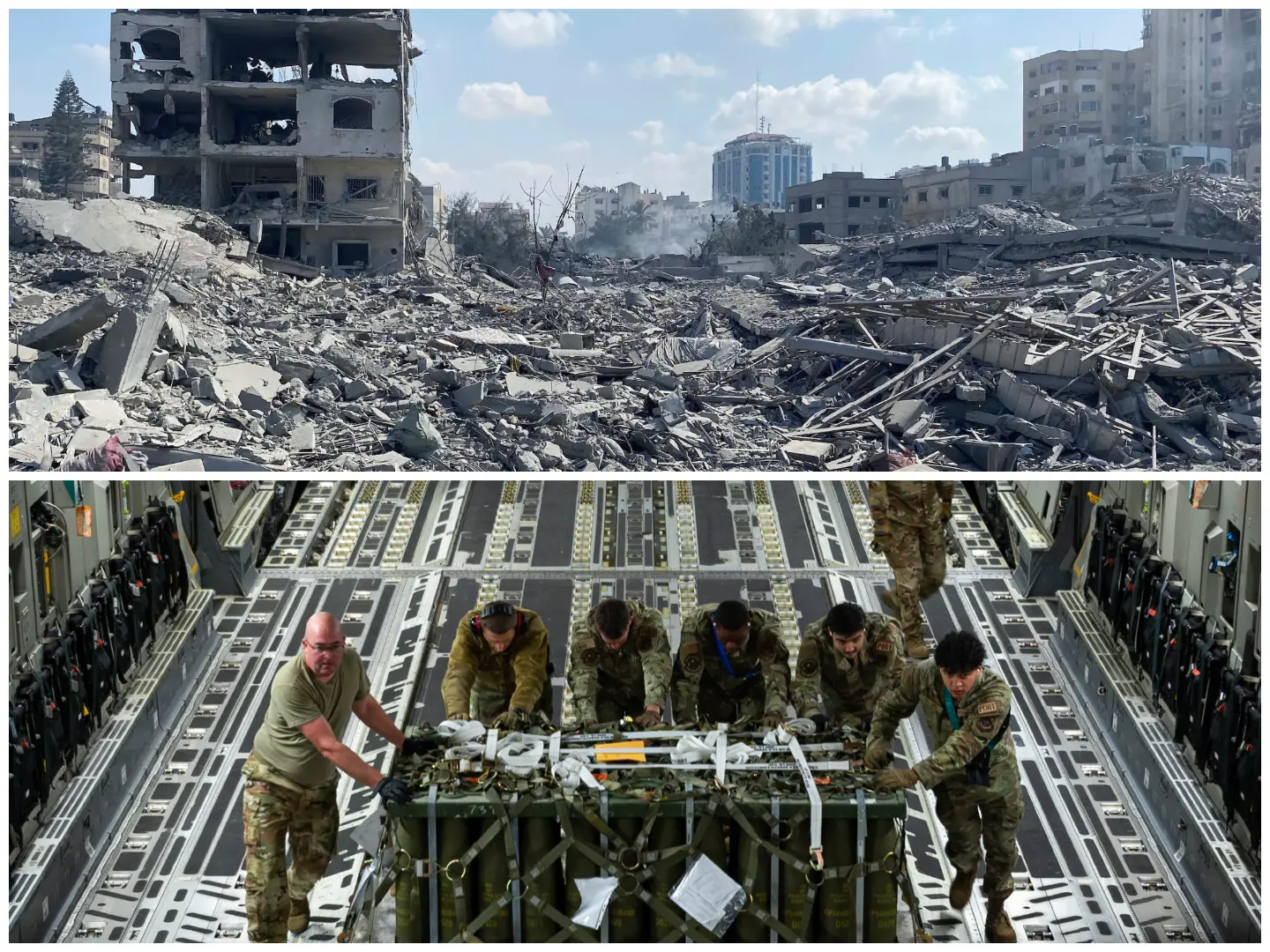
The United States and several regional nations are working to assemble the Gaza Force, formally known as the International Stabilisation Force (ISF). This multinational mission would administer the Palestinian enclave, which is slowly recovering after two years of war between Israel and Hamas. Nearly 80 years after Britain’s colonial rule under the so-called “Palestine Mandate” ended, a new foreign force is expected to take charge of Gaza once again. The proposed ISF is a central element of US President Donald Trump’s 20-Point Gaza Ceasefire Plan. Its stated aim is to secure the enclave following the October ceasefire between Israel and Hamas, but many are asking whether it will cause more problems than it solves. Could it simply become another way for foreigners to control Palestinians by proxy?
How ISF in Gaza is different: An enforcer, not a peacekeeper
The US has circulated a draft UN Security Council resolution to authorise a two-year mandate for the ISF. It is expected to function as an enforcement force, not a traditional peacekeeping mission, prompting observers to wonder whether it will bring stability or signal a return to Mandate-era foreign control under a new guise.
Unlike blue-helmet UN peacekeepers, the ISF would have authority to use “all necessary measures” to maintain order in Gaza. According to the draft proposal, the ISF’s role would be to secure Gaza’s borders with Israel and Egypt, protect civilians and aid corridors, and help restore basic governance. It would also select and train a new Palestinian police force to take over internal security once the situation stabilises.
Who will oversee the Gaza Force?
Trending Stories
&imwidth=180&imheight=135&format=webp&quality=medium)
IND-W vs ZIM-W, 2nd ODI: Harmanpreet Kaur, Vaishnavi Sharma star in India's 121-run win
&im=FitAndFill=(700,400)&imwidth=180&imheight=135&format=webp&quality=medium)
What is the real meaning behind Pete Hegseth's tattoos?
&imwidth=180&imheight=135&format=webp&quality=medium)
Telangana unveils AI avatar of IT minister D Sridhar Babu at Hyderabad DevFest 2026
&imwidth=180&imheight=135&format=webp&quality=medium)
'This is humiliation': Vijay Deverakonda under fire over controversial marriage proposal remark on Koffee With Karan 9
&imwidth=180&imheight=135&format=webp&quality=medium)
Pahalgam, Gulmarg record season’s first sub-zero temperatures as winter chill intensifies in Kashmir
&imwidth=180&imheight=135&format=webp&quality=medium)
Govinda breaks silence on divorce rumours with Sunita Ahuja, calls her his first love
&imwidth=180&imheight=135&format=webp&quality=medium)
Indian embassy warns nationals in Saudi Arabia against filming missile strikes
&imwidth=180&imheight=135&format=webp&quality=medium)
Can Putin cheat death? All about his daughter’s billion-dollar quest for immortality
&imwidth=180&imheight=135&format=webp&quality=medium)
Saudi says debris fell in Mecca, Medina after missile interceptions; Houthis deny targeting holy cities
&imwidth=180&imheight=135&format=webp&quality=medium)
Netanyahu warns Israelis of ‘existential threat’ from Iran, posts AI image of nuclear strike
&imwidth=180&imheight=135&format=webp&quality=medium)
Trump revives ‘shithouse countries’ slur, targets Abdul El-Sayed and Ilhan Omar at Georgia rally
&imwidth=180&imheight=135&format=webp&quality=medium)
Pakistan airline PIA unveils new crew uniforms, faces online criticism
&imwidth=180&imheight=135&format=webp&quality=medium)
Kerala judge's 17-year-old son allegedly driving Mercedes kills scooter rider
&imwidth=180&imheight=135&format=webp&quality=medium)
'Already tired of his 9-to-5': Baby born with a moustache becomes internet sensation, video goes viral | Watch
&imwidth=180&imheight=135&format=webp&quality=medium)
Bigg Boss 20: Rohit Shetty indirectly reacts to firing at his Mumbai home
&imwidth=180&imheight=135&format=webp&quality=medium)
Tiger Shroff’s team calls report on actor’s reaction to Mumbai attack ‘completely untrue’
&imwidth=180&imheight=135&format=webp&quality=medium)
Horrific video shows the moment 18-year-old fell to her death from Mexico amusement park ride
&imwidth=180&imheight=135&format=webp&quality=medium)
Russia-Ukraine drone attacks kill 6, injure 31 across both countries
&imwidth=180&imheight=135&format=webp&quality=medium)
'I promised Gautam & Kotak Sir that...': Tilak Varma opens up on match-winning mindset against NZ
&imwidth=180&imheight=135&format=webp&quality=medium)
‘Saddam Hussein opened a cheesecake factory’: Obama mocks Trump’s White House renovations; defends Abdul El-Sayed
&imwidth=180&imheight=135&format=webp&quality=medium)
Anthropic's leaked AI bill would act only at 50 deaths or $1bn in harm
&imwidth=180&imheight=135&format=webp&quality=medium)
China's dancing robot turns violent bodyguard, lifts cars and fights intruders - Watch
&im=FitAndFill=(700,400)&imwidth=180&imheight=135&format=webp&quality=medium)
Why do some fighter jets have two engines while others use one?
&imwidth=180&imheight=135&format=webp&quality=medium)
Byeon Woo Seok makes first public appearance as Sung Jin Woo for Solo Leveling at Netflix Korea’s 10th anniversary event
&im=FitAndFill=(700,400)&imwidth=180&imheight=135&format=webp&quality=medium)
New Friday OTT releases (October 23, 2026): Gajab Raat, Dorothy, Chaar Yaar- Watch these 6 new movies and TV shows on Netflix, Prime Video and more
&imwidth=180&imheight=135&format=webp&quality=medium)
'Clear overkill': Putin rejects claims Russia is behind mass protests in Europe
&imwidth=180&imheight=135&format=webp&quality=medium)
'If it was up to me, it wouldn't have ended like this': James Anderson opens up on Lancashire exit
&imwidth=180&imheight=135&format=webp&quality=medium)
‘Do I make a deal or finish them off’: What Trump said on resuming Iran strikes
&imwidth=180&imheight=135&format=webp&quality=medium)
Javed Akhtar backs Rashmika Mandanna after Koffee With Karan 9 accent trolling, calls out ‘linguistic superiority’
&imwidth=180&imheight=135&format=webp&quality=medium)
WATCH | Langur walks into Odisha repair shop, hugs shopkeeper; internet reacts to heartwarming video
&imwidth=180&imheight=135&format=webp&quality=medium)
Nagpur man fails to pay rent, allegedly prints fake Rs 500 notes worth Rs 37 lakh
&imwidth=180&imheight=135&format=webp&quality=medium)
Venezuelan opposition leader María Machado returns home after over 10 months in exile
&imwidth=180&imheight=135&format=webp&quality=medium)
‘Modi ka baap bhi jayega,’ Kharge loses cool at party event in Patna; BJP slams him
&imwidth=180&imheight=135&format=webp&quality=medium)
Why Europe’s protests are about more than austerity and rising costs
&imwidth=180&imheight=135&format=webp&quality=medium)
Kim Kardashian, Kris Jenner turn heads with Bold looks at All’s Fair season 2 premiere in Rome
A “Board of Peace”, chaired by Trump and working in coordination with Israel and Egypt, would oversee the Gaza Force. The US is expected to maintain a small coordination hub just outside Gaza. The mission’s declared goal is a temporary two-year stabilisation period leading to Palestinian self-governance, though it remains to be seen whether the force will truly withdraw once its term ends.
Also read: IDF receives casket with hostage body from Red Cross in Gaza; remains taken for identification
International Stabilisation Force for Gaza: Which countries are joining it?
While Arab and Muslim-majority nations are expected to form the backbone of the ISF to ensure regional legitimacy, Israel is reported to have veto power over who can join. It has already opposed Turkey’s participation. Indonesia, Egypt, Jordan, Pakistan, and Azerbaijan are in early discussions, while France, Canada, and Australia may provide training and logistical support. Britain, the erstwhile ruler of Palestinians, is unlikely to play an active role in the new ISF.
Troop commitments remain uncertain at the time of writing. Most countries are waiting for formal UN authorisation before making firm pledges. Arab states have made clear they will not participate unless Palestinians play a visible leadership role, warning against what they call “new forms of tutelage”.
Also read: Hamas accuses Israel of organ theft from Palestinian corpses - AND it’s not the first time
Gaza Force: Does it have echoes of the British Mandate?
For many Palestinians, the ISF proposal feels like déjà vu. During the British Mandate from 1920 to 1948, an external power ruled Palestine for its own good, fostering Zionist institutions and suppressing Arab revolts. Many historians argue that the Mandate laid the groundwork for the ongoing Israeli-Palestinian conflict. Like that Mandate, the ISF would see foreign forces managing a territory still reeling from war.
Supporters, however, highlight key differences: the ISF would be multinational, UN-sanctioned, and time-limited—at least on paper—aimed at stabilisation rather than settlement-building.
Still, the similarities concern many observers. Israel’s reported veto power over participant countries is a major irritant, and the Palestinian Authority appears sidelined. Critics warn the ISF could easily evolve into a form of indirect foreign rule. “It risks being Mandate 2.0—outsiders managing Palestinians until further notice,” one Arab diplomat was quoted as saying in The Guardian.
Palestinians’ choice between stabilisation and subjugation: When will boots go on ground for Gaza Force?
The mission’s success or failure will depend on whether it can disarm Hamas and other armed groups without triggering renewed chaos. Hamas has already rejected any disarmament conditions, calling the ISF “a disguised occupation under foreign flags.”
If the UN Security Council approves the resolution this month, initial ISF deployments could begin in early 2026, starting in southern Gaza. Some see the plan as a bridge to peace and reconstruction; others view it as yet another experiment in external control.
For Gaza’s two million residents, the next chapter may not be written in Ramallah or Jerusalem, but in Washington, Cairo, or even New York.

