

&imwidth=800&imheight=600&format=webp&quality=medium "'FBI could come': How Stanley Kubrick built the B-52 cockpit for Dr. Strangelove from a single photo")
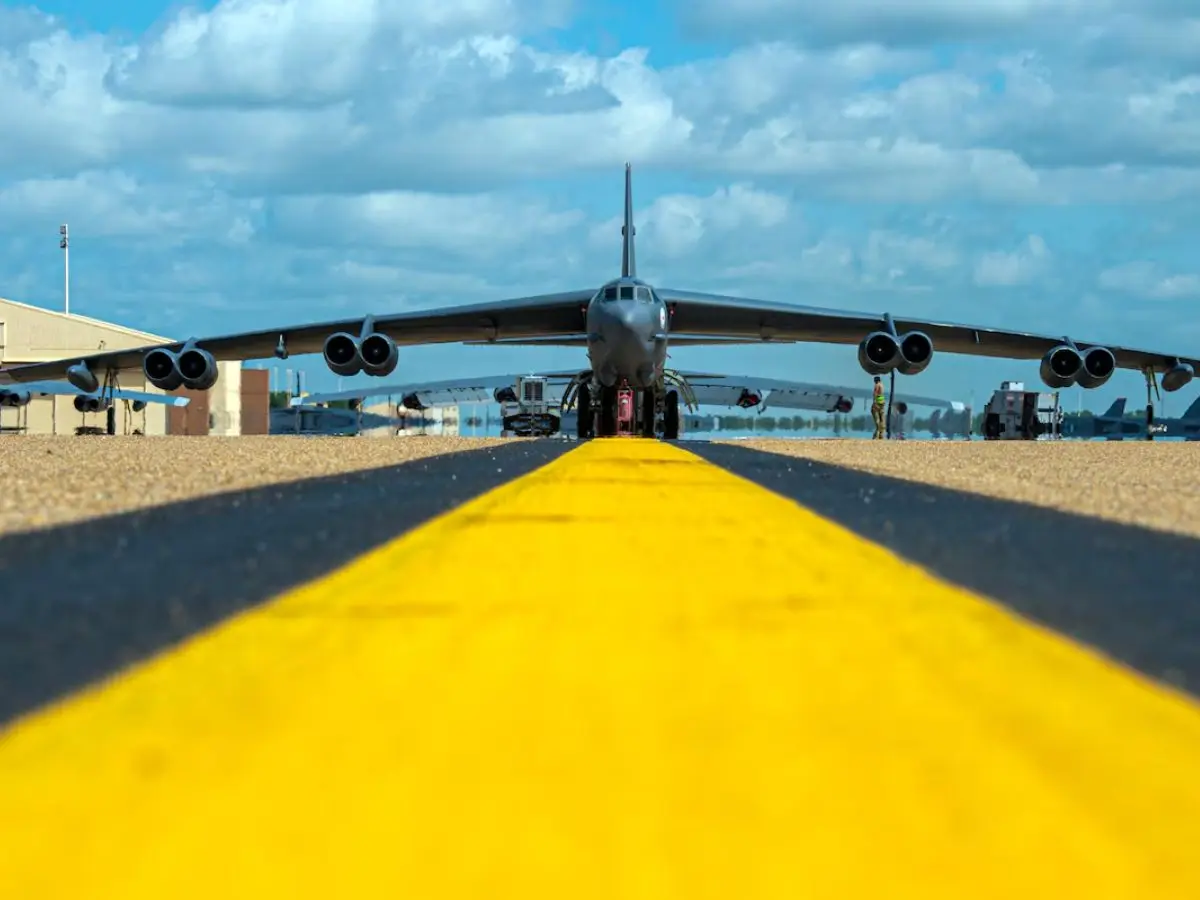
In 1963, Stanley Kubrick was preparing to shoot Dr. Strangelove or: How I Learned to Stop Worrying and Love the Bomb, a black comedy about nuclear annihilation that would become one of the most celebrated films ever made. A significant portion of the film takes place inside a B-52 Stratofortress bomber on a nuclear attack run. There was one problem: the US Air Force wanted nothing to do with the project and refused to cooperate. The B-52's cockpit was classified. No film crew would be allowed anywhere near one.
One Photo And A Lot Of Geometry
Kubrick's production designer, Ken Adam, was tasked with building the B-52 interior from scratch. With no access to the aircraft, no technical drawings, and no military cooperation, Adam worked from two sources: the cockpit of a World War II-era B-29 Superfortress, which he could access, and a single photograph of a B-52 cockpit that had been published in a magazine. By studying the known dimensions of the B-52's fuselage and cross-referencing the photograph with the B-29's layout, Adam and his team reconstructed what they believed the bomber's interior looked like. Everything, instrument panels, overhead switches, crew positions, the navigator's station, was built from that combination of public information and educated guesswork.
Absolutely Correct — Down To The Black Box
When the set was completed, a group of United States Air Force personnel were invited to view the reconstruction. Their reaction reportedly stunned Kubrick's team: the officers said the cockpit was ‘absolutely correct, even to the little black box which was the CRM’ the CRM being a classified component of the B-52's navigation and weapons delivery system. The set designers, working from a single photo and public reference material, had somehow reproduced a classified piece of military hardware accurately enough for serving Air Force officers to recognise it on sight.
Kubrick's Panic Call
Trending Stories
&imwidth=180&imheight=135&format=webp&quality=medium)
Asian Games 2026: India face Afghanistan in quarterfinal on Sep 28; Pakistan clash with Hong Kong
&imwidth=180&imheight=135&format=webp&quality=medium)
Myanmar training camp case: US national, 6 Ukrainians allowed to meet their families abroad
&imwidth=180&imheight=135&format=webp&quality=medium)
Bigg Boss 20: Salman Khan schools Rhiti Tiwari over Qazi Touqeer clash, compares her to Dolly Bindra
&imwidth=180&imheight=135&format=webp&quality=medium)
Mushtaq Khan dies at 56: When Welcome actor opened up about his salary for iconic role Ballu
&imwidth=180&imheight=135&format=webp&quality=medium)
LPU students go on rampage, vandalise campus amid widespread protest: What's happening
&imwidth=180&imheight=135&format=webp&quality=medium)
'FIRST LOOK from inside Noah’s Ark': Researchers share video from inside mysterious mound in Turkey
&imwidth=180&imheight=135&format=webp&quality=medium)
‘Attack on Mecca a red line for Pakistan’: Shehbaz Sharif warns Houthis at UN
&imwidth=180&imheight=135&format=webp&quality=medium)
Pakistan deploys over 20,000 security personnel as PTI vows march for Imran Khan's release
&imwidth=180&imheight=135&format=webp&quality=medium)
OpenAI AI Agents hacked 4 websites before Hugging Face, researchers reveal
&imwidth=180&imheight=135&format=webp&quality=medium)
'A terrorist country is asking me that question?': Jaishankar hits back at Pakistani journalist at UN; flags attacks on commercial shipping
&imwidth=180&imheight=135&format=webp&quality=medium)
Trump-Xi summit wrap: Big pageantry, Iran talks, few major developments and more meetings planned
&imwidth=180&imheight=135&format=webp&quality=medium)
Did Hitler kill his niece Geli Raubal? Newly found records reopen a 95-year-old mystery
&imwidth=180&imheight=135&format=webp&quality=medium)
Hawaii braces for Hurricane Nolo: NOAA warns of flash flooding and mudslides
&imwidth=180&imheight=135&format=webp&quality=medium)
'What kind of confession is this?': Pakistan PM Shehbaz Sharif’s 'terrorists would be roaming New York' remark goes viral, raises alarm online. Watch
&imwidth=180&imheight=135&format=webp&quality=medium)
US-Iran war: Trump rejects Iran's Hormuz proposal, reports suggest talks expected next week
&imwidth=180&imheight=135&format=webp&quality=medium)
Bollywood x K-pop crossover! LE SSERAFIM’s Kazuha charms fans with Shah Rukh Khan’s ‘Chammak Challo’ steps
&imwidth=180&imheight=135&format=webp&quality=medium)
Gaza's war turned environmental damage into second crisis
&imwidth=180&imheight=135&format=webp&quality=medium)
‘Serial practitioner of terrorism’: Jaishankar calls out Pakistan’s ‘state-sponsored’ terror at UNGA
&imwidth=180&imheight=135&format=webp&quality=medium)
‘It is all possible’: Putin weighs next steps on Ukraine talks, rules out Europe conflict
&imwidth=180&imheight=135&format=webp&quality=medium)
Prince Harry offers rare glimpse into Archie and Lilibet’s life after UK move
&imwidth=180&imheight=135&format=webp&quality=medium)
Nigeria Navy moves to boost oil security, tackle crude theft and infrastructure threats
&imwidth=180&imheight=135&format=webp&quality=medium)
Donald Trump shares image of Xi's arrival in Washington, carries signs of AI
&imwidth=180&imheight=135&format=webp&quality=medium)
Pentagon quietly adds 37 wounded troops to Iran war tally without explaining when or how
&imwidth=180&imheight=135&format=webp&quality=medium)
US court backs Pentagon's decision to exclude Anthropic over Claude AI restrictions
&imwidth=180&imheight=135&format=webp&quality=medium)
US Supreme Court backs Trump administration's use of SAVE database to check voter citizenship
&imwidth=180&imheight=135&format=webp&quality=medium)
‘Could kill billions...’: Bill Gates backs calls to slow AI development amid fears of catastrophe
&imwidth=180&imheight=135&format=webp&quality=medium)
'Countries far from conflict are penalised': Jaishankar calls for Gulf peace, seafarer safety at UN
&imwidth=180&imheight=135&format=webp&quality=medium)
WATCH | As Shehbaz Sharif claims Pakistan’s ‘victory’ during 2025 conflict, Indian diplomat R Srinivas laughs at UN
&imwidth=180&imheight=135&format=webp&quality=medium)
Outrage erupts after 3-year-old is married to 60-year-old man in Pakistan, link to her sister's murder being probed
&im=FitAndFill=(700,400)&imwidth=180&imheight=135&format=webp&quality=medium)
New Friday OTT releases (September 25, 2026): Don’t Be Shy, Hunkkaar: The Roar, Mango Pachcha- 6 movies and TV shows on Netflix, Prime Video and more
&imwidth=180&imheight=135&format=webp&quality=medium)
Global community 'absent' in Gulf crisis: Saudi at UN calls for freedom of navigation, pre war status for Hormuz
&imwidth=180&imheight=135&format=webp&quality=medium)
Farhan, who went viral for AK47 celebration vs India in Asia Cup, hopes to lead Pakistan beyond Asian Games
&imwidth=180&imheight=135&format=webp&quality=medium)
‘I rejected it’: Trump confirms turning down Iran’s proposal to reopen Hormuz, claims Tehran is losing ‘badly’
&imwidth=180&imheight=135&format=webp&quality=medium)
Russia will achieve Ukraine war aims; Europe doing everything to block peace talks: Lavrov at UN
The accuracy of the set did not make Kubrick proud, it made him nervous. After learning how closely the reconstruction matched the real thing, Kubrick contacted Ken Adam directly to make certain that every piece of research used to build the set had come from publicly available, legally accessible sources. Kubrick's concern was specific: he did not want the FBI or any government agency targeting the film with an espionage investigation. Adam confirmed that everything had been derived from open-source materials. No classified documents had been obtained or used. The resemblance was the product of skilled design work and logical deduction, not leaked intelligence.
A Film That Became Military History
Dr. Strangelove was released in January 1964 and immediately became a landmark of cinema. The B-52 sequences, shot on Ken Adam's handmade set at Shepperton Studios in England are so convincing that many viewers assumed Kubrick had used footage of a real bomber interior. He had not. The entire cockpit was built from a photograph and the imagination of a production designer who was too talented for the Pentagon's comfort. It remains one of the most remarkable feats of set design in film history and one of the strangest footnotes in the story of the B-52 Stratofortress.
