Explained: What's causing the recent conflict between Israel and Gaza?

Israel-Gaza conflict
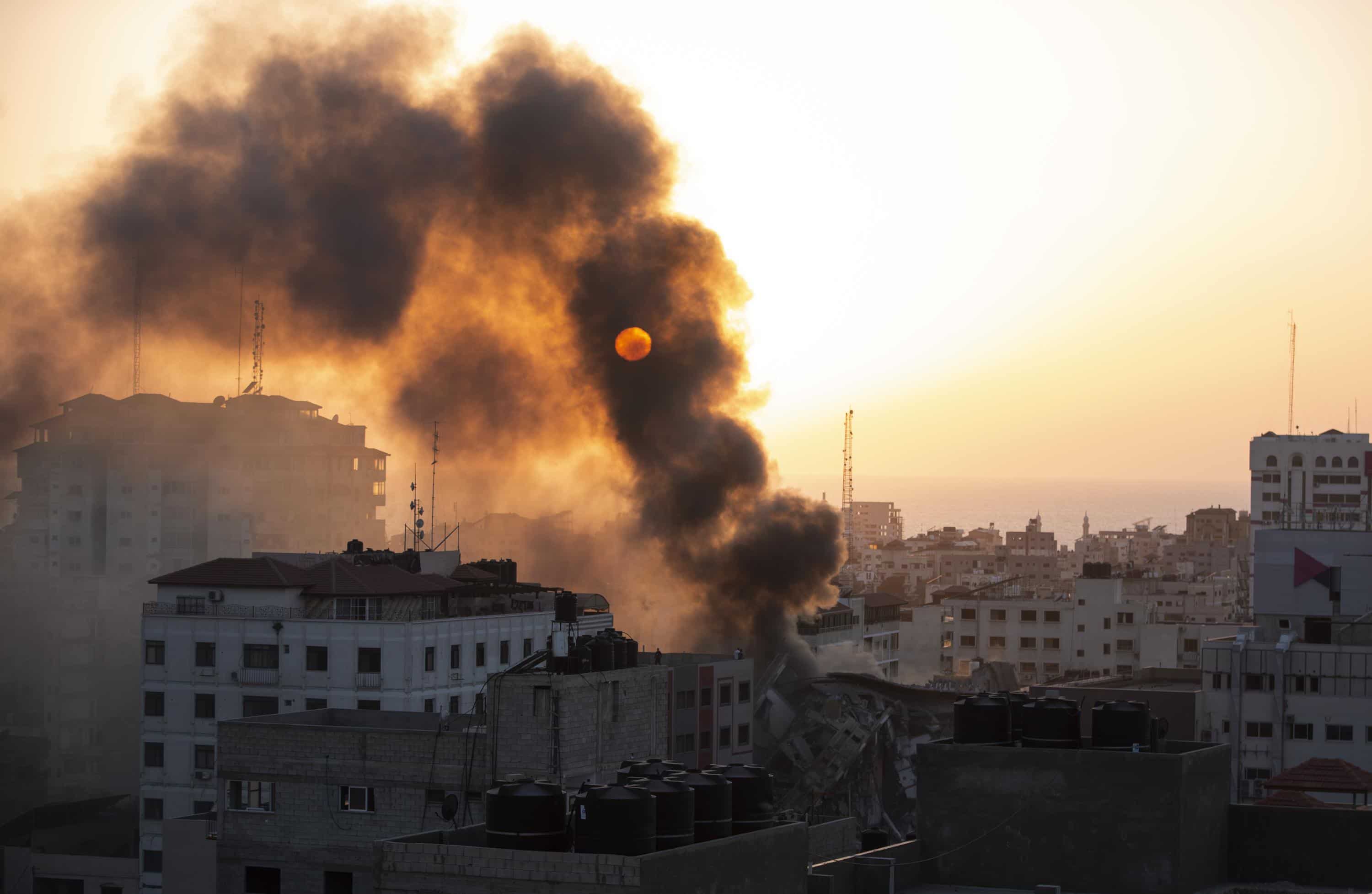
The biggest incident of cross-border fighting since a 11-day war between Israel and Hamas last year occurred on Saturday as Israeli soldiers and Palestinian terrorists in the Gaza Strip exchanged fire.
Eleven people have been killedby Israeli airstrikes, including a senior commander from the militant organisation Palestinian Islamic Jihad, which is supported by Iran.
Numerous rocket attacks by militants on Israeli cities and villages have disrupted daily life for hundreds of thousands of Israelis.

Here is a look at the most recent escalation of violence:
IN HAMAS’ SHADOW
)
No Pandya as Auqib Nabi earns maiden ODI call-up; Mayank returns for WI T20Is| check full squads
)
Chiefs tight end Travis Kelce named one of the victims in $35 million ponzi scheme
)
Trump praises India’s Opium crackdown, hails anti-drug efforts
)
Sydney Sweeney defends provocative ad choice, the internet is still not impressed
)
Former India player Diana Edulji wants Smriti Mandhana to replace Harman as skipper at the earliest
)
Trump calls Canada-EU associate membership plan ‘laughable’ and threatens 'very serious tariffs'
)
Protests erupt over migrant housing plan in Piddington
)
Shahzad Bhatti Network declared terrorist organisation under UAPA: Govt order
)
Europe wants a common playbook for security threats, seeks security beyond NATO
)
Formula One reveals the 2027 race calendar; Monaco to host sprint race for the first time
)
All Indian goods to get duty-free access to New Zealand
)
240-million-year-old bizarre 'pig with a tusk' creature creates new dilemma over origin of dinosaurs
)
Bigg Boss 20: Mahhi Vij reveals she lost Yuva role to Kareena Kapoor; 'didn’t work out in my favour'
)
Lionel Messi for 2026 Ballon d’Or over Mbappe and Yamal, says Diego Simeone
)
US House votes 417-3 to pass Ratepayer Protection Act targeting AI data center electricity costs
)
Hong Kong unveils 11 new measures to boost birth rates, offers higher cash bonuses and housing perks
)
Former OpenAI researcher warns of growing risks from Artificial Intelligence
)
Veteran actor Anant Nag honoured with Indian cinema’s highest award
)
Wildfire tears through forests in Spain's Valencia
)
AUS vs SA: Steve Smith still gets 'little flashbacks' from sandpaper gate
)
Pakistan naval vessel returns to harbour with 'severe damage' after collision with Indian warship in Arabian Sea
)
Fed raises rates for first time in 3 years, Kevin Warsh defies Trump as inflation mounts
)
Katrina Kaif’s postpartum weight is not the problem; your gaze is
)
Taiwan seeks deeper India ties as direct flights restart soon and chip projects advance
)
Daayra movie review: Kareena Kapoor, Prithviraj Sukumaran shine in Meghna Gulzar’s cop-versus-cop crime thriller
)
Saudi Vs Houthis: Yemeni military rebels clash with Houthis
)
Pak batter Rizwan's petition against being questioned by cyber crime agency rejected by court
)
US trade tariff: 100% tariff targets Russian buyers amid trade tensions
)
Pakistan: Imran Khan's sons Kasim & Sulaiman claim their father is 'tortured' in jail
&im=FitAndFill=(700,400))
New OTT releases this week (September 14-20, 2026): Lust Stories 3, Waiting Hai, Irumudi- 5 new titles coming on Netflix, Prime Video and more
)
Trump gets new power to hit India, China with up to 100% tariffs as US Senate clears Russia sanctions bill
)
Prime Minister Narendra Modi's birthday: Italian PM Meloni sends birthday wishes
)
‘Imagine 50 AI fighters cornering one manned jet’: India’s mobbing doctrine eyes a new era of air warm
)
Saudi vs Houthis: Riyadh claims to have shot Houthi drone targeting Mecca
)
US Treasury rallies global financial institutions for Op Economic Outcast to isolate Iran
)
India breaks silence on US Russia sanctions bill, 100% tariff threat: ‘Committed to energy security’ for 1.4 billion
)
Want to get married within a year? Why 18 lakh people rush to Jaipur for ‘sacred henna’
)
Pakistan boycotts chess match against Israel at Olympiad
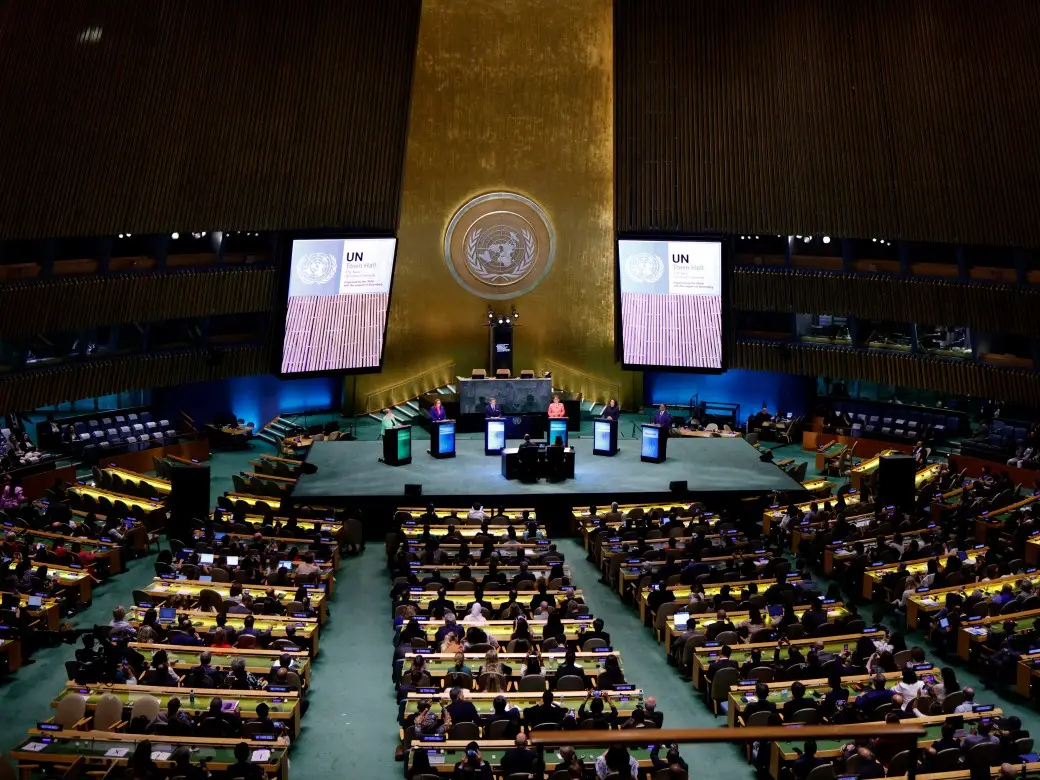)
UN General Assembly 2026: What is veto power. Which countries have it and how does it work?
&im=FitAndFill=(700,400))
Suriya and Jyothika say ‘I do’ again after 20 years! See their dreamy wedding pics
)
Abhishek Sharma rises to No. 2 in T20Is; ENG’s Robinson 3rd after record Pakistan Tests
)
The Early Spring season 2 is happening, but fans have one request - 'don't change the actors'
The smaller of the two main Palestinian militant organisations in the Gaza Strip, Islamic Jihad, is considerably outnumbered by the prevailing Hamas organisation. However, it has direct Iranian financial and military support, which has become the impetus behind its rocket assaults and other conflicts with Israel.
Because it is in charge of managing the day-to-day operations of the poor area, Hamas, which took over administration of Gaza in 2007 from the internationally recognised Palestinian Authority, frequently faces restrictions on its ability to take action. Islamic Jihad, which has emerged as the more violent faction and occasionally even challenges Hamas' control, has no such responsibilities.
In order to create an Islamic Palestinian state in the West Bank, Gaza, and all of what is currently Israel, the organisation was created in 1981. The European Union, the United States State Department, and other governments have labelled it as a terrorist group. Islamic Jihad, like Hamas, is committed to destroying Israel.
THE RELATIONSHIP TO IRAN
Iran, a longtime adversary of Israel, provides Islamic Jihad with money, training, and other resources, but the majority of the group's weaponry are domestically made. It has recently created an arsenal comparable to Hamas's, complete with longer-range missiles that can reach Tel Aviv, the capital of central Israel. Although no rockets appear to have reached the area, air raid sirens went off on Friday in the suburbs to the south of Tel Aviv.
Islamic Jihad has leadership in Beirut and Damascus as well as its home stronghold of Gaza, where it maintains close links with Iranian authorities.
The group's main leader, Ziad al-Nakhalah, was in Tehran meeting with Iranian officials on Friday as Israel started its offensive in Gaza.
AIMING AT COMMANDERS
Israel has already assassinated leaders of the Islamic Jihad in Gaza. Taiseer al-Jabari, the commander it murdered on Friday, took the place of Bahaa Abu el-Atta, who was killed by Israel in a strike in 2019. Since the 2014 war in the Gaza Strip, his killing marked the first prominent assassination of an Islamic Jihad leader by Israel.
Al-Jabari, 50, was a part of the "military council," Islamic Jihad's governing body in Gaza. During the 2021 war, he oversaw the militant Islamic Jihad activity in Gaza City and the northern Gaza Strip. Israel said that he was getting ready to attack Israel with anti-tank missiles.
His demise followed Israel's earlier this week arrest of a prominent Islamic Jihad commander in the West Bank. Senior Islamic Jihad official in the northern West Bank, Bassam al-Saadi, is 62 years old. Al-Saadi reportedly worked to increase the group's capabilities and reach in the West Bank, according to Israeli media.
Al-Saadi was an active member of the Islamic Jihad and was imprisoned in Israel for a total of 15 years across several terms. In two separate occurrences in 2002, Israel executed two of his sons who were also Islamic Jihad members. The same year, a major battle in the West Bank city of Jenin resulted in the destruction of his home.
Zvika Haimovich, the former commander of the Israeli military's air defence unit, warned that hitting the commanders would have an instant impact on the entire organisation.
It immediately causes a major snarl within the Jihad.
A COMPREHENSIVE HARMONY
Hamas has engaged in four conflicts with Israel since assuming power in 2007, frequently with the assistance of fighters from Islamic Jihad. The border has been mostly calm since last year's 11-day war, with the exception of a flare-up earlier this year. Hamas also seems to be staying out of this latest conflict, which may prevent it from turning into a full-scale war.
While Hamas upholds the cease-fire, Islamic Jihad terrorists have challenged Hamas by shooting rockets, frequently without claiming responsibility, to increase its profile among Palestinians. Israel blames Hamas for all rocket fire that originates in Gaza.
Hamas must choose between quelling Islamic Jihad's attacks on Israel and avoiding the wrath of Palestinians if it retaliates against the organisation. Hamas will have the final word on how long and how ferocious this round of combat lasts, just like in previous flare-ups.
CARETAKERLEADER
Israel is currently engaged in a lengthy political crisis that will force Israelis to cast ballots for the sixth time in less than four years this fall as a result of the war.
After the politically diverse government he assisted in forming fell apart and the new elections were called, caretaker leader Yair Lapid assumed control earlier this summer.
Lapid, a centrist author and former TV host, lacks the security experience that many Israelis believe is necessary for leadership. His political future may be determined by the ongoing conflict; it may improve if he can establish himself as a capable commander, or it may suffer with a protracted operation as Israelis try to enjoy the remaining few weeks of summer.
Lapid aspires to defeat security hawk and current corruption trial defendant Benjamin Netanyahu in the upcoming election.
(With inputs from agencies)