Explained: What are the sanctions Niger is facing following the July 26 coup?

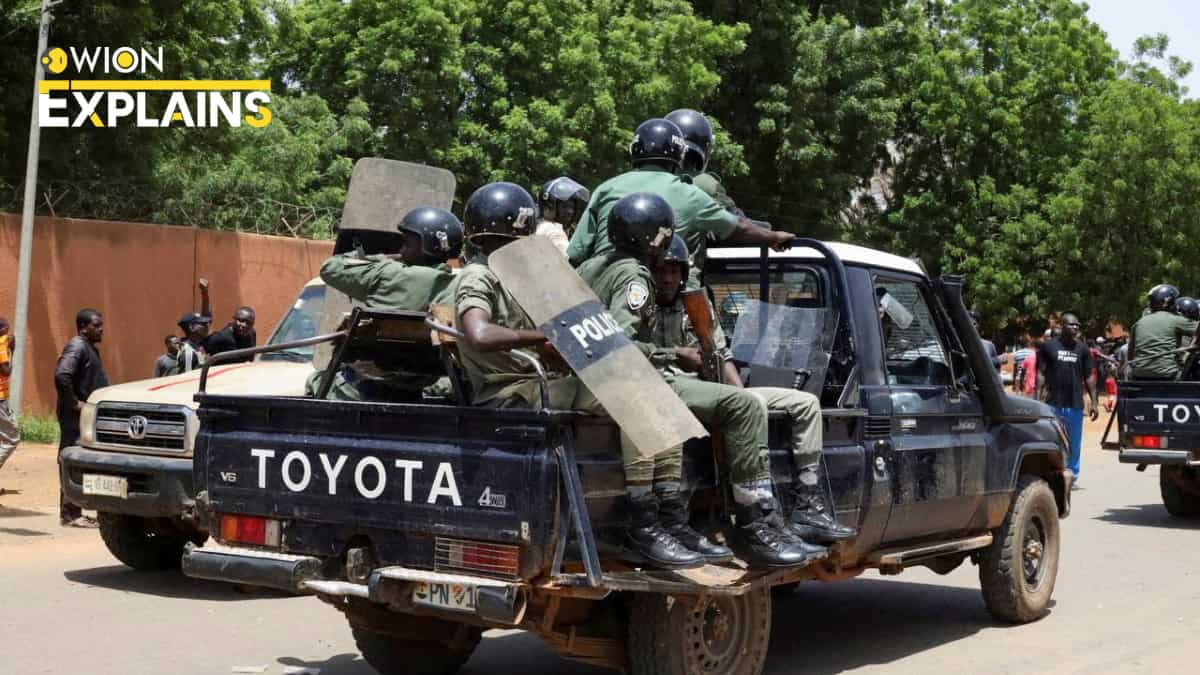
File photo.
Niger's military junta defied a Sunday (August 6) deadline from the Economic Community of West African States (ECOWAS) to reinstate ousted president Mohamed Bazoum or face a possible military intervention. Last week, defence chiefs of the ECOWAS drew up a plan for the possible use of force to reverse the July 26 coup in Niger, including how and when to deploy forces.
With the junta defying the deadline, Niger's regional and Western allies have announced a series of sanctions against the country. The junta denied a joint delegation from West African states, the African Union (AU), and the United Nations (UN) permission to enter Niger, resisting pressure from the United States and the UN to come to the negotiating table.

Meanwhile, ECOWAS heads of state are preparing for a summit to discuss their standoff with the junta.
What sanctions have been imposed?
According to a report by the news agency Reuters, the sanctions could lead to a default on Niger's debt repayments.
&imwidth=180&imheight=135&format=webp&quality=medium)
Zohran Mamdani's Garba dance goes viral as he joins Indian community's Navratri celebrations | WATCH
&imwidth=180&imheight=135&format=webp&quality=medium)
Rafale Marine fighter begins flight trials in Goa ahead of Indian Navy induction
&imwidth=180&imheight=135&format=webp&quality=medium)
SBI confirms data breach: 3,897 records flagged on dark web. Is your money safe?
&imwidth=180&imheight=135&format=webp&quality=medium)
India to develop first indigenous aviation gun for Prachand, Rudra attack helicopters, SSS Defence CEO confirms
&imwidth=180&imheight=135&format=webp&quality=medium)
Man marries off wife of 17 years to her lover in Uttar Pradesh
&imwidth=180&imheight=135&format=webp&quality=medium)
Boeing 737 MAX10 gets FAA certification, deliveries expected to begin in 2027
&imwidth=180&imheight=135&format=webp&quality=medium)
Shastri backs Shami comeback; lauds Bhuvi and warns Bumrah on format workload ahead of World Cup
&imwidth=180&imheight=135&format=webp&quality=medium)
US midterms 2026: Red seats once deemed safe now appear shaky as Republicans spend big on ads
&imwidth=180&imheight=135&format=webp&quality=medium)
'Tap dancing through a minefield': Musk backs SpaceX-Tesla merger as AI boom fuels rocket firm's first profit
&imwidth=180&imheight=135&format=webp&quality=medium)
Dandiya Nite ’26: Indian High Commissioner hails diaspora as bridge between India and Nigeria
&imwidth=180&imheight=135&format=webp&quality=medium)
Trump says Ilhan Omar 'could go to jail' amid federal probe, calls Somalia a 's***house'
&imwidth=180&imheight=135&format=webp&quality=medium)
Punjab CM Bhagwant Mann allegedly detained for three hours at Delhi airport, fined ₹50,000: AAP
&imwidth=180&imheight=135&format=webp&quality=medium)
Trump waves at 'empty space' in viral video,' critics claim 'mental decline getting worse' | WATCH
&imwidth=180&imheight=135&format=webp&quality=medium)
What the Mecca Joint Defence Agreement says about withdrawal and military support. Read full text of the pact here
&imwidth=180&imheight=135&format=webp&quality=medium)
IND vs NZ T20Is: Will Sooryavanshi play? Skipper Shreyas Iyer clears the air on Samson vs Vaibhav debate
&imwidth=180&imheight=135&format=webp&quality=medium)
'You are not Gen Z': Delhi HC pulls up CJP's Das, Ranka over bail bond breach after Jantar Mantar trespass
&imwidth=180&imheight=135&format=webp&quality=medium)
India vs New Zealand T20I Series 2026: Complete schedule, match timings, squads and live streaming details
&imwidth=180&imheight=135&format=webp&quality=medium)
Trump considers removing White House press corps to restore historic indoor swimming pool
&imwidth=180&imheight=135&format=webp&quality=medium)
Ukrainian soldier rescued by a drone chopped off own leg while hiding for 491 days
&imwidth=180&imheight=135&format=webp&quality=medium)
US-Iran war | Tehran: Must end port blockade, oil sanctions and regional attacks
&im=FitAndFill=(700,400)&imwidth=180&imheight=135&format=webp&quality=medium)
Priyanka Chopra to Shilpa Shetty: 6 Bollywood actresses and their fitness secrets
&imwidth=180&imheight=135&format=webp&quality=medium)
Pujara says 'Samson and Vaibhav cannot be in Playing XI' for India on NZ tour
&imwidth=180&imheight=135&format=webp&quality=medium)
'What's wrong with you? Are you a sick person?': Trump at it again as he snaps at reporters, faces backlash
&imwidth=180&imheight=135&format=webp&quality=medium)
US Midterms 2026 and money: From Bloomberg to Musk, corporate donors, super PACs and lobbies, it's all about the cash
&imwidth=180&imheight=135&format=webp&quality=medium)
‘Even legends can fall ill’: Badshah, Anupam Kher and other stars defend Daler Mehndi after Uttarakhand stage controversy
&imwidth=180&imheight=135&format=webp&quality=medium)
'UN experts is an oxymoron': Rubio mocks UN over India protests criticism, refuses to comment on India's internal matter
&im=FitAndFill=(700,400)&imwidth=180&imheight=135&format=webp&quality=medium)
New OTT releases this week (October 19-25, 2026): Gajab Raat to Chaar Yaar-8 titles to watch during Dussehra week on Netflix, Prime Video and more
&imwidth=180&imheight=135&format=webp&quality=medium)
Ukrainian drone airlifts wounded soldier in what is likely a world first
&imwidth=180&imheight=135&format=webp&quality=medium)
The Verdict | Trump, Putin and Xi: A superpower triangle that could reshape global diplomacy
&imwidth=180&imheight=135&format=webp&quality=medium)
India moves to buy 10,000 more AI chips for a national compute pool open to startups
&imwidth=180&imheight=135&format=webp&quality=medium)
'They are not even telling us' - Mysterious metallic object discovered in Minnesota field
&imwidth=180&imheight=135&format=webp&quality=medium)
Hunger makes alcohol more appealing, study finds
&imwidth=180&imheight=135&format=webp&quality=medium)
Cattle-feed bran in biscuits, detergent in milk: FSSAI acts against 3 companies
&imwidth=180&imheight=135&format=webp&quality=medium)
US midterms 2026: With Republicans spending big, Bloomberg opens his wallet for Democrats. Here's how much he is pouring
&imwidth=180&imheight=135&format=webp&quality=medium)
Iran rejects US talks until demands are met, rules out moving enriched uranium out of the country
&imwidth=180&imheight=135&format=webp&quality=medium)
Feds obtain DNA evidence that could prove Ilhan Omar married her brother: Report
&imwidth=180&imheight=135&format=webp&quality=medium)
Ramayana advance booking: Ranbir Kapoor, Yash's film cross $500K ahead of Diwali release
&imwidth=180&imheight=135&format=webp&quality=medium)
French military plane crashes in northeast France, one dead
&imwidth=180&imheight=135&format=webp&quality=medium)
Delhi HC agrees to hear Neha Bora's plea against 'maintain peace' directive on 'urgent basis'
The report said that the ECOWAS and the West African Monetary and Economic Union (UEMOA) have imposed some of the most stringent sanctions on the country.
The bloc suspended all commercial transactions with Niger, froze its state assets in the regional central bank, froze assets of the state and state enterprises in commercial banks, and suspended all financial assistance with regional development banks.
The report added a planned $51 million bond issuance by Niger in the West African regional debt market was cancelled by the regional central bank following the imposition of sanctions. The government had planned to raise $834 million from the regional debt market this year.
West Africa's regional central bank, the BCEAO, shut down its branches in the country, citing risks to operations.
The European Union (EU), which is one of Niger's biggest contributors, suspended its financial support and cooperation on security. The EU had allocated $554 million from its budget to improve governance, education and sustainable growth in Niger over 2021-2024.
France, which is another major partner of Niger, suspended development aid and budget support. The Reuters report said the development aid for the country was around $130 million in 2022 and expected to be slightly higher this year.
The United States has paused assistance programmes to Niger valued at more than $100 million following the coup, pressing the junta to reinstate the military government. The US had previously warned the coup could lead to the suspension of all cooperation. As per the Reuters report, Washington has provided nearly $138 million in humanitarian assistance so far this year.
The World Bank suspended disbursements until further notice, except for private-sector partnerships which it said will continue with caution. Niger has one of the largest World Bank portfolios in Africa, amounting to $4.5 billion, and it also received $600 million in direct budget support from the lender between 2022 and 2023.
Canada suspended direct development assistance to Niger. The Netherlands, on the other hand, temporarily suspended its direct cooperation with the government following the coup. The Dutch government had been supporting development and security programmes in Niger.
Military coup hampering UN's humanitarian efforts
A UN official said on Tuesday that the military coup is hampering the UN's humanitarian efforts in Niger as border and airspace closures have cut off supplies of medicine and food. Louise Aubin, the UN humanitarian chief in Niger, warned that aid agencies have been scrambling to eke out depleting stocks just as regional sanctions potentially increase the number of people in need.
"The risk is that we start running out of assistance materials to be able to help out people - I'm talking about simple things that are so life-saving," Aubin told Reuters and listed food, vaccines, and cash as areas of concern.
"Some people will soon be feeling the pinch of this ... More than the 4.3 million people we had planned on supporting through emergency humanitarian assistance, we might see that number growing and growing fast," Aubin added.
The UN official further said flights operated within Niger by the United Nations Humanitarian Air Service (UNHAS) were disrupted but not suspended by the junta's decision to close its airspace.
But that and the closure of land borders under sanctions imposed by the ECOWAS meant the outlook for replenishing stocks in Niger was uncertain, she said.
"The risk is that we start running out of assistance materials to be able to help out people. I'm talking about simple things that are so life-saving, I'm talking about vaccines, I'm talking about food but I'm also talking about cash. This is one way for us to be able to empower people to be able to access what they really need, but without cash flows in the country, some people will soon be feeling the pinch of this," the UN also said.
WATCH WION LIVE HERE
You can now write for wionews.com and be a part of the community. Share your stories and opinions with us here.