Explained: Theranos founder Elizabeth Holmes heads to prison. What was the blood-testing scam?

Theranos explainer
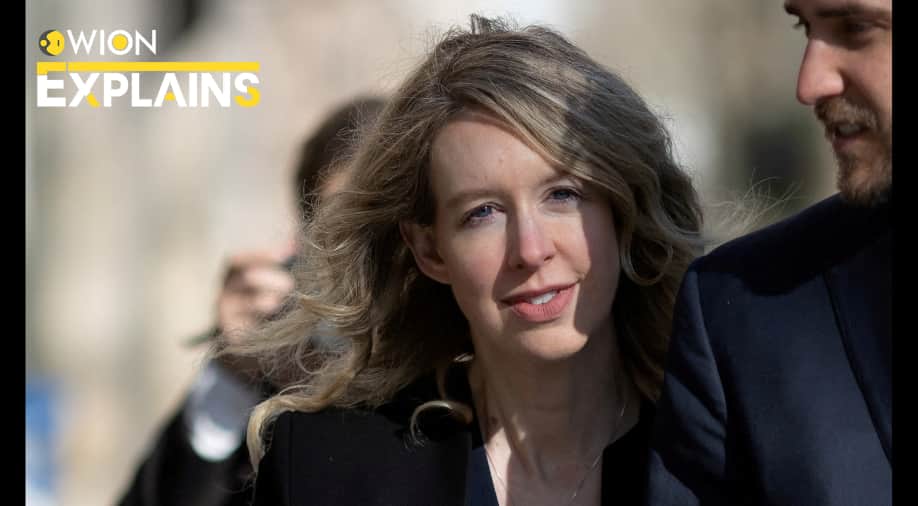
The names Elizabeth Holmes and her billion-dollar start-upTheranos have been making headlines since 2013,initially for all good reasons, but not so much over the years. The 39-year-old founder of the failed blood-testing company, Holmes,once a billionaire in Silicon Valley,reported to a Texas minimum-security federal prison, on Tuesday (May 30), which will be her home for the next 11 years.
Here’s all you need to know about the rise and fall of Theranos and its founder:
The rise of Theranos

Founded in 2003 by Elizabth Holmes, a 19-year-old Stanford dropout, Theranos was a privately held healthcare technology company which promised to revolutionise the blood-testing industry. The name of the company was a combination of the words “therapy” and “diagnosis.”
Theranos claimed to have designed a device to draw, retain, and analyse a “few” droplets of blood from a patient’s fingertip to detect a multitude of diseases and conditions, including cancer and high cholesterol. Over the years, Theranos, based on its claims, was able to raise millions of dollars in capital from venture capitalists and private investors.
According to reports, Holmes had told her professor Dr Phyllis Gardner at Stanford University when she first came up with the idea. The professor called it ambitious but also impossible,but this did not stop the then-19-year-old from launching the company which she would lie about the capabilities of for years to come.
&imwidth=180&imheight=135&format=webp&quality=medium)
Brendan Taylor overtakes Andy Flower to become Zimbabwe’s leading ODI run-scorer
&imwidth=180&imheight=135&format=webp&quality=medium)
Pakistan to head IMF, World Bank boards after 74 years amid persistent economic crisis
&imwidth=180&imheight=135&format=webp&quality=medium)
"The scariest thing was"... flydubai Captain Smit Machchhar recalls cockpit fight and how he thought of his son and daughter
&imwidth=180&imheight=135&format=webp&quality=medium)
'We are not sitting in ivory towers, we are aware': SC issues notice to Rahul Gandhi, Akhilesh Yadav
&imwidth=180&imheight=135&format=webp&quality=medium)
Flying car race: Alef Aeronautics welcomes Tesla Roadster '11 years' later, but are the two models the same?
&imwidth=180&imheight=135&format=webp&quality=medium)
6-year-old among 2 killed as vehicle crashes into youth soccer game in US
&imwidth=180&imheight=135&format=webp&quality=medium)
WATCH | Flames engulf St Petersburg oil sites as Ukraine launches 1,000 drones at Russia
&imwidth=180&imheight=135&format=webp&quality=medium)
‘I have very severe problems’: Trump fuels health speculation during address to firefighters
&imwidth=180&imheight=135&format=webp&quality=medium)
US midterm elections 2026: Postal ballots and voter disenfranchisement — A key battle for Donald Trump
&imwidth=180&imheight=135&format=webp&quality=medium)
Lizard people? Ex-US Army sniper claims soldier killed by 'reptilian beings' in battle near Area 51
&imwidth=180&imheight=135&format=webp&quality=medium)
‘I don’t know how my family escaped': Congressman Raja Krishnamoorthi chokes while revealing he was inside US temple during foiled attack
&imwidth=180&imheight=135&format=webp&quality=medium)
Rain washes out 5th T20I as India-West Indies share honours 2-2
&imwidth=180&imheight=135&format=webp&quality=medium)
'Reason UN has lost credibility': Amid SIR protests India hits out at report alleging 'youth repression'
&imwidth=180&imheight=135&format=webp&quality=medium)
‘My president, I mean my husband’: Trump's new press secretary Katie Zacharia's first briefing goes off the rails in 14 minutes
&imwidth=180&imheight=135&format=webp&quality=medium)
China responds to Trump's Press Secretary Katie Zacharia after toilet remark: 'Visit China more often'
&imwidth=180&imheight=135&format=webp&quality=medium)
UAE agrees with Saudi Arabia to rejoin Yemen fight as Houthi strikes rattle Riyadh
&imwidth=180&imheight=135&format=webp&quality=medium)
PCB omits Atherton, Hussain from tri-series commentary panel over Imran Khan interview row
&imwidth=180&imheight=135&format=webp&quality=medium)
SA vs AUS 2nd Test: Rain delays start as Rabada returns; Boland replaces Lyon for Australia
&imwidth=180&imheight=135&format=webp&quality=medium)
At least 400 arrested as protests turn violent in France; PM blames far left
&imwidth=180&imheight=135&format=webp&quality=medium)
WATCH | iPhones, luxury perfumes floating in Hormuz? Iranian fishermen make bizarre discovery
&imwidth=180&imheight=135&format=webp&quality=medium)
Two students die, 14 injured at Dandiya event in Hyderabad: Know what happened? VIDEO
&imwidth=180&imheight=135&format=webp&quality=medium)
'keep telling him you will get your opportunities': Iyer opens up on conversations with Sooryavanshi
&imwidth=180&imheight=135&format=webp&quality=medium)
‘Be back in few weeks’: Emi Martinez shares first update after head clash in Premier League match
&imwidth=180&imheight=135&format=webp&quality=medium)
Tiger Shroff attacked by three gunmen in Mumbai, actor safe, two injured
&imwidth=180&imheight=135&format=webp&quality=medium)
Taylor Swift performs at star-studded Academy Museum Gala 2026 in stunning Dior ensemble
&imwidth=180&imheight=135&format=webp&quality=medium)
Anirudh Ravichander-Kavya Maran wedding: Telangana CM reveals Chennai reception date
&im=FitAndFill=(700,400)&imwidth=180&imheight=135&format=webp&quality=medium)
Inside Tesla's Roadster: 10 features of Elon Musk's 'flying car' that push the limits of electric vehicles | In Pics
&imwidth=180&imheight=135&format=webp&quality=medium)
Kolkata Durga Puja stampede: PM Modi announces Rs 2 lakh ex-gratia for kin of dead, Amit Shah to visit injured
&imwidth=180&imheight=135&format=webp&quality=medium)
One species, two lineages: Why Sri Lanka’s spectacled cobra differs genetically from Indian variant
&imwidth=180&imheight=135&format=webp&quality=medium)
2 injured in plane crash on busy California highway
&imwidth=180&imheight=135&format=webp&quality=medium)
'We feel like Mr India': Gujarat’s undercover SHE team guard garba nights at Navratri
&imwidth=180&imheight=135&format=webp&quality=medium)
Cattle-feed bran in biscuits, detergent in milk: FSSAI acts against 3 companies
&imwidth=180&imheight=135&format=webp&quality=medium)
'It's a joy to see the makers bring it on such a grand scale': SS Rajamouli on Ramayana
&imwidth=180&imheight=135&format=webp&quality=medium)
13 dead after truck mows down devotees, crashes into temple gate in Madhya Pradesh's Gwalior
&imwidth=180&imheight=135&format=webp&quality=medium)
IND-W vs ZIM-W, 2nd T20I: When and where to watch live streaming in India?
In 2013, a decade after Holmes had launched the start-up, it garnered more recognition than ever after it struck a deal with the second-largest pharmacy store chain in the US, Walgreens. This also led to the opening of the first Theranos Wellness Center at a Walgreens in Palo Alto, California where consumers could access the company’s blood test. At its peak, in 2015 Theranos was valued at nearly $10 billion.
It was not until 2015 that the US Food and Drug Administration (FDA) cleared the company to use its proprietary tiny blood-collection vials to finger stick blood tests for herpes simplex 1 virus. Notably, this would be the first and only approval that the company would receive for a diagnostic test.
The Theranos founder and CEO was named Forbes’ youngest self-made woman billionaire in 2014 and thanks to her 50 per cent stake in the start-up her personal wealth was valued at $4.5 billion.
By 2018, the company had raised more than $700 million but Holmes said that she would take the investors’ money on the condition that she would not be obligated to reveal how Theranos’ technology worked.
What did the billion-dollar start-up do?
Theranos’ downfall began with a series of explosive reports by the American newspaper Wall Street Journal starting in 2015 which said that the company relied on other blood machines instead of their own device, Edison.
It also noted that Theranos’ proprietary technique was being used in some 240 tests it performs while others were done by traditional vials of blood drawn from the arm as opposed to the “few drops” of blood by a finger prick. Some patients also reported receiving inaccurate diagnoses with the device.
Meanwhile, Holmes, who had borrowed the supposed obsession of secrecy about the technology from her Silicon Valley idol Steve Jobs, was forced to defend the testing practices and called the WSJ’s report “factually and scientifically erroneous.” She also expressed shock over the article and claimed that Theranos supplied over 1,000 pages of documentation to refute the allegations.
The fallout
The American newspaper asserted its claims and in a follow-up article, a day later, said Theranos was forced to halt the use of its unapproved device for all but one type which was the herpes test, approved by the FDA. In October 2015, the FDA released two heavily redacted reports which included over a dozen concerns and called Theranos’ proprietary vial an “uncleared medical device.”
The WSJ published another article, later that year, which alleged that there are gaps in management and strategies at Theranos and accused the company of rigging tests to produce better results for the Edison machines.
This was also around the time when Holmes had reportedly removed former Presidential cabinet members Henry Kissinger and George Shultz as the company’s directors as well as established a separate medical board.
Amid criticism, Safeway, an American supermarket chain which invested $350 million into offering Theranos blood tests, also pulled out of the deal. Reports suggest that Safeway executives were also sceptical of the validity of the test results given by Theranos.
However, that was just the beginning of Holmes’ problems, as the real fallout began when the Centers for Medicare and Medicaid Services released a damning report in 2016 which said that the company’s California lab has failed to comply with federal standards. It also noted that patients are in “immediate jeopardy,” and gave Theranos 10 days to address the issues.
This prompted Walgreens to stop sending lab tests to Theranos’ California lab for analysis and suspended its services in Palo Alto and eventually closed 40 Theranos Wellness Centers at Walgreens across Arizona. At the time, the company also came under investigation by the Securities and Exchange Commission (SEC).
Closure of Theranos
By May 2016, Theranos executive and Holmes’ business partner Ramesh “Sunny” Balwani had left the company. It was around the same time that Holmes was attempting to deal with the fallout and the WSJ reported that Theranos moved to void two years of blood test results from its proprietary testing devices and correct tens of thousands of blood test reports.
In the same year, after losing the Walgreens deal Forbes revised Holmes’ over $4 billion dollar to $0 and lowered Theranos’ valuation from $9 billion to $800 million. Holmes had also been banned from running a blood-testing lab for two years by CMS. In 2018, the SEC charged Holmes and Balwani with “massive fraud”.
Balwani, Holmes sentenced for fraud
Starting in late 2016 Theranos had broadly dissolved amid multiple lawsuits and finally ceased operations in September 2018. SEC ordered Holmes to pay a $500,000 fine and relinquish all of her shares in the company. In June 2018, both Balwani, Holmes’ former romantic and business partner, and the Theranos founder were indicted.
During the trial, Holmes tried to blame others including Balwani for the failure of the company but admitted making mistakes while also denying committing crimes. She also went on to claim that Balwani, Theranos’ former COO was sexually and emotionally abusive which Holmes said clouded her thinking.
However, Balwani’s attorney steadfastly denied these allegations. Currently, the 57-year-old former COO who was charged with two counts of conspiracy and 10 counts of fraud, late last year, and sentenced to nearly 13 years imprisonment is spending his days in a Southern California prison.
Meanwhile, Holmes, on Tuesday, movedinto the Federal Prison Camp Bryan, Texas is sentenced to spend the next 11 years there for four counts of defrauding investors. Both Balwani and Holmes have also been ordered to pay $452,047,268 to the involved investors, reported Forbes.
(With inputs from agencies)
WATCH WION LIVE HERE
You can now write for wionews.com and be a part of the community. Share your stories and opinions with us here.