Estimates show between 1mn & 1.5mn died in China since it rescinded its ‘zero Covid’ policy

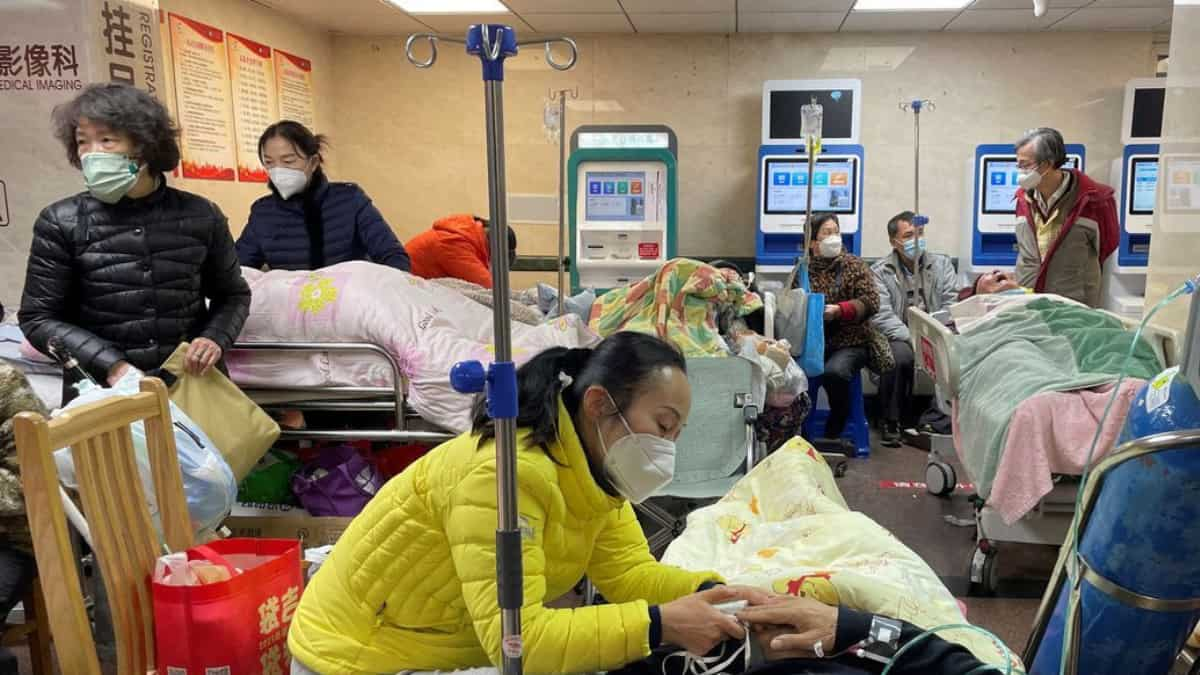
The covid death wave since China ended its strict covid policies apparently killed between 1.5 million people
In December, China abandoned its zero-Covid policy, which was one of the world’s most stringent Covid-19 restrictions. After China lifted all its restrictions, there was a sudden and massive increase in Covid-19 cases everywhere. There was a ruckus in the country with crematories overwhelmed with dead bodies and hospitals turning away patients. But still, somehow China’s total Covid death toll stands at 83,150 (as of February 9), which is strikingly low and led to suspicions on China’s official Covid data.
Many researchers believe that the number is a huge undercount because it includes only those people who died in hospitals, excluding those who died at home. Since December, epidemiologists have been working to solve China’s Covid data puzzle and now they have reached some conclusions. The New York Times reports that China’s Covid wave may have killed between a million and 1.5 million people. Four teams of researchers worked on different estimates and convergedthem on broadly similar estimates.
Also Read |Explained | The quest for male birth control: from condoms to vasectomy to 'the pill'

Though all the researchers that The New York Times has consulted emphasized that without any reliable data from China, all the estimates are just informed guesses. But these estimates make more sense and fit the evidence far better than the official figures do.
The early lockdowns in China helped it to keep cases at a minimal level, which gave Xi Jinping and the Communist Party a reason to show how they are better at managing a virus than the West. But this claim will be hard to believe with a high death toll in the country. The difference between China’s official figures and researchers’ estimates is drastic.
The official figure shows China has the lowest death rate per capita of any other major country over the entirety of the pandemic. But the estimates show altogether a different story. According to researchers’ estimates, China would already have passed official rates of death in many Asian countries that never clamped down as long or as aggressively. China would rank below Germany, Italy, the US and other countries where outbreaks accelerated before the vaccines were made available.
&imwidth=180&imheight=135&format=webp&quality=medium)
'Hell of a beautiful a**': Trump compliments Nicki Minaj as rapper joins him in Michigan rally
&imwidth=180&imheight=135&format=webp&quality=medium)
'Hire the robot, fire the human': Bill Gates's words hint at a bleak future
&imwidth=180&imheight=135&format=webp&quality=medium)
'Lousy president': Trump hits back at Obama over 'cheesecake factory' White House jibe
&imwidth=180&imheight=135&format=webp&quality=medium)
Jordan strikes 'terrorist organisations' in Syria after deadly church attack as Damascus shuts main border crossing
&imwidth=180&imheight=135&format=webp&quality=medium)
Microsoft offers voluntary exit packages to 60,000 employees in India, US, UK and Canada
&imwidth=180&imheight=135&format=webp&quality=medium)
WATCH | Virat Kohli returns to training ahead of New Zealand ODI series
&imwidth=180&imheight=135&format=webp&quality=medium)
'He is a red flag': Ex-India strength and conditioning coach on Rohit's fitness regime
&imwidth=180&imheight=135&format=webp&quality=medium)
One dead, six injured in Elizabeth, New Jersey mass shooting; suspect flees
&imwidth=180&imheight=135&format=webp&quality=medium)
Maurene Comey, daughter of ex-FBI director James Comey, was unlawfully fired as federal prosecutor, judge rules
&imwidth=180&imheight=135&format=webp&quality=medium)
Hijack scare unfolds on United flight over suspicious text message. Here is what happened
&imwidth=180&imheight=135&format=webp&quality=medium)
‘That is a miss’: Ravi Ashwin questions Sooryavanshi’s demotion to No. 3 in 2nd T20I vs NZ
&imwidth=180&imheight=135&format=webp&quality=medium)
Pakistan airline PIA unveils new crew uniforms, faces online criticism
&imwidth=180&imheight=135&format=webp&quality=medium)
Police called after 3-year-old scores 10 goals in 12 minutes at Florida youth soccer game
&imwidth=180&imheight=135&format=webp&quality=medium)
Trick or Treat -Anthropic's IPO sales pitch is the perfect Halloween scare for AI enthusiasts
&im=FitAndFill=(700,400)&imwidth=180&imheight=135&format=webp&quality=medium)
New OTT releases this week (October 26-November 1, 2026): Baththa, Akka, The One About Matthew Perry- 7 titles coming on Netflix, Prime Video and more
&imwidth=180&imheight=135&format=webp&quality=medium)
Mohra re-release in 4K: Akshay Kumar, Raveena Tandon’s film to clash with Ranbir Kapoor’s Ramayana
&imwidth=180&imheight=135&format=webp&quality=medium)
IND vs NZ 3rd T20I: Abhishek Sharma equals Rohit Sharma's record of 35-ball 100
&imwidth=180&imheight=135&format=webp&quality=medium)
US Midterms 2026: Last leg polls and forecasts indicate Democratic momentum, but Senate control remains uncertain
&imwidth=180&imheight=135&format=webp&quality=medium)
'Already tired of his 9-to-5': Baby born with a moustache becomes internet sensation, video goes viral | Watch
&imwidth=180&imheight=135&format=webp&quality=medium)
Zimbabwe slips four places to 14th out of 29 in Africa’s Digital Rights and Inclusion ranking
&imwidth=180&imheight=135&format=webp&quality=medium)
IND vs NZ, 3rd T20I: When and where to watch live streaming in India?
&imwidth=180&imheight=135&format=webp&quality=medium)
Democrats allege 'desperate efforts to cover up' Trump's involvement in Jeffrey Epstein sex crimes, release 50-page report
&imwidth=180&imheight=135&format=webp&quality=medium)
'She is a beautiful woman': Trump mocks Mexican President Sheinbaum, mimics her voice at US Midterms rally
&imwidth=180&imheight=135&format=webp&quality=medium)
Uttarakhand innovator Ravi Tamta builds flying car without any formal engineering degree
&imwidth=180&imheight=135&format=webp&quality=medium)
US midterms 2026: Democrat Annie Andrews gains bipartisan backing against Trump's pick Darline Graham in South Carolina Senate race
&imwidth=180&imheight=135&format=webp&quality=medium)
Chris Brown given suspended eight-month jail term for London nightclub attack
&imwidth=180&imheight=135&format=webp&quality=medium)
Shah Rukh Khan unveils new poster of King, Internet reacts
&imwidth=180&imheight=135&format=webp&quality=medium)
'Shove that ballroom up your a**': Trump heckled at Mississippi rally over White House ballroom renovations | WATCH
&imwidth=180&imheight=135&format=webp&quality=medium)
Trump accused of 'brutal' rape by ex-Miss Switzerland; Beatrice Keul alleges 'Don's best friend' Epstein facilitated assault in 1993
&imwidth=180&imheight=135&format=webp&quality=medium)
Meta’s AI bet is getting more expensive: What its $95 billion share plan means
&imwidth=180&imheight=135&format=webp&quality=medium)
Trump’s oil and gas holdings surge to $81.6 million amid Iran war as Americans face rising fuel costs
&imwidth=180&imheight=135&format=webp&quality=medium)
'I've done my work sincerely': AR Rahman on facing backlash over Ramayana soundtrack
Watch |China, Covid and Secrecy: WHO urges China to share real-time data
One of the crucial questions for which researchers were looking for answers was: how effective China’s homegrown vaccines were at preventing Covid-19 deaths?For this, researchers used different approaches from past data of outbreaks from Hong Kong to detailed computer models.
Why does official data from China under-representthe outbreak?
One of the main reasons is that China has a very different and narrow definition of what counts as a Covid-19 death. Chinese officials only count those deaths as Covid-19 deaths that involved respiratory failure, leaving out all other infected people who died of liver, kidney or cardiac failure. This exemption of other Covid-19-related deaths led to scepticism, in reply to which the Chinese government released separate data on other deaths in January. But even the figures of this data were incomplete.
What was most astonishing was that they exclude people who died outside hospitals due to Covid-19-related problems. While it is impossible to know exactly how many people died at home from 2018 to 2020, but only around one-fifth of all deaths in China occurred in hospitals.
A demographer at the University of North Carolina, Yong Cai said that the official figure is “certainly an underreport of all Covid deaths” and there is no doubt about it.
Also Read |COVID-19 expenses pile misery on the Chinese economy as provinces reveal staggering data
Another point of contestation is that China never released any official data about the total number of people infected by the virus, which further complicates the understanding of the reach of the epidemic.
Another data that is missing is the quarterly count of cremations in China. At least nine cities in different parts of China, including Beijing, have stopped publishing this data.
Estimates based on the Shanghai outbreak
One estimate, published last year by scientists largely at Fudan University in Shanghai, used a previous Omicron outbreak in Shanghai to estimate how quickly the virus might spread in mainland China.
The virus spread quickly through the city early last year, before lockdowns and other social restrictions could stop it. The researchers used data from that time period to build a disease model that predicted how a future outbreak would unfold if strict control measures were lifted.
The study assumed an outbreak during the spring and summer, when more people are outdoors; meaning the rate of transmission would be relatively slow. But the virus took off in China in the winter.
Watch |China reports ‘zero Covid death’ for the first time in three years
The paper focused on how treatment, vaccination, and other measures might be able to slow the wave and lower the toll. However, the work's ultimate conclusion was unwavering- repealing the "zero Covid" policy was likely to overwhelm the healthcare system, resulting in an estimated 1.6 million deaths.
Estimates based on the travel patterns
The researchers at the University of Hong Kong estimated deaths by looking at how increased travel around China’s Lunar New Year, which is the busiest travel period annually, would result in the spreading of the virus. It shows that the surge might kill about 970,000 people by the end of January.
Estimates based on when the peak was passed
A third team of researchers shared another estimate with The Times, using information that became available after the worst of the outbreak had passed.
Dr Meyers of the University of Texas and Zhanwei Du, an epidemiologist at the University of Hong Kong, devised a novel approach to another critical question: How many people were infected? Even after China ended its mass testing programs, health officials tested hundreds of thousands of people from across the country between mid-December and mid-January to track infection rates.
Based on that data, they inferred that 90 per cent of the population was infected in little more than a month.
All these estimates show that China’s official Covid-19 data is flawed and it is probably the only country in the world that faced its first major wave of infections without making any attempt to slow it which resulted in the fastest spread of a respiratory pandemic virus in modern history.
WATCH WION LIVE HERE
You can now write for wionews.com and be a part of the community. Share your stories and opinions with us here.