

&imwidth=800&imheight=600&format=webp&quality=medium "DeepSeek is buying 160,000 Huawei chips, and the detail that matters is what it will not use them for")
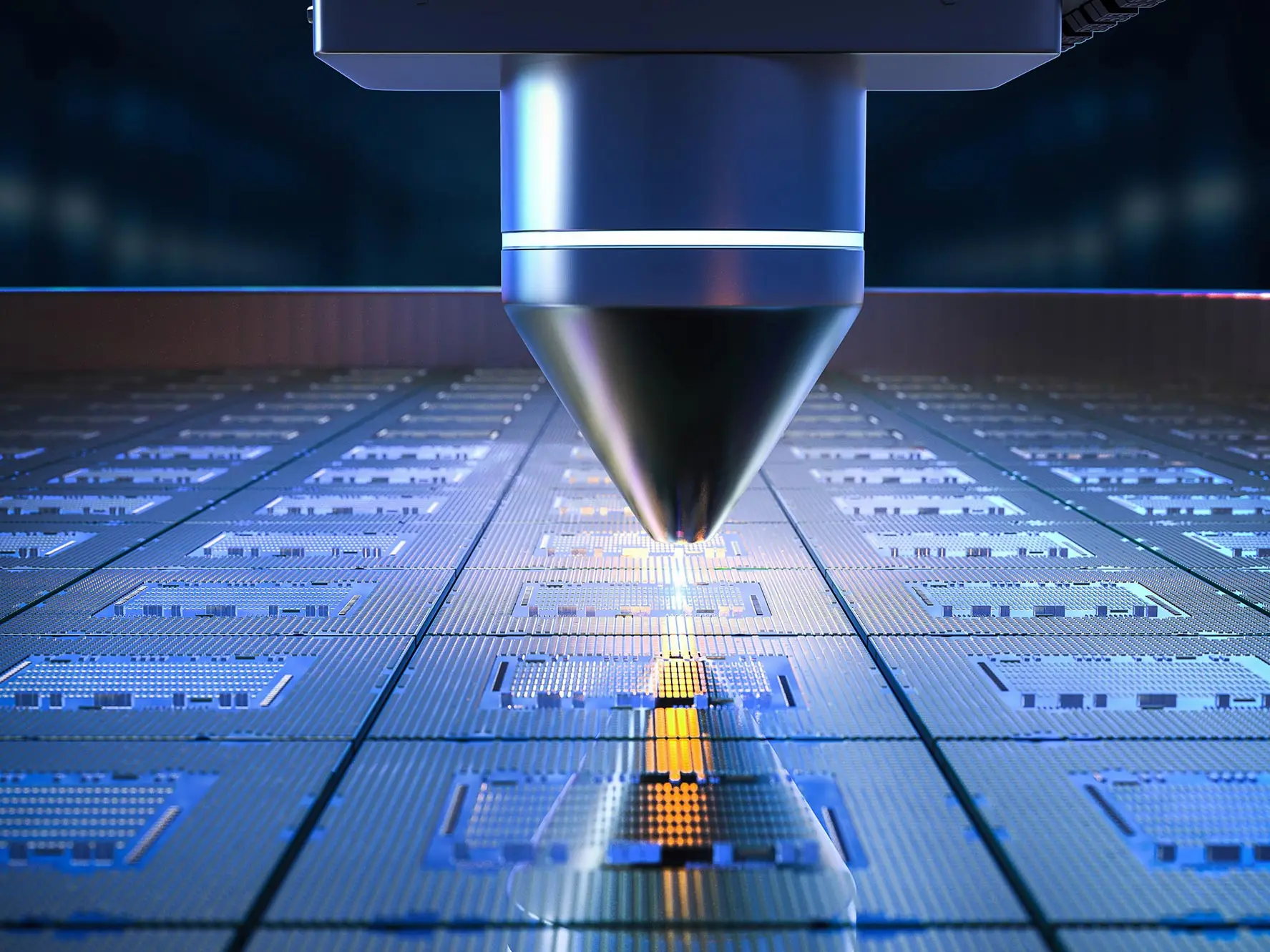
DeepSeek is preparing to order at least 160,000 of Huawei's next-generation Ascend 950DT accelerators for a new gigawatt-scale data centre at Ulanqab in Inner Mongolia, according to a Bloomberg report.
If it completes, it would be one of the largest known clusters of domestically manufactured Chinese AI accelerators anywhere — a roughly $2.56 billion order placed by China's most closely watched AI lab, with Nvidia locked out of the market.
It reads as a decoupling milestone. The details complicate that reading considerably.
The Caveat
DeepSeek does not currently plan to use the 950DT chips for training.
That is the part worth sitting with. Huawei designed and marketed the 950DT for training — the computationally brutal step where a model is actually built. DeepSeek intends to use them to run its models, not to create them, and has so far relied on Nvidia accelerators for training even after attempting to train earlier models on Huawei silicon.
Trending Stories
&imwidth=180&imheight=135&format=webp&quality=medium)
West Bengal govt forms SIT to probe Kolkata Durga Puja stampede that killed 19
&im=FitAndFill=(700,400)&imwidth=180&imheight=135&format=webp&quality=medium)
What is the real meaning behind Pete Hegseth's tattoos?
&imwidth=180&imheight=135&format=webp&quality=medium)
Zohran Mamdani's Garba dance goes viral as he joins Indian community's Navratri celebrations | WATCH
&imwidth=180&imheight=135&format=webp&quality=medium)
Rafale Marine fighter begins flight trials in Goa ahead of Indian Navy induction
&imwidth=180&imheight=135&format=webp&quality=medium)
Explosions heard in Iran’s Hormozgan province near Strait of Hormuz: State media
&imwidth=180&imheight=135&format=webp&quality=medium)
Shock, anger and despair in Bangladesh over the executions
&imwidth=180&imheight=135&format=webp&quality=medium)
Americans told to prepare their will before visiting this country
&imwidth=180&imheight=135&format=webp&quality=medium)
WATCH | Mysterious haze grips Ohio city as toxic chemical leak forces mass evacuation – What is happening?
&imwidth=180&imheight=135&format=webp&quality=medium)
Kim Jong Un death rumors explode | China accused of secretly sending troops to Pyongyang
&imwidth=180&imheight=135&format=webp&quality=medium)
James Bond auction: Own Daniel Craig's Skyfall suit, Ana de Armas' dress and 300+ rare 007 collectibles
&imwidth=180&imheight=135&format=webp&quality=medium)
Trump says end to Ukraine war is 'closer than ever'; Witkoff's Putin remarks spark criticism
&imwidth=180&imheight=135&format=webp&quality=medium)
Trump waves at 'empty space' in viral video,' critics claim 'mental decline getting worse' | WATCH
&imwidth=180&imheight=135&format=webp&quality=medium)
IND vs NZ T20Is: Will Sooryavanshi play? Skipper Shreyas Iyer clears the air on Samson vs Vaibhav debate
&imwidth=180&imheight=135&format=webp&quality=medium)
US midterms: Democrats sue Trump administration over alleged 'threats and intimidation' ahead of election, Musk issues warning to Dems
&imwidth=180&imheight=135&format=webp&quality=medium)
‘Her heart and mind in good shape’: What Helen Haines’ husband said after MP loses both legs in ‘targeted’ attack
&imwidth=180&imheight=135&format=webp&quality=medium)
Israel election 2026: Three possible scenarios after October 27 polls
&imwidth=180&imheight=135&format=webp&quality=medium)
US midterms 2026: What polls and prediction markets indicate about Congress
&imwidth=180&imheight=135&format=webp&quality=medium)
US Midterms 2026 and money: From Bloomberg to Musk, corporate donors, super PACs and lobbies, it's all about the cash
&imwidth=180&imheight=135&format=webp&quality=medium)
Ramayana promotion takes a funny turn after Ranbir Kapoor's verbal blunder, leaves fans in splits | Watch
&imwidth=180&imheight=135&format=webp&quality=medium)
US orders embassy staff, families to leave Saudi Arabia amid Houthi attacks: Report
&imwidth=180&imheight=135&format=webp&quality=medium)
Priyanka Chopra celebrates Dussehra 2026 with Nick Jonas and daughter Malti Marie | See pics
&im=FitAndFill=(700,400)&imwidth=180&imheight=135&format=webp&quality=medium)
New OTT releases this week (October 19-25, 2026): Gajab Raat to Chaar Yaar-8 titles to watch during Dussehra week on Netflix, Prime Video and more
&imwidth=180&imheight=135&format=webp&quality=medium)
US business activity grows in June, but tariffs and inflation cloud outlook
&imwidth=180&imheight=135&format=webp&quality=medium)
'I’m not saying it’s extraterrestrial' - 'Mutant' creature forces Mexicans to flee their homes
&imwidth=180&imheight=135&format=webp&quality=medium)
‘I caution the president...’: Trump’s ex-press secretary warns after Zacharia’s exit
&imwidth=180&imheight=135&format=webp&quality=medium)
Hunger makes alcohol more appealing, study finds
&imwidth=180&imheight=135&format=webp&quality=medium)
Finance influencer dies by suicide in Chennai; father accuses tech CEO, who denies charge
&imwidth=180&imheight=135&format=webp&quality=medium)
France protests: 'Block everything' movement escalates as public fury over austerity grows; over 200 arrested. Here's all you to need to know
&imwidth=180&imheight=135&format=webp&quality=medium)
Kolkata airport: CISF detects ₹1.13 crore in US dollars hidden in bags of 2 Bangkok-bound passengers
&imwidth=180&imheight=135&format=webp&quality=medium)
Feds obtain DNA evidence that could prove Ilhan Omar married her brother: Report
&imwidth=180&imheight=135&format=webp&quality=medium)
US midterms 2026: Trump's approval rating hits record low as Democrats gain ground
&imwidth=180&imheight=135&format=webp&quality=medium)
French military plane crashes in northeast France, one dead
&imwidth=180&imheight=135&format=webp&quality=medium)
Turkey, Qatar, Pakistan and Indonesia sign 'Badr' defence cooperation pact in Doha
So the largest domestic-silicon order yet placed by a Chinese lab is, on current plans, an inference order. The dependency that actually constrains DeepSeek — access to Western chips for training — is not what this purchase resolves.
The Second Constraint
There is also a supply problem, and it is Huawei's.
Component shortages, particularly for high-end memory, are reported to cap total 950DT output at the low hundreds of thousands of units this year. Against that ceiling, a single 160,000-unit order is enormous, and fulfilling it could stretch beyond twelve months.
The data centre is scheduled to come online partially by late 2027 or early 2028 — a timeline that tells you this is a bet on capacity that does not exist yet, from a supplier that cannot currently build it at the required rate.
Why It Still Matters
None of which makes the order insignificant. Three things follow from it regardless.
It commits Huawei's constrained output to a domestic customer, at a scale that squeezes everyone else in China queuing for the same chips. It gives Huawei a reference deployment at gigawatt scale, which is the credential its accelerator business has lacked. And it demonstrates that a serious Chinese lab will now plan multi-year infrastructure around domestic silicon rather than waiting for export policy to loosen.
That last point is the durable one. Export controls were designed to make Chinese labs dependent on American hardware. A 160,000-chip order placed against a supplier that cannot yet deliver is not the behaviour of a company expecting that dependency to be restored.
The Energy Question
A gigawatt is the other number in this story, and it gets less attention than it deserves.
That is a full nuclear reactor's worth of generation dedicated to a single facility. Inner Mongolia is a plausible site for exactly that reason — cheap land, cold air, and proximity to coal and wind generation — but a build of this scale is a regional energy commitment as much as a computing one.
What To Watch
Whether the order is confirmed at the reported volume or quietly reduced as Huawei's memory constraints bite. Whether DeepSeek's stated inference-only plan holds, or whether it shifts training onto the 950DT once the cluster exists — which would be the genuinely significant development. And whether other Chinese labs follow with orders of their own, or wait to see whether this one is delivered.
For now the correct reading is narrower than the headline number suggests. This is a very large bet on Chinese silicon for the easier half of the problem.
