
&imwidth=800&imheight=600&format=webp&quality=medium "Cut the red tape: NITDA's Inuwa makes case for co-regulation across Africa")
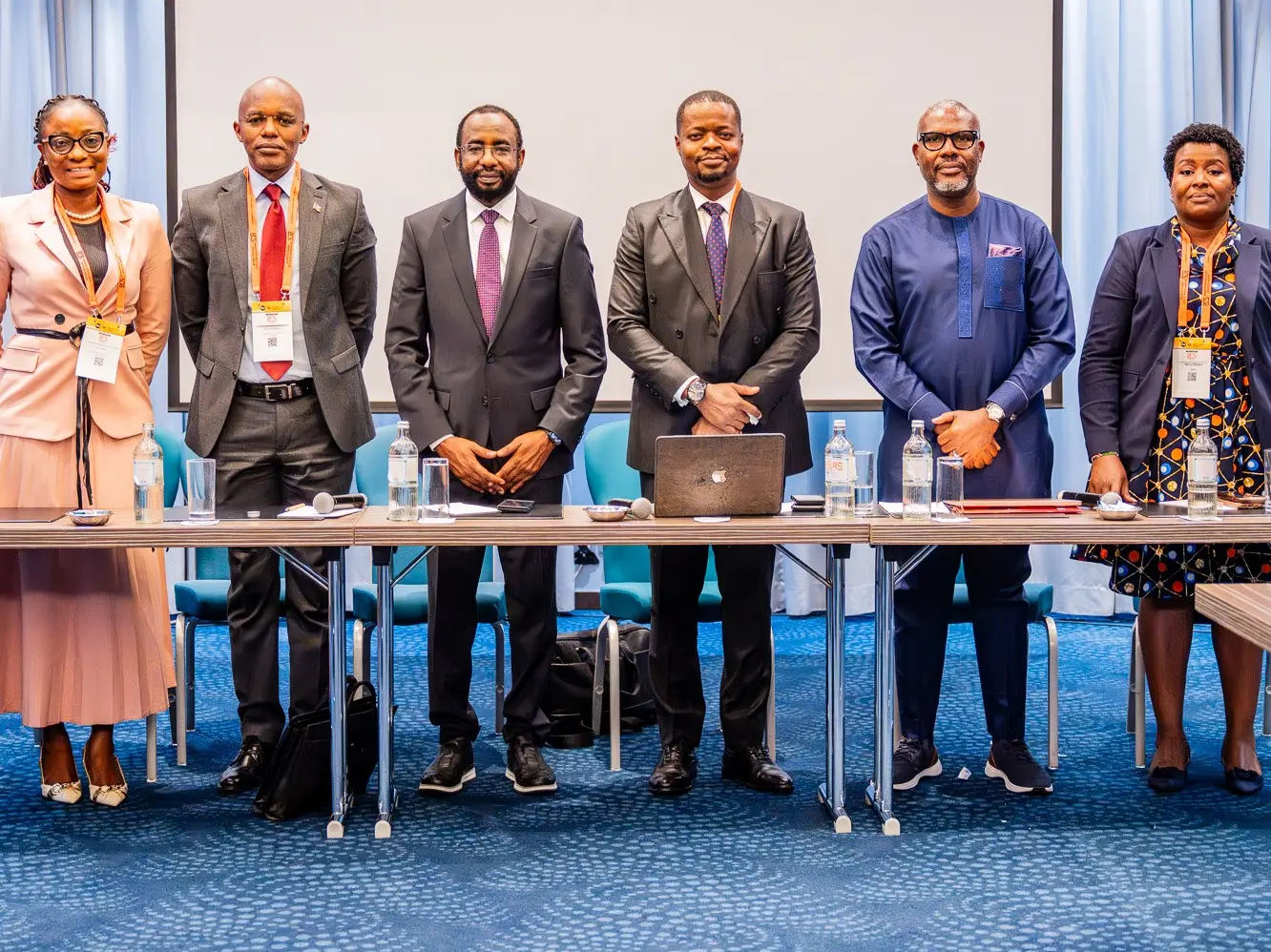
Digital infrastructure investors across Africa could soon see an end to red tape, overlapping mandates, and regulatory delays, as the Director-General of the National Information Technology Development Agency (NITDA), Kashifu Inuwa Abdullahi, pushes for a more unified regulatory approach.
Inuwa made the case during a Regulatory Roundtable session titled "Regulations that Build: Aligning Policy and Digital Infrastructure Investment Priorities," held at ITW Data Cloud Africa 2026. He used the platform to address the friction that both foreign and domestic investors face when they have to navigate multiple government agencies to get things done.
According to Inuwa, investors want government to function as one cohesive unit rather than a patchwork of disconnected institutions. He argued that aligning agencies internally around a single regulatory interface would cut out duplication, speed up licensing approvals, and give businesses clearer, more predictable timelines when entering the market.

He also pointed to a shift in regulatory philosophy driven by the convergence of emerging technologies such as artificial intelligence, cloud computing, and high-density data centers, which he said has made traditional, sector-by-sector regulation insufficient. In response, NITDA is adopting a horizontal regulatory framework: broad, foundational standards that individual sector regulators can then build on. As an example, Inuwa cited Nigeria's National Sovereign Cloud Initiative, noting that the Central Bank of Nigeria used NITDA's horizontal framework to issue a single circular covering the financial sector, allowing banks to meet digital stability requirements without chasing separate approvals from multiple agencies.
Looking beyond Nigeria's borders, Inuwa called for unified standards for cross-border data transfers and regional markets, built around interoperability, trust, and security. He suggested that if African countries adopt standardised data classifications, clearly distinguishing sovereign in-country data from public or hybrid cloud assets, they could enable smoother data exchange across the continent and recognise one another's compliance standards without duplicating local procedures.
On the perception that regulators see tech firms mainly as sources of revenue, Inuwa pushed back, stating that NITDA operates on a Regulatory Intelligence Framework built to support business growth rather than extract money from operators. He described regulation as a tool for shaping economic behaviour rather than a rigid set of rules, adding that NITDA does not charge for its regulations and is instead focused on building markets, developing local capacity, and drawing in long-term investment.
Trending Stories
)
The Early Spring is proof not everyone can talk about their real feelings, and it is perfectly OK
)
UN votes to ‘correct the map’ as India backs fairer world view
)
Nigerian Navy discovers 99,000 litres of suspected stolen, illegally refined products as it intensifies anti-crude oil theft operations
)
Who is Aditi Paudel? 17-year-old becomes Japan's first literacy ambassador
)
Bengaluru: Officials find 40 kg expired chilli at chairman's club
)
Jaishankar rejects trade link to ending Ukraine war
)
Israeli strikes on Lebanon kill three, injure 23 despite truce
)
Alpine glacier was covered with sheep wool sheets to prevent melting. It worked
)
South Korea mulls deploying military assets to Strait of Hormuz
)
World's fifth-largest economy, British army can't afford to train
)
Breaking | Vance takes the podium: First White House briefing since Leavitt's exit
)
Taiwan raises 'concerns' over China's missile test
)
BRICS 2026: $1 trillion sovereign capital set to converge in Delhi for first iBRICS Summit
)
What is Iran's Pickaxe Mountain that Trump has again threatened to bomb?
)
UN votes to correct world map that visually shrank Africa for 450 years
)
Former NewJeans member Danielle launches YouTube channel, hints at new solo journey
)
Bangladesh batter Towhid Hridoy creates history with 350 not out in South Africa
)
Brendan Fraser’s transformation fuels The Mummy 4 excitement as fans welcome back Rick O’Connell
&im=FitAndFill=(700,400))
Krishna Janmashtami 2026: From Dhaniya Panjiri to Makhana Kheer- 5 best sweet dishes perfect for celebrating Lord Krishna’s birth
)
Donald Trump plans to travel to Ireland on Qatari-donated jet amid security concerns
)
Nazi-looted art to return to Jewish heirs
)
Eight killed in Kerala’s Thrissur after car rams into lorry parked on highway
&im=FitAndFill=(700,400))
Why Russian fighter jets use bulky, low-pressure tyres compared to US jets
)
FBI-wanted fraud accused arrested in Jalandhar over $600,000 scam
&im=FitAndFill=(700,400))
Why US tanks weigh over 20 tons more than Russian tanks
&im=FitAndFill=(700,400))
New Friday OTT releases (September 4, 2026): GDN, Dhamaal 4, Jagamae Sangeetham- Watch 6 new movies and TV shows on Netflix, Prime Video and more
)
Killing the Himalayas slowly: Human urine is melting a glacier on Mount Everest
Joining Inuwa on the panel were Caroline Okafor, Legal Enforcement and Regulation lead at the Nigeria Data Protection Commission (NDPC); Tony Izuagbe Emoekpere, President of the Association of Telecommunications Companies of Nigeria (ATCON); Mercy Ndegwa, Director of Public Policy for East & Horn of Africa and Economic Policy Lead for Africa at Meta; and Eng. Dennis Chepkwony, Director of the Universal Service Fund at Kenya's Communication Authority.
