Who gets to define terrorism? How colonial history shapes the debate over Hezbollah's designation

&imwidth=600&imheight=450&format=webp&quality=medium "Who gets to define terrorism? How colonial history shapes the debate over Hezbollah's designation")
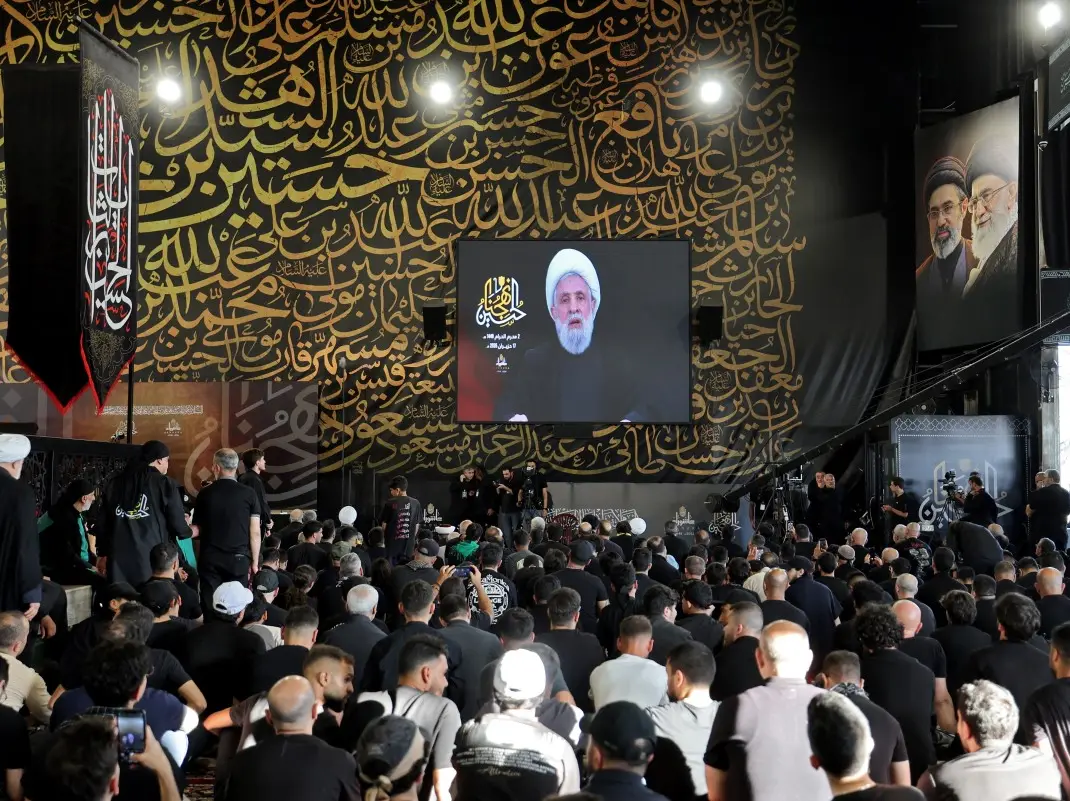
Hezbollah Secretary-General Sheikh Naim Qassem addresses crowds via a giant screen during the first day of Ashura commemorations at the mausoleum of former Hezbollah leader Hassan Nasrallah in Beirut’s southern suburbs on June 17, 2026. Photograph: (AFP)
The debate over Hezbollah's designation has renewed questions about who defines terrorism and how colonial-era laws and political frameworks continue to shape the use of the label in modern conflicts.
The US-Iran MoU that was to be signed face-to-face on June 19 in Switzerland was abruptly cancelled following the escalation by both Israel and Hezbollah in Lebanon. Even as Israel is facing severe diplomatic backlash over its military operations in both Gaza and Lebanon, it maintains that it has no intention of withdrawing its forces from Lebanon and claims that the conflict with Hezbollah is separate from the war on Iran. The process is further complicated due to the Western proscription of Hezbollah as a terror outfit. Israel continues to assert that Hezbollah is a Western-designated terrorist outfit, which it reserves the right to attack and engages with the Lebanese government diplomacy which is arguably incapable of fighting Israel. As of now, Israel maintains control over around 5 per cent of Lebanon's territory.
Who gets to define terrorism?
The term terrorism has colonial roots. It emerged first in the French Revolution during 1793-94, was used to denote state-sponsored violence and government intimidation, and then the ruling revolutionary government decreed, “terror is the order of the day,” to institutionalise the guillotine justice. Once the ruling government was overthrown, the term got a negative connotation. The modern concept, application, and legal framework of terrorism are deeply tied to British imperial history. It was used by the empire to criminalise anti-colonial resistance. It started at first in colonial India in 1919, officially known as the Anarchical and Revolutionary Crimes Act. This law was implemented in British India and then imported to Ireland to criminalise the Sinn Féin.
The first time the word "terrorism" was explicitly named in British parliamentary law was the Prevention of Terrorism (Temporary Provisions) Act 1974. For the longest time, the list of terrorist outfits was just the Irish Republican Army. By 2000, with the permanent Terrorism Act 2000, the UK became the first nation to normalise extraordinary police powers. The broad definition included using or threatening the use of serious violence, property damage, or severe electronic system disruption, to influence a government or intimidate the public for advancing a political, religious, or ideological cause.
Why is the terror label controversial?
Trending Stories
)
)
&im=FitAndFill=(700,400))
)
)
)
)
)
&im=FitAndFill=(700,400))
)
)
)
&im=FitAndFill=(700,400))
)
)
)
)
)
)
)
)
)
)
)
)
)
)
)
)
)
)
)
)
)
&im=FitAndFill=(700,400))
Hezbollah emerged in 1982, directly in response to Israel's invasion of Lebanon, as a resistance movement against the occupation of southern Lebanon, which lasted till May 2000. Hezbollah is credited with expelling Israel from Lebanon or at least making the cost of occupation high, through guerrilla warfare. Something the Lebanese state could not do. The Lebanese army has poor technical capability, suffering from economic crisis, as part of a deliberate foreign policy by international donors to keep the military under-equipped. From this view, Hezbollah's origins are anti-colonial resistance, not unprovoked terror.
An independent Lebanese journalist, Rania Khalek, has explicitly argued that Hezbollah is the only group that's standing right now between Israel and the Lebanese people, and stopping it from turning into Gaza. It is not just an army but also contains a legitimate political arm with seats in the Lebanese parliament. It runs hospitals, schools, and social services and represents a large segment of Lebanese Shia society. So the representation of Hezbollah as a terrorist outfit is a reductionist perspective of a much more complex phenomenon. It delegitimises the social needs of Lebanese people, taking away agency from non-Western actors by terming them terrorists to achieve foreign policy goals.