China plans ‘all-seeing’ surveillance camera network on moon to secure its lunar base


A glimpse of Skynet's surveillance network.
China has been planning to set up an all-seeing surveillance system on the moon in the wake of the success of the massive video surveillance network of the country, known as Skynet.
According to Chinese officials, the new system will strengthen the security of the upcoming lunar base, will secure assets and track foreign visitors to the moon.
The agencies, planning the project, said that the lessons learnt from Skynet will help them build and operate the optical surveillance system for the lunar research station of China.

Skynet or Tianwang is the largest video surveillance network in the world, which includes more than 600 million cameras. In this system, one camera monitors every two adult Chinese citizens and virtually covers every corner of the country.
Also Read:China to raise defence spending as Beijing adopts tougher language against Taiwan
“The construction and operation of the optical surveillance system for the (International) Lunar Research Station can draw on the successful experience … of China’s Skynet project,” said the Lunar Exploration and Space Engineering Centre of the China National Space Administration (CNSA), in a paper published in the Chinese academic journal Acta Optica Sinica on February 22.
&im=FitAndFill=(700,400)&imwidth=180&imheight=135&format=webp&quality=medium)
‘0-100km/h in 1 second Tesla Roadster’: Why tyre grip becomes a problem when cars accelerate this fast
&imwidth=180&imheight=135&format=webp&quality=medium)
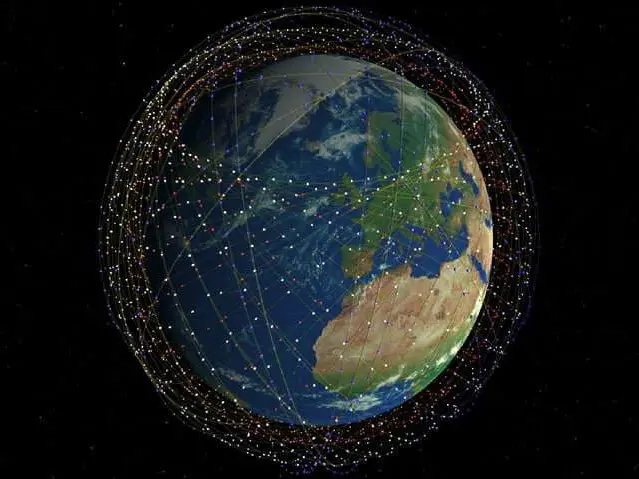
Up to 1 million satellites in orbit? the space race raising questions about who controls space
&imwidth=180&imheight=135&format=webp&quality=medium)
US sanctions Cuban state-owned bank BICSA over alleged financial links to Iran
&imwidth=180&imheight=135&format=webp&quality=medium)
Majid Majidi's new film Midday Meal takes top prize at Asia's biggest film festival
&imwidth=180&imheight=135&format=webp&quality=medium)
Broke Your iPhone Duo? Here’s how much screen repair could cost
&imwidth=180&imheight=135&format=webp&quality=medium)
Russian woman and Bihar boy's love story goes viral after she reaches India to marry him
&imwidth=180&imheight=135&format=webp&quality=medium)
Arijit Singh 9-city India stadium tour to start from January: Check venue and ticket prices
&imwidth=180&imheight=135&format=webp&quality=medium)
Billy Joel's health update: Why the singer can't drive or perform right now?
&imwidth=180&imheight=135&format=webp&quality=medium)
Ukraine blinded: Musk deflects blame on Trump, Putin sharpens attack | Gravitas
&imwidth=180&imheight=135&format=webp&quality=medium)
Oregon school shooting: 16-year-old identified as suspect after at least four killed, including three children
&imwidth=180&imheight=135&format=webp&quality=medium)
Who is Abu Dhabi royal Mahrah Al Nahyan, found unconscious on London street with toddler after cocaine use
&imwidth=180&imheight=135&format=webp&quality=medium)
US-Iran War: Trump eyes mother of all bombs; Iran in crosshairs

Not Khan but Pal: Why did Imran Khan choose his mother's surname over his father's? Family tree explained
&imwidth=180&imheight=135&format=webp&quality=medium)
Russia-Ukraine War: Putin vows retaliation against Ukraine
&imwidth=180&imheight=135&format=webp&quality=medium)
'Turns out the future does have flying cars': Musk's Tesla unveils 'flying' sports car with SpaceX technology | Watch
&imwidth=180&imheight=135&format=webp&quality=medium)
‘He told me clearly...’: Yuzvendra Chahal reveals why Rohit Sharma dropped him from India’s 2023 WC squad
&imwidth=180&imheight=135&format=webp&quality=medium)
Australian woman charged for adding snail poison to lover's curry at work
&imwidth=180&imheight=135&format=webp&quality=medium)
Central Park in Delhi shut on October 16, 17 amid CJP's protest call
&im=FitAndFill=(700,400)&imwidth=180&imheight=135&format=webp&quality=medium)
Inside the Peshawar school tragedy: 34 dead, building's condition under scrutiny and owner arrested. Here's what all happened
&im=FitAndFill=(700,400)&imwidth=180&imheight=135&format=webp&quality=medium)
‘No traffic jams for Tesla owners’: How Elon Musk’s new flying car is different from regular cars?
&imwidth=180&imheight=135&format=webp&quality=medium)
‘My president, I mean my husband’: Trump's new press secretary Katie Zacharia's first briefing goes off the rails in 14 minutes
&im=FitAndFill=(700,400)&imwidth=180&imheight=135&format=webp&quality=medium)
World's 7 most innovative countries in 2026 REVEALED: Did India make the list? | In Pics
&imwidth=180&imheight=135&format=webp&quality=medium)
Trump says Zelensky 'not a good guy' amid fresh Russia-Ukraine tensions | Watch video
&imwidth=180&imheight=135&format=webp&quality=medium)
Earthquake measuring 7 magnitude strikes Russia’s Kamchatka Peninsula
&imwidth=180&imheight=135&format=webp&quality=medium)
Was Trump in danger at Alaska rally? Viral video shows Secret Service agents reacting
&imwidth=180&imheight=135&format=webp&quality=medium)
'Will stand with Pakistan in case of war with US': Rajasthan BJP chief's remark sparks row
&imwidth=180&imheight=135&format=webp&quality=medium)
US midterms 2026: FBI investigates suspicious mailings containing 'unknown substance' sent to election offices
&imwidth=180&imheight=135&format=webp&quality=medium)
Durga Puja 2026: Kajol kicks of celebrations along with mother Tanuja, sister Tanishaa and cousin Ayan Mukerji
&imwidth=180&imheight=135&format=webp&quality=medium)
Abhishek Sharma sets all-time record for most T20I sixes in a year
&im=FitAndFill=(700,400)&imwidth=180&imheight=135&format=webp&quality=medium)
Inside Tesla's Roadster: 10 features of Elon Musk's 'flying car' that push the limits of electric vehicles | In Pics
&imwidth=180&imheight=135&format=webp&quality=medium)
India’s naval priorities: Ex-Navy Chief calls for third aircraft carrier, more warships and submarines
&imwidth=180&imheight=135&format=webp&quality=medium)
Netanyahu defies Trump, blocks Gaza military base for Board of Peace | Gravitas
&imwidth=180&imheight=135&format=webp&quality=medium)
Saudi Arabia executes Two Bangladesh nationals over immoral act
&imwidth=180&imheight=135&format=webp&quality=medium)
Nine former FBI employees fired over investigation into Trump's classified records sue Kash Patel, DOJ over alleged unlawful dismissal
&im=FitAndFill=(700,400)&imwidth=180&imheight=135&format=webp&quality=medium)
Tesla Roadster's thrusters vs rocket engines: What's the difference?
&imwidth=180&imheight=135&format=webp&quality=medium)
Mumbai: CJP brings Tricolour protest to Azad Maidan after weeks of demonstrations
&imwidth=180&imheight=135&format=webp&quality=medium)
'Ukraine must get all it needs to protect civilians and infrastructure': Macron
&imwidth=180&imheight=135&format=webp&quality=medium)
Portland stabbing: Multiple people reportedly stabbed hours after deadly Bend school shooting
The co-authoring organisations like the Chinese Academy of Sciences, Zhejiang University and the China Aerospace Science and Technology Corporation are the main agencies which manage and execute the lunar programme of China and play an important role in establishing technical standards.
All about the lunar version of Skynet
The lunar version of China's Skynet will include a large number of high-performance security cameras that operate in infrared zones or visible light.
These cameras, which generally weigh only 100 grammes (3½ oz) each, will be fitted with AI-driven chips “capable of identifying, locating, tracking and aiming at suspicious targets independently”, as per the paper.
It said that if “abnormalities” get detected in the system, it will “promptly generate alarm signals and initiate appropriate response measures”. The paper did not mention what kind of measures will be adopted.
Watch:China raises defence spending by 7.1 percent, to improve childbirth policies
The cameras, in batches, will land on the moon and will get automatically connected with each other to ensure seamless coverage of the station area, as per the paper.
The proposed lunar research station, which has a radius of more than 6km (3.7 miles), is a large complex and will house a communication hub, power station, command centre, scientific facilities and a group of robots.
The station will have its own satellites for navigation, remote sensing and communication.
(With inputs from agencies)