BRICS Summit 2026: Will Bangladesh PM Tarique Rahman travel to New Delhi and why it matters?

&imwidth=600&imheight=450&format=webp&quality=medium "BRICS Summit 2026: Will Bangladesh PM Tarique Rahman travel to New Delhi and why it matters?")
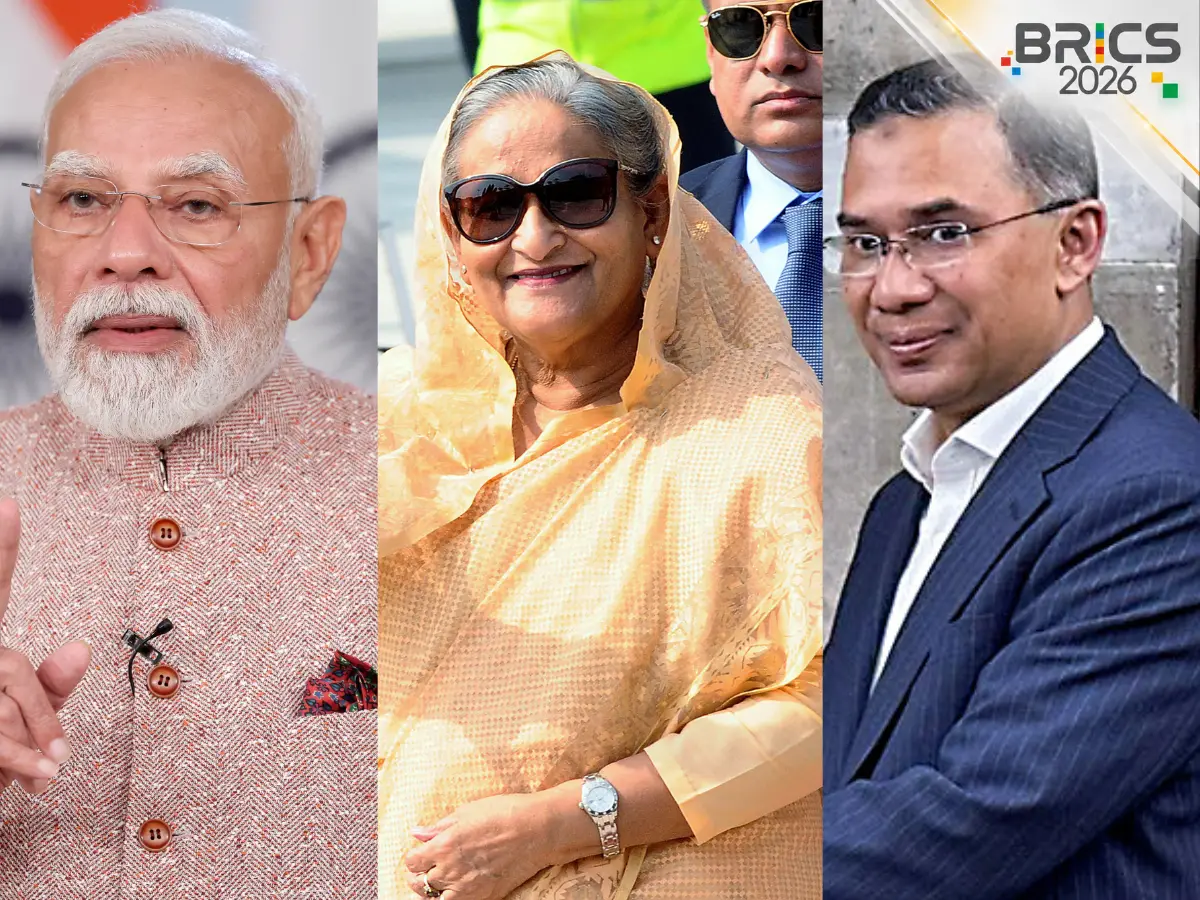
A combination image of India PM Narendra Modi, Bangladesh PM Tarique Rahman and former PM Sheikh Hasina Photograph: (ANI)
Tarique Rahman’s uncertain BRICS attendance reflects widening India-Bangladesh tensions over Sheikh Hasina, even as Dhaka keeps dialogue open. With deeper China, Pakistan, ties, all eyes are set on Bangladesh's final decision
India is all set to host the BRICS Summit on September 12–13, but there's no clarity if its neighbour Bangladesh will attend the international event. While Bangladesh is not a member of BRICS, Prime Minister Tarique Rahman was invited by Prime Minister Narendra Modi as a special guest to attend the summit in his capacity as chair of BIMSTEC. With an aim to improve the ties, India had not only invited Rahman to attend the outreach session of the BRICS Summit but also an invitation for a bilateral visit. However, the issue surrounding former Bangladesh Prime Minister Sheikh Hasina has been a major source of friction between the two nations. With Bangladesh improving ties with China and Pakistan under Rahman, all eyes are set on Bangladesh PM's final decision.
MEA's latest response on Rahman's visit
The Indian government still does not know whether Bangladesh Prime Minister Rahman will attend the upcoming BRICS Summit or, if he does not, whether someone else will represent Bangladesh at the event. Responding to a question on the matter at the Indian Ministry of External Affairs’ briefing on Friday, MEA spokesperson Randhir Jaiswal said he had no new information on the issue.
Bangladesh's latest response on Rahman's visit
State Minister for Foreign Affairs Humaiun Kobir said that the possibility of such a visit before the upcoming UN General Assembly session was very slim. Bangladesh wants engagement and a good working relationship with India despite existing challenges, stressing that the door to dialogue will always remain open, he said. “When the time is right, the prime minister will be visiting India, but the possibility is very slim before the UNGA as the prime minister will be attending the UNGA,” he added.
Trending Stories
&im=FitAndFill=(700,400)&imwidth=280&imheight=210&format=webp&quality=medium)
&imwidth=280&imheight=210&format=webp&quality=medium)
&imwidth=280&imheight=210&format=webp&quality=medium)
&imwidth=280&imheight=210&format=webp&quality=medium)
&imwidth=280&imheight=210&format=webp&quality=medium)
&imwidth=280&imheight=210&format=webp&quality=medium)
&imwidth=280&imheight=210&format=webp&quality=medium)
&imwidth=280&imheight=210&format=webp&quality=medium)
&imwidth=280&imheight=210&format=webp&quality=medium)
&imwidth=280&imheight=210&format=webp&quality=medium)
&imwidth=280&imheight=210&format=webp&quality=medium)
&imwidth=280&imheight=210&format=webp&quality=medium)
&imwidth=280&imheight=210&format=webp&quality=medium)
&imwidth=280&imheight=210&format=webp&quality=medium)
&imwidth=280&imheight=210&format=webp&quality=medium)
&imwidth=280&imheight=210&format=webp&quality=medium)
&imwidth=280&imheight=210&format=webp&quality=medium)
&imwidth=280&imheight=210&format=webp&quality=medium)
&imwidth=280&imheight=210&format=webp&quality=medium)
&imwidth=280&imheight=210&format=webp&quality=medium)
&imwidth=280&imheight=210&format=webp&quality=medium)
&imwidth=280&imheight=210&format=webp&quality=medium)
&imwidth=280&imheight=210&format=webp&quality=medium)
&imwidth=280&imheight=210&format=webp&quality=medium)
&imwidth=280&imheight=210&format=webp&quality=medium)
&imwidth=280&imheight=210&format=webp&quality=medium)
&imwidth=280&imheight=210&format=webp&quality=medium)
&imwidth=280&imheight=210&format=webp&quality=medium)
&imwidth=280&imheight=210&format=webp&quality=medium)
&imwidth=280&imheight=210&format=webp&quality=medium)
&imwidth=280&imheight=210&format=webp&quality=medium)
&imwidth=280&imheight=210&format=webp&quality=medium)
&imwidth=280&imheight=210&format=webp&quality=medium)
&imwidth=280&imheight=210&format=webp&quality=medium)
&imwidth=280&imheight=210&format=webp&quality=medium)
&im=FitAndFill=(700,400)&imwidth=280&imheight=210&format=webp&quality=medium)
The Hasina angle
Former PM Hasina who is in India has been active in teh last few days and has given several interviews to Indian pnews publishers detailing about her possible retun, her political life and the situation in Bangladesh after Rahman took over as PM. This has not gone well with Dhaka. When the Ministry of External Affairs (MEA) was asked whether the timing of Hasina’s interviews was “quite interesting,” Jaiswal replied that he had no comment. When asked if Hasina has shared the details of her return and sought any assistance, Jaiswal said he had no information on the issue. Moreover, as Hasina’s first press conference since her ouster and subsequent stay in India prompted a sharp response from officials in Rahman’s government in Dhaka, India restricted up large-scale public or political events planned by the Awami League network. The Bangladeshi government has aggressively double down on its demands for her formal extradition under the 2013 India-Bangladesh Extradition Treaty, going to an extent of saying that India-Bangladesh relations will depend on it.
Meanwhile, in an interview with The Hindu, Bangladesh’s former PM invoked the right to free speech. Defending her right to hold press conferences and meet her Awami League party colleagues while in India, Hasinasaid that she had no intention of damaging India-Bangladesh ties. This comes after her virtual press conference held on August 5, 2026, ignited a major diplomatic row between India and Bangladesh. While Dhaka strongly condemned the event, New Delhi sought distanced itself from it.
The other neighbourhood angle
As the Hasina factor rocks the ties between India and Bangladesh, Dhaka is eyeing closer strategic and defense engagement with Pakistan, Turkey, and Saudi Arabia, moving toward a post-Hasina foreign policy. Bangladesh has officially expressed strong interest in joining the Mecca Joint Defense Agreement, an emerging trilateral mutual-defense security pact formed by Saudi Arabia, Turkey, and Pakistan. Foreign Minister Khalilur Rahman told the Bangladeshi parliament that Dhaka will view an invitation to join the pact "positively," framing it as a measure for the self-defense of the global Muslim community.
Additionally, Bangladesh-China ties have moved into a deeper strategic phase. During Rahman’s June 2026 visit to China, both sides agreed to elevate their Comprehensive Strategic Cooperative Partnership and build a China-Bangladesh community with a shared future in the new era. Dhaka and Beijing also agreed to deepen cooperation in defence, trade, investment, connectivity, agriculture, technology and education, while China backed Bangladesh’s participation in BRICS and its bid to become a partner of the Shanghai Cooperation Organisation (SCO). Bangladesh is also moving towards talks with China on acquiring J-10CE fighter jets and other military equipment. China is already Bangladesh’s largest source of military hardware, underscoring the growing strategic importance of the relationship.
Why Rahman's visit matters?
For India, Tarique Rahman’s participation in the BRICS Summit could offer an important opportunity to reset the bilateral ties and prevent the relationship from drifting further. His presence in New Delhi would allow the two governments to maintain high-level political contact at a time when the Sheikh Hasina issue remains a major irritant. It could also provide India an opportunity to engage directly with Bangladesh’s new leadership on trade, connectivity, border management, security and regional cooperation. More broadly, Rahman’s attendance would signal that Dhaka remains open to engagement with New Delhi—not just diplomatically, but also on broader geopolitical and strategic issues.

