Before he was Prime Minister: The making of Keir Starmer

&imwidth=600&imheight=450&format=webp&quality=medium "Before he was Prime Minister: The making of Keir Starmer")
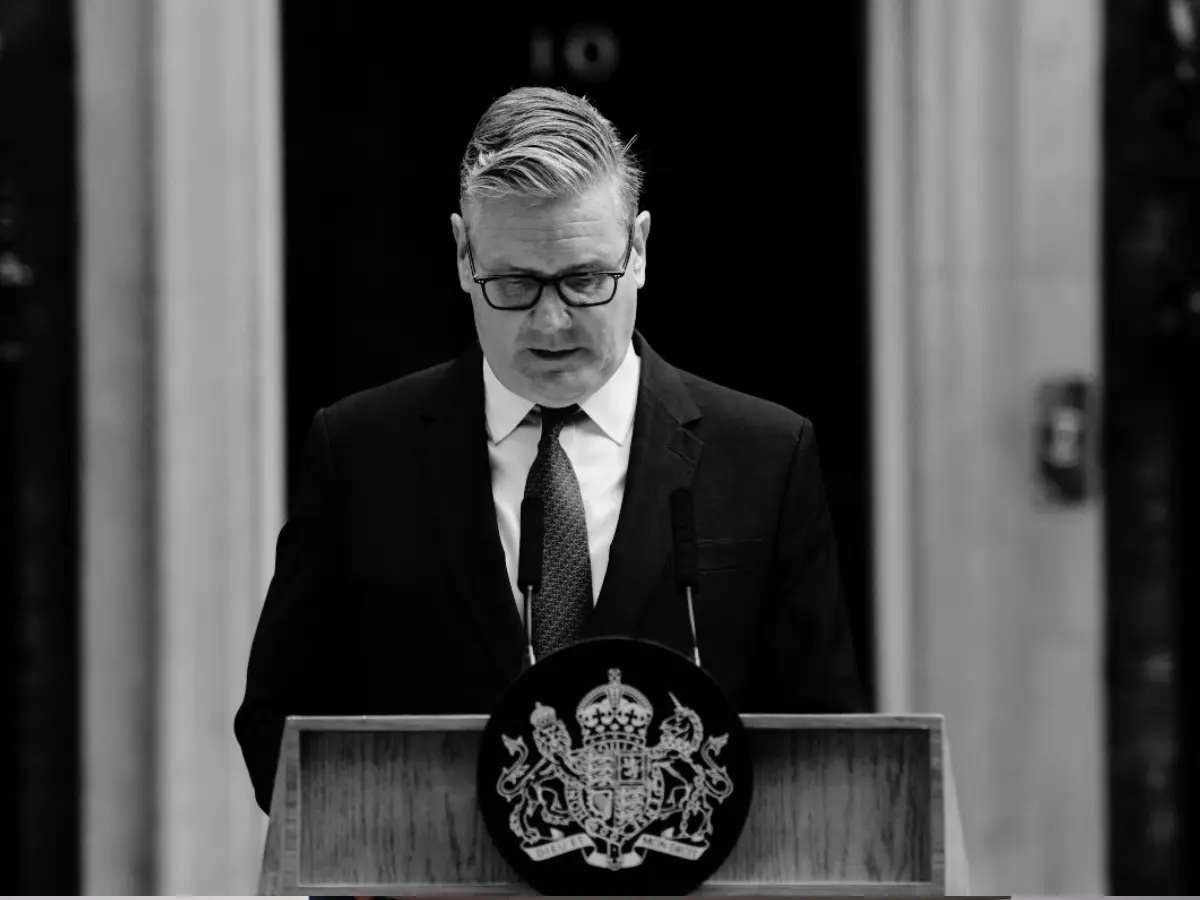
Britain's Prime Minister Keir Starmer reacts as he makes a statement on his future outside 10 Downing Street on the morning of June 22, 2026, in London. Photograph: (AFP)
After the intense internal party pressure and a sharp drop in popularity, UK Prime Minister Sir Keir Starmer has announced his resignation, ending his brief two-year premiership since leading Labour to power.
Politics is one of the few professions where you can spend years trying to get a job, finally get it, and then find yourself out of it, unexpectedly (often). And that is roughly what has happened to Sir Keir Starmer - the British Prime Minister. He announced his resignation on Monday (June 22), just two years after leading the Labour Party back to power and ending the Conservative Party’s 14-year hold on government. His resignation makes him the sixth British prime minister to leave office in the past 10 years, a statistic that makes UK politics look less like a stable democracy and more like the managerial position at a struggling football club.
Speaking at a press briefing, Starmer said he had “heard the answer” from his party and accepted it “with good grace”. He said, “I will resign as leader of the Labour Party.”
The comeback of Labour
Before he was chosen as the UK PM in 2024, Starmer spent four years leading the opposition. His biggest political achievement was rebuilding Labour after years of internal divisions and electoral setbacks. He moved the centre-left party away from its more left-wing positions and closer to the political centre, hoping to win back voters who had drifted away. And the strategy worked.
Labour returned to power in 2024, ending more than a decade of Conservative rule. For many supporters, Starmer was the man who made Labour electable again. But for critics, he was the man who changed Labour too much.
In politics, that usually means you’ve landed somewhere in the middle.
Trending Stories
&im=FitAndFill=(700,400))
)
)
)
)
&im=FitAndFill=(700,400))
)
)
)
)
)
)
)
)
)
)
)
&im=FitAndFill=(700,400))
)
)
)
)
)
&im=FitAndFill=(700,400))
)
)
)
)
)
&im=FitAndFill=(700,400))
)
)
)
Before politics…
Unlike many politicians who seem to have emerged directly from student debates and television studios (not generalising, though), Starmer built an entire career outside politics before entering Parliament. As a trained lawyer, he specialised in human rights law and later became one of Britain’s most senior legal officials.
From 2008 to 2013, he served as Director of Public Prosecutions, heading the Crown Prosecution Service in England and Wales. His work earned him a knighthood, giving him the title “Sir” long before he moved into 10 Downing Street.
Was it all destined?
Born in 1963, Starmer grew up in a modest household on the outskirts of London. His father was a toolmaker, and his mother worked as a nurse. He was named after Keir Hardie, the Labour Party’s first leader, which is either an inspiring political origin story or evidence that his parents had already planned his career decades in advance.
Starmer became the first member of his family to attend university.
He studied law at the University of Leeds and later at the University of Oxford before building a career in the legal profession. It is the kind of biography politicians often spend entire campaigns trying to create.
Starmer simply lived it.
Ties with the Labour
Unlike many political figures who enter public life in their twenties, Starmer arrived relatively late. He won his first parliamentary seat in 2015, when he was already in his 50s. His rise through Labour was not always smooth. He often disagreed with the then Labour leader Jeremy Corbyn and, at one point, resigned from the party’s senior team over policy differences.
Yet politics has a way of bringing rivals together when necessary. Starmer later returned to serve as Labour’s spokesperson on Brexit under Corbyn.
Years later, he would go on to lead the same party himself.
From opposition to the PM
For most politicians, reaching the top job is the destination. For Starmer, it turned out to be only part of the story.
Two years after winning power and ending the Conservatives’ long run in government, he is leaving office. His resignation closes another chapter in a decade of extraordinary political turbulence in Britain, a country that has seen prime ministers come and go at a pace that would leave even Indian coalition politics impressed.
The question now is not who Keir Starmer is. The history books have already started writing that chapter.
The question is, who comes next?

