As Italy leaves BRI, China warns against 'smearing' of the mega-initiative

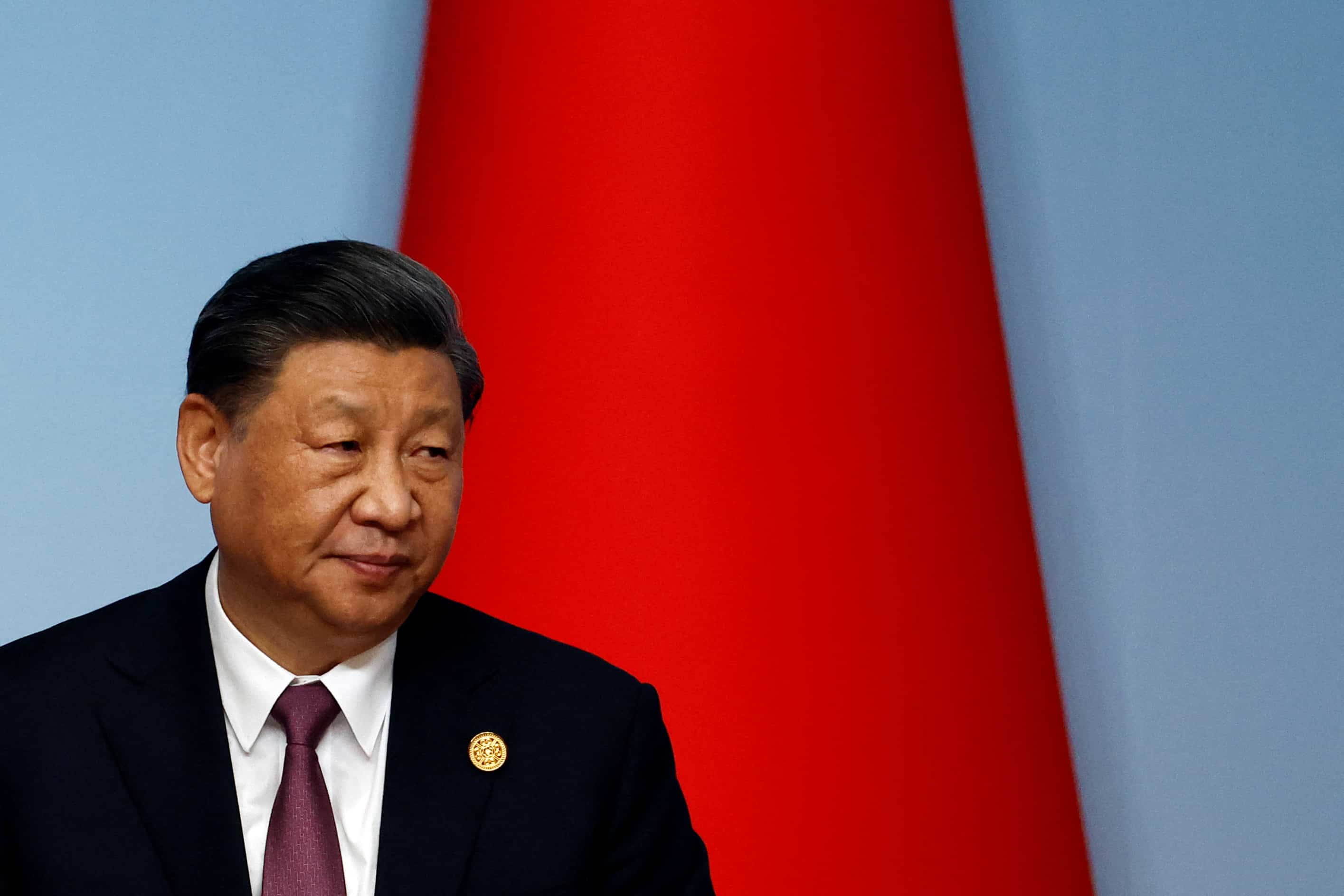
File photo of Chinese President Xi Jinping.
China reacted sharply on Thursday (Dec 7) after Italy said that it would withdraw from the Belt and Road Initiative (BRI). Chinese foreign ministry spokesperson Wang Wenbin slammed what he termed was the 'smearing' of the ambitious infrastructure project. Italy has withdrawn from BRI just four years after it became the only G7 country to join the China-led global initiative.
"China firmly opposes smearing and undermining of cooperation on the joint construction of the Belt and Road," said Wang.
China also opposes "confrontation and division among camps that causes separation", he added. The foreign ministry however, did not comment directly on Italy's exit.

Watch | EU-China Summit: Top European Union officials meet with Xi in China Summit
The Belt and Road Initiative is Beijing's ambitious global project through which it wishes to establish land and sea-based trade routes from China to the West, undertaking mega projects to create an infrastructure towards the end goal.
&imwidth=180&imheight=135&format=webp&quality=medium)
Elon Musk pumps $276 million into Republican campaigns ahead of US midterm elections
&imwidth=180&imheight=135&format=webp&quality=medium)
'I will not be silenced': Ilhan Omar alleges political intimidation after federal officers search her Washington home
&imwidth=180&imheight=135&format=webp&quality=medium)
'I am thoroughly unamused': Judge slams Trump administration after 400 trees cut at Washington golf course
&imwidth=180&imheight=135&format=webp&quality=medium)
Apple HomeView smart home hub may launch soon with A18 chip, display and Siri controls: What to expect
&imwidth=180&imheight=135&format=webp&quality=medium)
Sidhu Moose Wala’s younger brother wins hearts by recreating late singer’s signature move at Toronto Hologram Show
&imwidth=180&imheight=135&format=webp&quality=medium)
BCCI rejects venue shift reports, India vs Sri Lanka 1st ODI to remain in Delhi
&im=FitAndFill=(700,400)&imwidth=180&imheight=135&format=webp&quality=medium)
How does a robot decide what to do next?
&imwidth=180&imheight=135&format=webp&quality=medium)
Pakistan's government blames PTI for rise of terrorism in Khyber Pakhtunkhwa
&imwidth=180&imheight=135&format=webp&quality=medium)
India Rejects Pakistan-China Boundary Commission, Tells Islamabad to Drop 'Theatrics' | GRAVITAS
&imwidth=180&imheight=135&format=webp&quality=medium)
'Absolutely disgusting': Australia slams US plan to livestream Nidal Hasan's execution; Mike Johnson raises concerns, warns of terrorist propaganda
&imwidth=180&imheight=135&format=webp&quality=medium)
'Turn approver, resign, we'll forgive you': Rahul Gandhi claims receiving messages from CEC Gyanesh Kumar
&imwidth=180&imheight=135&format=webp&quality=medium)
Korean peninsula tensions escalate as North Korea launches multiple ballistic missiles, PACOM says 'no threat to US personnel'
&imwidth=180&imheight=135&format=webp&quality=medium)
'Almost certainly': UK Prime Minister Andy Burnham says Iran's IRGC behind RAF Fairford threat
&imwidth=180&imheight=135&format=webp&quality=medium)
Trump weighs firing Kimberly Guilfoyle as US ambassador to Greece amid misconduct allegations: Report
&imwidth=180&imheight=135&format=webp&quality=medium)
India's Ajit Doval, Iran's Mohsen Rezaei hold talks amid escalating West Asia tensions, discuss 'issues of mutual interest'
&imwidth=180&imheight=135&format=webp&quality=medium)
'Ouch!!! That must hurt': Kangana Ranaut hails Kamal Haasan's sharp reply to Elon Musk over Starlink row
&imwidth=180&imheight=135&format=webp&quality=medium)
‘This is just the start’: Maaya Rajeshwaran on historic ITF title, confidence boost and future goals
&imwidth=180&imheight=135&format=webp&quality=medium)
Congress demands action against chief election commissioner
&imwidth=180&imheight=135&format=webp&quality=medium)
Rahul Gandhi's plea against Election Commission delayed as Supreme Court registry flags 14 ‘defects’
&imwidth=180&imheight=135&format=webp&quality=medium)
Portugal Federation confirms Cristiano Ronaldo’s return to national team despite suspension
&imwidth=180&imheight=135&format=webp&quality=medium)
Houthis warns US of 'painful response' if Washington joins Saudi war in Yemen as airlines suspend flights to Saudi Arabia
&im=FitAndFill=(700,400)&imwidth=180&imheight=135&format=webp&quality=medium)
New OTT releases this week (October 12-18, 2026): Sacrifice, Koffee with Karan S9, Roadies Rebirth- 6 titles coming on Netflix, JioHotstar and more
&imwidth=180&imheight=135&format=webp&quality=medium)
1,500 drones illuminate Mumbai sky as Cordelia Cruises unveils second ship, Cordelia Sky
&imwidth=180&imheight=135&format=webp&quality=medium)
UK school ditches technology, shifts from screen to pen and paper for learning
&imwidth=180&imheight=135&format=webp&quality=medium)
Anti-SIR protest in Mumbai: Protestors wear black masks & ribbons in Mumbai
&imwidth=180&imheight=135&format=webp&quality=medium)
Robotic surgery, advanced treatment: What is coming to this small Gujarat town?
&im=FitAndFill=(700,400)&imwidth=180&imheight=135&format=webp&quality=medium)
Navratri 2026: 9 days, 9 forms of Goddess Durga and 9 colours- Check the complete list
&imwidth=180&imheight=135&format=webp&quality=medium)
UK PM Andy Birnham renews claims of Russian meddling in Brexit vote
&imwidth=180&imheight=135&format=webp&quality=medium)
Opposition’s 10 demands in Supreme Court petition range from stay on SIR to audit of voter rolls
&imwidth=180&imheight=135&format=webp&quality=medium)
Trump says he 'may' meet North Korean leader Kim Jong Un during upcoming Asia trip
However, critics of BRI say that the project is a cover for China's intention to greatly expand its influence around the world. China has repeatedly drawn flak for the 'debt trap' strategy it uses to gain political and strategic assets.
Wang however, said that participation from more that 150 countries was an evidence that BRI was the "most popular international public product and the largest international cooperation platform in the world today".
He also underlined that Italy had sent representatives to BRI forum held in Beijing in October this year.
"This embodies the huge appeal and global influence of jointly constructing the Belt and Road," he said.
AFP cited an Italian government source who confirmed that Rome had exited the BRI.
The IMEEC
The India-Middle East-Europe Economic Corridor (IMEEC), the MoU for which was signed during the New Delhi G20 Summit in September, is widely perceived as an initiative launched to counter BRI.
On September 10, the governments of India, Saudi Arabia, UAE, France, Germany, Italy, the European Union and the United States signed the MoU.
Also Read | China's Xi Jinping holds talks with EU's von der Leyen and Charles Michel in Beijing
The IMEEC seeks to bolster communication as well as transport links between Asia and the West. This would see the establishment of rail and shipping networks and more. In this respect, the IMEEC resembles the BRI.
Also Read | Blow for China: Apple prefers India to manufacture batteries for next-gen iPhone 16 - Report
The announcement of the IMEEC corridor came at a time when critics have been pointing at opaque pricing of the infrastructure projects undertaken by Chinese companies under BRI. Countries like Malaysia and Myanmar are renegotiating the deals to bring down prices.
(With inputs from agencies)